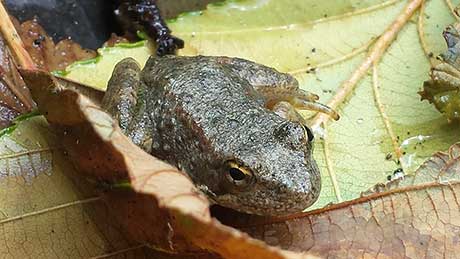
The foothill yellow-legged frog is a resident of lower elevation mountain streams west of the Cascades, readily identified by the distinct lemon-yellow skin under the legs. The rest of their body is variable in color and often mottled beige, olive, or grayish brown. Some foothill yellow-legged frogs have dark spotting, while others do not. Brick-red spotting may be present in habitats where reddish substrates are abundant. Their coloration and grainy skin provide camouflage in coarse sandy substrates. The tympanum (ear drum) is inconspicuous, with the same coloration and texture as the surrounding skin. They have long legs, short, webbed back feet, and a wide, pointed head. Foothill yellow-legged frogs have no mask through the eyes, and have indistinct dorsolateral folds, or ridges of skin along the length of their body. Their call is a faint, low pitched series of four to six notes per second that is rarely heard, as they often call underwater. Adults average three inches in length from snout to vent. Eggs are deposited in discrete masses of 300 to 1500 embryos, resembling a compact fist-sized, grape-like cluster with each individual egg about the size of a small pea. Egg masses are attached to the substrate (often cobble or pebble, but sometimes wood or vegetation), in calm portions of flowing waters. Upon hatching, tadpoles are small and dark, superficially resembling newly hatched tadpoles of other anurans but identity can often be confirmed by close proximity the emptied egg mass remnant. Within a week or two, tadpoles gain mobility and develop features which can be used to distinguish them from other species. Tadpoles have eyes on the top of the head distinguishing them from chorus frog tadpoles. Tadpole coloration becomes olive-gray with coarse brown spots and a lighter colored belly distinguishing them from toad tadpoles, They lack black dots distinguishing them from nonnative bullfrogs. By about four weeks old, they have up to seven upper labial tooth rows distinguishing them from tadpoles of other ranid species. Six genetically distinct clades (DPS) have been documented across the species’ range, one occurring in Oregon. The Foothill Yellow-legged Frog in Oregon are considered part of the North Coast clade, which is not currently listed under the federal ESA ruling. Two DPSs in California are listed as Endangered and two DPSs are listed as Threatened under the federal ESA.
Overview
- Species Common Name Foothill Yellow-legged Frog
- Species Scientific Name Rana boylii
- Federal Listing Status Species of Concern
- State Listing Status Sensitive
Ecoregions
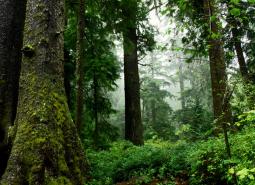
Coast Range
Oregon's Coast Range, known for its dramatic scenery, is extremely diverse, with habitats ranging from open sandy dunes to lush forests and from tidepools to headwater streams. It follows the coastline and extends east through coastal forest to the border of the Willamette Valley and Klamath Mountains ecoregions
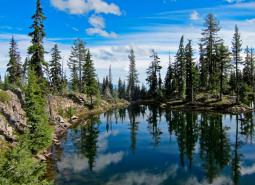
Klamath Mountains
The Klamath Mountains ecoregion covers much of southwestern Oregon, including the Klamath Mountains, Siskiyou Mountains, the interior valleys and foothills between these and the Cascade Range, and the Rogue and Umpqua river valleys. Several popular and scenic rivers run through the ecoregion, including the Umpqua, Rogue, Illinois, and Applegate rivers. Historically, this ecoregion is known …
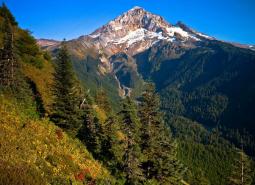
West Cascades
The West Cascades ecoregion extends from east of the Cascade Mountains summit to the foothills of the Willamette, Umpqua, and Rogue Valleys, and spans the entire length of the state of Oregon. It is largely dominated by conifer forests, moving into alpine parklands and dwarf shrubs at higher elevations.
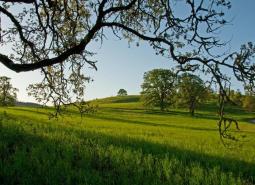
Willamette Valley
The Willamette Valley ecoregion is bounded on the west by the Coast Range and on the east by the Cascade Range. This long mostly level alluvial plain has some scattered areas of low basalt, and contrasts with productive farmland and large urban areas. It has the fastest-growing human population in the state resulting in challenges due to land-use changes.