
The Ferruginous Hawk is the largest buteo in North America , with a wingspan of more than 140 cm. Adult males and females weigh on average 1,160 g and 1,700 g respectively. Both sexes are similar in appearance, but dimorphic in size with females being larger.
There are two color forms of Ferruginous Hawk, a light-morph and dark-morph, though the latter are rare in Oregon. Light-morph birds have stark white underparts, sometimes washed with rufous, with black, curved markings at the wrist. Their tarsi are rufous in color and fully feathered, and they have bare yellow feet. In flight they show white underparts including remiges and a long, broad rather pointed tail. Their back is rusty or rufous colored and the tops of the ends of the wings are darkish gray. Immatures are similar in appearance, but legs, flanks, and belly darkly spotted, lacking the rufous wash of adults.
Ferruginous Hawks are heavier chested than other buteos, which is particularly noticeable in flight. They perch in trees, on utility poles, buildings, fence posts, cliffs, or on the ground and often appear cumbersome when taking flight. In flight they soar with slightly uptilted wings. There are no subspecies recognized for the Ferruginous Hawk.
Overview
- Species Common Name Ferruginous Hawk
- Species Scientific Name Buteo regalis
- Federal Listing Status Species of Concern
- State Listing Status Sensitive
Ecoregions
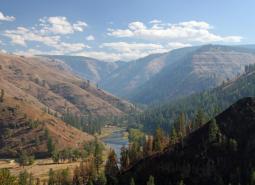
Blue Mountains
Located in NE Oregon, the Blue Mountains ecoregion is the largest ecoregion in the state. It provides a diverse complex of mountain ranges, valleys, and plateaus that extend beyond Oregon into the states of Idaho and Washington.
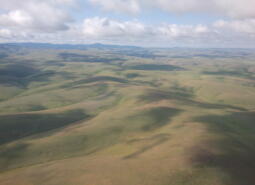
Columbia Plateau
The Columbia Plateau ecoregion was shaped by cataclysmic floods and large deposits of wind-borne silt and sand earlier in its geological history. It is dominated by a rolling landscape of arid lowlands dissected by several important rivers, and extends from the eastern slopes of the Cascades Mountains, south and east from the Columbia River to the Blue Mountains.
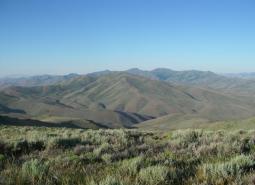
Northern Basin and Range
The Northern Basin and Range ecoregion covers the very large southeastern portion of the state, from Burns south to the Nevada border and from the Christmas Valley east to Idaho. It is largely a high elevation desert-like area dominated by sagebrush communities and habitats.