Photo Credit: Aron Flanders, U.S. Fish and Wildlife Service
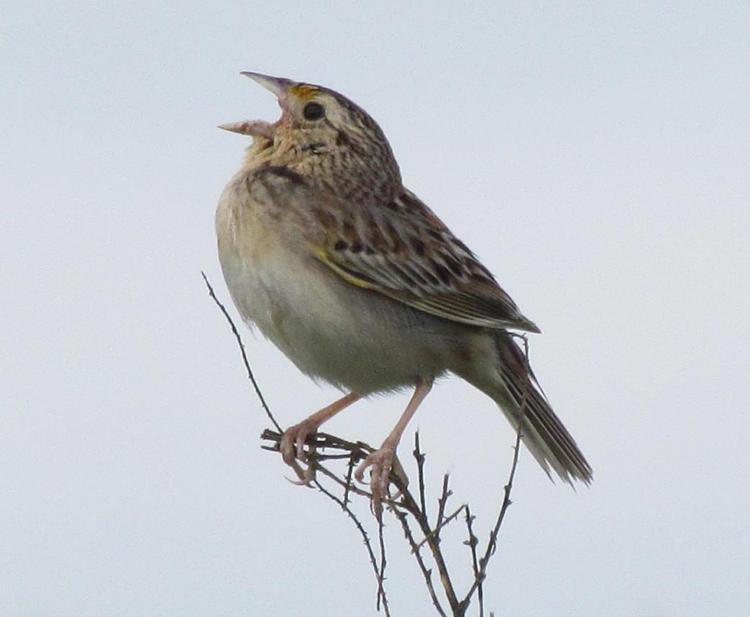
The Grasshopper Sparrow is a small, enigmatic, and inconspicuous grassland bird which can be easily overlooked, but is considered rare in Oregon. Occurrence of the species is often erratic, as small populations may arrive to an area for nesting, move away, then return a few years later. It is difficult to detect due to secretive behavior. It has a characteristic insect/grasshopper-like song delivered from a fence-post or shrub. It is small ‘flat headed’ sparrow with short tail, prominent black eye, and large bill. The Grasshopper Sparrow has a cream-buff breast, white belly, dark crown streaked with buff-white crown stripe, orange-yellow between bill and eyes – sometimes extending thinly over and behind eye; grayish streaked nape, back streaked with chestnut-rust and blackish, and the edge of the wings are yellow.
Only one subspecies of Grasshopper Sparrow is known to occur in Oregon, the Western Grasshopper Sparrow (A. s. perpallidus).
Overview
Species Common Name Western Grasshopper Sparrow
Species Scientific NameAmmodramus savannarum perpallidus
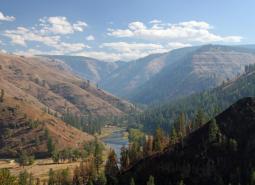
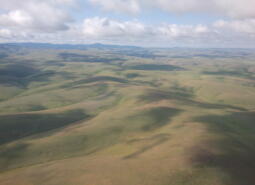
Grasshopper Sparrows prefer dry grassland and pasture habitats with low to moderate grass height and little shrub cover. They need large areas of suitable habitat to thrive. Among grassland birds that occur in Oregon, it is one of the most dependent on native perennial grasses and occupies a narrow niche including bare, sparsely vegetated ground with relatively short vegetation. In Western Oregon in particular, they are dependent on habitats without shrubs and trees that invade grassland habitat in areas with a history of fire suppression historically used by Indigenous people.
In the Willamette Valley, Western Grasshopper Sparrow territories have more grass cover but less cover from forbs, shrubs, and trees compared to areas occupied by Western Meadowlarks. Their nests are often located in lightly grazed pastures and fallow fields. They are also found in recently restored and remnant prairie areas around Eugene. In the foothills of the Blue Mountains in Morrow County, these sparrows are found in remnant bunchgrass stands that are not intensively grazed.
Limiting factors
Grasshopper Sparrows are uncommon and locally distributed in Oregon. Loss of their grassland habitat due to conversion and shrub/tree encroachment may be the most important factor limiting their abundance in Oregon. Nesting failure due to timing of land use practices (e.g., mowing, haying, spraying) also impacts this species.
Data gaps
• Assess distribution and abundance.
• Investigate habitat relationships, including the effects of habitat patch size on abundance and productivity.
• Identify and describe planting mixes that may favor this species.
• Assess the impacts of grazing and agricultural management on productivity.
• Assess wintering locations for Oregon birds.
• Study demographics, movement, and site fidelity.
• Specific information about barriers to dispersal and migration for Western Grasshopper Sparrow in Oregon is needed.
• Evaluate impacts from wind energy development.
Conservation actions
• Maintain or restore grassland habitat.
• Increase plant diversity to promote greater insect diversity.
• Maintain high percent native grass cover and <10% shrub cover in patches >20 acres.
• Delay mowing and other field management until after July 15 at known nesting areas.
• Control key invasive plants to maintain habitat suitability.
Key reference or plan
Status Assessment and Conservation Plan for Grasshopper Sparrow. Read here
PIF Focal and Imperiled Species. Rockwell et al. 2022. Read here
Population and Habitat Objectives for Landbirds in Prairie, Oak, and Riparian Habitats of Western Oregon and Washington. Read here
The Willamette Valley Landowner’s Guide to Creating Habitat for Grassland Birds. Read here