The Red-necked Grebe (Podiceps grisegena) is a medium-sized, rather shy waterbird. During the breeding season, it is recognized by its bright white cheeks, which contrast with a dark brown crown and a rust-red neck. Its bill is long, straight, and stout, with a yellowish base and a dark tip. In flight, Red-necked Grebes display large, distinctive white secondary feathers that stand out against their dark upper wings and back. Outside of the breeding season, in basic plumage, the bird has grayish cheeks that are noticeable against a dark gray crown and hind neck, along with a slightly paler, whitish upper breast.
Overview
Species Common Name Red-necked Grebe (Holboell)
Species Scientific NamePodiceps grisegena holbollii
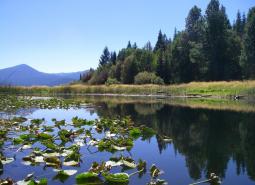
Red-necked Grebes inhabit large lakes and ponds within a forested landscape. They require deep water for foraging and marshy, emergent vegetation for nesting, high water quality and abundant food supply. Pelican Bay in Upper Klamath Lake National Wildlife Refuge is the only consistent breeding location in Oregon but other locations also recorded.
Limiting factors
Red-necked Grebes persist as a small, isolated breeding population in Oregon. They are susceptible to pesticide impacts on reproduction. They need high water quality with diverse invertebrate and fish prey. Vulnerable to human disturbance during nesting. As an apex aquatic predator is susceptible to bioaccumulation of pollutants in breeding areas; and at risk of oil-spill contamination in ocean/bay wintering areas.
Data gaps
• Standardize survey protocols and implement comprehensive surveys.
• Determine the potential impacts of recreational boating on breeding success.
• Assess cumulative effects of pesticides and heavy metals on this species.
• Monitor the effects of deteriorating water quality due to agricultural run-off, drought, and pollution.
• Record wintering area locations and numbers of grebes occurring.
Conservation actions
• Maintain and enhance submergent, emergent, and other marshy vegetation at occupied site(s).
• Minimize disturbance at breeding and roosting locations.
• Where appropriate, consider enhancing availability of nest sites through the addition of artificial nest platforms. Artificial nest platforms have been used successfully in other regions.
Key reference or plan
Waterbird Conservation for the Americas. Read here