
The Short-eared Owl is one of the world’s most widely distributed owls. Only the nominate subspecies, Asio flammeus flammeus, occurs in Oregon. This open country species breeds throughout the northern United States and Canada. The Short-eared Owl is a medium sized owl with a slender body and a rounded facial disk. As their name suggests, their ear tufts are very short and difficult to see. Adult plumage is heavily patterned overall. Upperparts are mottled medium brown and buff, and the breast is buff or pale with dense brown streaking. Females are darker and buffier on average than males. Buff to pale underwing and has a dark comma-shaped mark and blackish barred tips. Short-eared Owls have yellow eyes with a dark triangular patch around each eye and a whitish face. The facial disk is defined by a thin white ruff. Short-eared Owls are active day and night and are often seen hunting during the day, especially at dawn or dusk. These owls fly low over open areas and have a distinctive bouncy flight with deep wingbeats described as “mothlike”. The Short-eared Owl is a facultative migrant, whose movements are in response to the availability of resources either spatially or temporally
Overview
- Species Common Name Short-eared Owl
- Species Scientific Name Asio flammeus flammeus
- State Listing Status Sensitive
Ecoregions
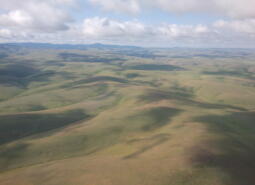
Columbia Plateau
The Columbia Plateau ecoregion was shaped by cataclysmic floods and large deposits of wind-borne silt and sand earlier in its geological history. It is dominated by a rolling landscape of arid lowlands dissected by several important rivers, and extends from the eastern slopes of the Cascades Mountains, south and east from the Columbia River to the Blue Mountains.
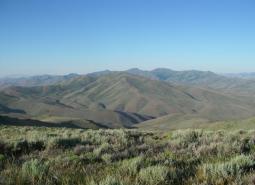
Northern Basin and Range
The Northern Basin and Range ecoregion covers the very large southeastern portion of the state, from Burns south to the Nevada border and from the Christmas Valley east to Idaho. It is largely a high elevation desert-like area dominated by sagebrush communities and habitats.
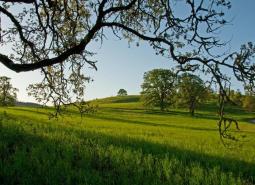
Willamette Valley
The Willamette Valley ecoregion is bounded on the west by the Coast Range and on the east by the Cascade Range. This long mostly level alluvial plain has some scattered areas of low basalt, and contrasts with productive farmland and large urban areas. It has the fastest-growing human population in the state resulting in challenges due to land-use changes.