The White-breasted Nuthatch (Pacific), also called the Slender-billed Nuthatch, is found in western Oregon west of the Cascade Mountain Range crest. The Slender-billed Nuthatch is distinguished from other subspecies by its slender bill of medium length, washed brownish ventrum, and medium blue-gray dorsum. Among the largest of the world’s nuthatches, Slender-billed Nuthatches also are noteworthy for an extensive repertoire of unusual behaviors and habits. Unlike most other North American passerines, they maintain close pair bonds over most of the year. In spring, they cement their pair bond by exhibiting a variety of courtship displays. Elaborate display rituals also are used in antagonistic territorial interactions, and distraction displays are used to deter predators.
Overview
Species Common Name White-breasted Nuthatch (Pacific)
Species Scientific NameSitta carolinensis aculeata
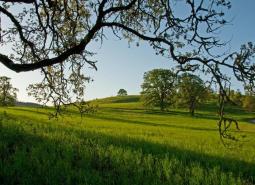
The White-breasted Nuthatch (Pacific) uses mature, large-diameter oak trees for foraging and nesting cavities. They require high canopy cover in connected patches.
Limiting factors
Availability of mature oaks and cavities for nesting may limit distribution of the White-breasted Nuthatch (Pacific). Nuthatches are susceptible to nest predation and competition from European Starlings (Sturnus vulgaris) and other cavity-nesters.
Data gaps
• Evaluate patch size requirements.
• Evaluate dispersal ability.
• Evaluate Oregon population’s resilience and potential to support cross-fostering in other parts of the range where populations are at higher risk
Conservation actions
• Maintain large oaks.
• Preserve trees containing cavities whenever possible. Promote development of larger oaks.
• Where possible, implement controlled burns and/or conifer thinning to maintain oak tree dominance and prevent conifer encroachment.
Key reference or plan
Land Manager’s Guide to Bird Habitat and Populations in Oak Ecosystems of the Pacific Northwest. Read here
Population and Habitat Objectives for Landbirds in Prairie, Oak, and Riparian Habitats Version 2.0. Read here