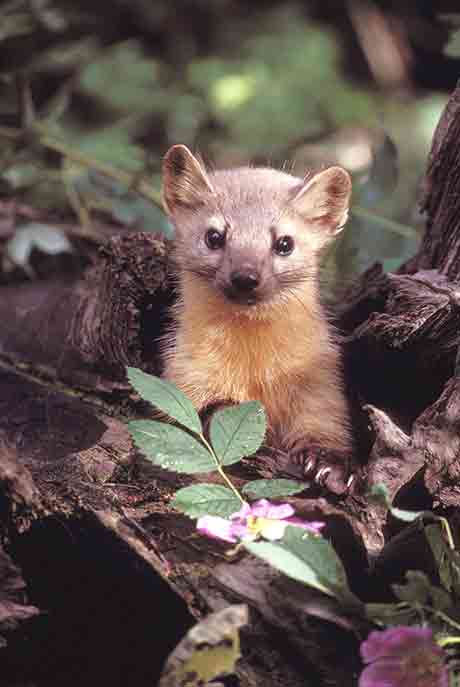
The Pacific marten is a medium-sized carnivorous mammal belonging to the weasel family (Mustelidae). Martens are characterized by the long and narrow body type typical of the mustelid family. They have brown fur with distinctive coloration on the throat and upper chest that varies from orange to yellow to cream, large and distinctly triangular ears, and a bushy tail that is proportionally equivalent to about 75 percent of the head and body length. In Oregon, marten are found in mixed conifer forests with complex understory vegetation. There are two distinct populations in the state. Most marten are distributed throughout the Cascade and Blue Mountains, but a small, federally threatened Distinct Population Segment, the coastal Pacific marten (M. caurina humboldtensis) is found in coniferous and coastal dune forests in the Coast Range and Klamath Mountains.
Overview
- Species Common Name Pacific Marten
- Species Scientific Name Martes caurina
- Federal Listing Status Threatened (Coastal DPS)
- State Listing Status Sensitive
Ecoregions
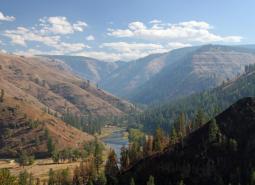
Blue Mountains
Located in NE Oregon, the Blue Mountains ecoregion is the largest ecoregion in the state. It provides a diverse complex of mountain ranges, valleys, and plateaus that extend beyond Oregon into the states of Idaho and Washington.
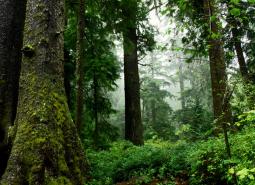
Coast Range
Oregon's Coast Range, known for its dramatic scenery, is extremely diverse, with habitats ranging from open sandy dunes to lush forests and from tidepools to headwater streams. It follows the coastline and extends east through coastal forest to the border of the Willamette Valley and Klamath Mountains ecoregions
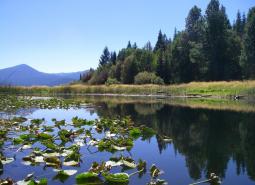
East Cascades
The East Cascade ecoregion extends from the Cascade Mountains' summit east to the warmer, drier high desert and down the length of the state. This ecoregion varies dramatically from its cool, moist border with the West Cascades ecoregion to its dry eastern border, where it meets sagebrush desert landscapes.
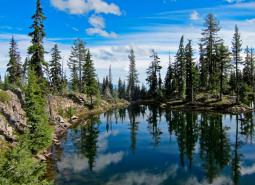
Klamath Mountains
The Klamath Mountains ecoregion covers much of southwestern Oregon, including the Klamath Mountains, Siskiyou Mountains, the interior valleys and foothills between these and the Cascade Range, and the Rogue and Umpqua river valleys. Several popular and scenic rivers run through the ecoregion, including the Umpqua, Rogue, Illinois, and Applegate rivers. Historically, this ecoregion is known …
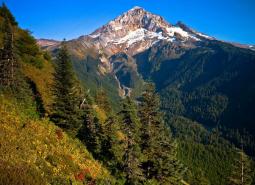
West Cascades
The West Cascades ecoregion extends from east of the Cascade Mountains summit to the foothills of the Willamette, Umpqua, and Rogue Valleys, and spans the entire length of the state of Oregon. It is largely dominated by conifer forests, moving into alpine parklands and dwarf shrubs at higher elevations.