OREGON’S CONSERVATION PARTNERS
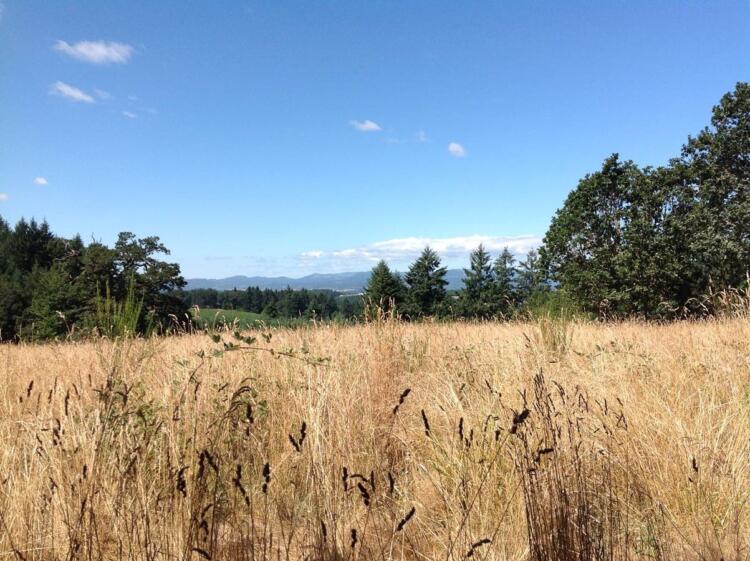
The habitats that support Oregon’s Species of Greatest Conservation Need (SGCN) are found across a diverse and interwoven landscape spanning public and private lands and waters, working forests, farms, rangelands and urban spaces. This patchwork of land uses and ownership is managed by a broad range of partners across the state, from federal and tribal governments to local agencies, private landowners, and nonprofit organizations. Effective conservation outcomes for Species of Greatest Conservation Need and Key Habitats rely on strong communication, alignment of priorities, and shared stewardship among all Oregonians. No single organization can fully address the challenges described in the State Wildlife Action Plan alone. Collaborative leadership, sustained coordination, and collective responsibility are essential to success.
Landowners and land managers are encouraged to partner with multiple entities such as the Oregon Department of Fish and Wildlife (ODFW), Oregon Watershed Enhancement Board (OWEB), soil and water conservation districts (SWCDs), watershed councils, land trusts, landowner organizations, and nonprofit conservation groups. These partnerships enable more comprehensive and innovative approaches by integrating local knowledge, technical expertise and varied funding sources.
Each sector, from State and Local Governments to Tribal Governments, the Federal Government, Nonprofits, and Community-Based Organizations each has a crucial role in the stewardship of Oregon’s natural resources. Their contributions include integrating natural resource conservation and management into existing operations, conducting outreach and engaging the public, and providing guidance and support to private landowners seeking opportunities for voluntary conservation action.
Collaboration between conservation partners is vital to protect and restore natural areas and the corridors that connect them. For example, in urban areas, park and greenspace enhancement programs provide excellent opportunities for building fish and wildlife habitat while contributing to people’s recreational opportunities and enhancing their quality of life. Local and regional governments and park districts are instrumental in obtaining funding for land acquisitions, while regional partnerships support efforts to preserve open space and natural areas.
Oregon’s ability to conserve its most vulnerable species and habitats depends on building relationships across agencies, sectors, and communities. Everyone has a role to play in ensuring that Oregon’s fish, wildlife and their habitats are protected for generations to come.
CONDUCTING OUTREACH, ENGAGEMENT, AND EDUCATION TO AND FOR ALL OREGONIANS
Conservation doesn’t happen in a vacuum, and it is important for active conservation leaders at all levels to provide opportunities for all Oregonians to find their role in conserving or appreciating Oregon’s natural resources. The conservation of natural resources impacts all people, through benefits like clean air, clean water, and healthy ecosystems.
Conservation education programs need to reach people of all ages and backgrounds across Oregon, using languages and materials they understand. These programs should also encourage real, hands-on actions and help people understand the many sides of complex conservation issues so they can make informed choices about how they want to act.
Education and outreach will be most effective when linked strategically to other actions, such as land management and habitat conservation, water management, or incentives for private landowners. Successful implementation depends on expanded involvement from a wide variety of people, agencies, and groups across the state. Effective outreach will be needed to share the goals, voluntary approaches, recommended actions, and benefits of habitat conservation to diverse Oregonians and partners. For real impact, a wide range of people and organizations need to be involved. This includes both sharing information and listening to input from all communities.
Some examples of ongoing efforts to engage Oregonians being implemented by many agencies, schools, and organizations in Oregon are:
-
- Interpretation presentations and educational programs, such as campground talks, nature walks, tidepool tours, skills workshops, hunter and angler education programs, games, and other children’s programs and exhibits (e.g. Tidepool Ambassador programs)
- Informational signage, brochures, videos, and other materials at agency offices, trails, campsites, beaches, wildlife refuges, and other outdoor recreation sites
- School-sponsored learning, including outdoor camps, internships, restoration projects at schools, and classwork such as Bird by Bird
- Special events, such as festivals and camps (e.g., Oregon Zoo, Oregon Museum of Science and Industry)
- Fish and wildlife viewing programs, such as whale watching, bird watching, and elk viewing
- Becoming a Bird Friendly City and taking community action to conserve birds through habitat improvement and threat reduction (Bird City Oregon)
- Information on reducing human/wildlife conflicts in urban areas, such as Oregon Department of Fish and Wildlife’s (ODFW) Living with Wildlife, and the Bird Alliance of Oregon
- Media relationships, such as Oregon Public Broadcasting’s Oregon Field Guide
- Booths at county fairs and other community events
- Volunteer programs
- Information available to landowners and managers interested in supporting wildlife on their property, such as Know Your Forest created by the Partnership for Forestry Education
- Community Science
GOALS AND ACTIONS
Goal 1: Improve Coordination, Strategic Implementation, and Evaluation of Conservation Education and Outreach in Oregon
Expanding public awareness of the importance of conservation is foundational to the success of the SWAP. Goals and Actions are presented here that are tied to the conservation actions for Urban and Suburban Oregonians, Rural Oregonians, and State and Local Agencies.
Action 1.1. Build on existing efforts
- Work with local, state, and federal parks, wildlife areas, campsites, and other recreational programs to enhance interpretation programs.
- Enhance effective partnerships with organizations whose primary mission is conservation education (e.g., non-governmental organizations, universities, agencies). Seek new conservation education partners in Oregon.
- Fold SWAP priorities into the education and outreach activities of federal, state, and local natural resource agencies, non-governmental organizations, and other education providers.
- Support environmental education programs for educators and students K-12.
- Broaden outreach materials and information available electronically to deepen public appreciation of Oregon’s environment. Increase the quantity, quality, and timeliness of information available on topics including nearshore fisheries, regulations, conservation, and ecosystem management.
- Provide translation services and resources in multiple languages to ensure equitable access to information.
Action 1.2. Market and promote opportunities to learn more about and engage in conservation in Oregon
- Develop education materials about the SWAP. Produce outreach materials addressing SGCN and Key Habitats, Conservation Opportunity Areas, and conservation actions and issues. Inform people about opportunities to weave conservation goals into ongoing planning, greenspace acquisition and management, neighborhood projects, educational programs, restoration programs, and other activities. Provide information on human-wildlife conflict and coexistence strategies for humans and wildlife.
- Develop and expand existing partnerships for communication, education, and outreach on conservation topics and issues. Work with partners to develop new mechanisms for information development and dissemination and leverage partnerships to reach new audiences.
- Work with media partners to promote the SWAP and its implementation priorities and create messages which report successes achieved by the SWAP.
Action 1.3. Incorporate outreach and education into other voluntary actions
- Produce informational brochures or other educational materials for landowners on SGCN and Key Habitats
- Develop educational tools that complement on-the-ground conservation actions and management for SGCN and Key Habitats.
- Work with partners to develop a statewide awareness campaign about sections of the SWAP (e.g., work with the Oregon Invasive Species Council on invasive species messaging), which will assess SWAP needs for education and marketing. Develop other tools for public participation.
Action 1.4. Expand outreach to historically underserved populations
- Assess opportunities to engage with underserved communities more effectively. This may include providing compensation for the time and travel involved with engagement in conservation discussions, as well as broadening the venues and manner in which we hold conservation discussions. Holding discussions in areas that are more easily accessible or part of regularly attended community-led meetings, as well as providing methods for input to be collected without travel or electronically may allow for a broader engagement and increase diverse perspectives. Expanding participation strengthens conservation efforts and leads to better decisions for Oregon’s natural resources.
- Assess what communities have historically been left out of the conversation, using social science data to identify currently unknown, underserved, or unengaged constituent groups.
- Identify barriers to participation in natural resource conservation and outdoor recreation for groups including, but not limited to, non-English speaking, BIPOC, LGBTQIA+, disabled, urban, rural, and other communities.
- Ensure that documents are available in multiple languages that reflect the major languages spoken in a community
- Identify constituent interests, values, and types of engagement or experiences relevant to the SWAP.
- Support community-led organizations and empower diverse community leaders to advance conservation actions in Oregon through shared resources and knowledge/information sharing.
- Recognize the contributions of underrepresented partners to natural resource conservation.
- Develop and expand creative avenues to engage a diverse array of constituents, including the broader public. Explore technologies that support alternative methods of communication and participation, in addition to continuing to support traditional paths such as issue-specific advisory groups.
Goal 2: Promote Outdoor Opportunities related to the Oregon SWAP
Outdoor recreation and outdoor tourism are an opportunity for the public to connect with Oregon’s natural spaces and increase engagement in conservation. Conservation leaders should work with landowners and land managers, communities, recreational businesses, and other partners in developing projects and be sensitive to any concerns local communities may have. All proposed actions should consider and mitigate for any potential impacts to both species and habitats.
Action 2.1. Explore joint outdoor recreation marketing and market research opportunities
Explore joint opportunities for cooperative marketing of key nature-based outdoor recreation themes (including wildlife watching). In addition, determine priority areas of joint need for undertaking cooperatively funded market research that will better inform the marketing and product development strategies adopted.
Action 2.2 Build on existing wildlife-watching programs
Support and expand the many fish and wildlife-watching programs that currently exist. For example, work with partners at all scales, including community-based organizations, non-governmental organizations, businesses, and local, state, federal, and tribal governmental organizations to promote development and expansion of birding trails in Oregon. Work with the Oregon Parks and Recreation Department and other coastal partners to support existing whale watching and tide pool programs. Work with local groups to promote existing wildlife festivals.
Action 2.3 Provide information on responsible recreation
Oregonians and visitors in all corners of the state have significant opportunity to impact fish, wildlife, and habitats when they enter their habitat while recreating. Provide information on best practices for recreation to minimize or mitigate impacts to fish, wildlife, and habitats.
Providing Technical Guidance to Oregonians for Voluntary Conservation Actions
There are numerous resources available for voluntary conservation actions, whether big or small. However, particularly when projects are complex, there is not a “one-stop-shop” for technical guidance resources to identify all requirements for funding sources, permitting or regulatory agencies, engineering requirements, or science to support various practices. Establishing networks of agencies, organizations, and other groups who complete conservation and restoration activities will help facilitate shared learning and knowledge to be used for future projects.
To increase the volume of voluntary conservation actions in Oregon, focal areas include striving to make it easier to for landowners and land managers to find technical assistance for conservation projects, helping landowners and land managers prioritize conservation actions, facilitating relationships between landowners and land managers and natural resource professionals to provide continued guidance and support, and identifying potential financial resources to assist landowners and land managers in implementing projects on their lands.
Goal 3: Make it easier for landowners and land managers to find assistance on conservation projects.
For complex projects involving multiple partners and funding sources, it can be difficult to receive approval from several agencies or foundations, each of which may have different goals, criteria, and standards for monitoring, completion, or success.
Action 3.1 Expand technical assistance and site-specific restoration information for landowners and land managers. Technical support services include information to help evaluate habitat, information about best management practices, and monitoring.
Landowners and land managers often want help in designing projects, applying for funds, obtaining permits, and conducting on-the-ground work. At present, many agencies and conservation organizations have developed brochures and web resources on invasive non-native plants, native plant guides, habitat management guidelines, and other aspects of habitat restoration. However, sorting through this information to find specific information relevant to a specific property can be overwhelming. At the same time, excellent technical information that would be useful to landowners and land managers may not be finding its way into their hands. Technical and communications staff across agencies should be urged to collaborate in this area.
Some ways to increase technical assistance to landowners include increasing coordination between incentive program staff, providing training for groups that work with landowners and land managers, developing more targeted outreach materials, providing avenues for landowners and land managers to learn from one another, helping with setting up demonstrations and workshops, and developing information about funding and incentives programs.
Action 3.2 Build capacity among organizations to provide the technical expertise described in the above action item.
Landowners and land managers often turn to an organization with a local presence to help implement a conservation project. Organizations with field offices provide a natural entry point for landowners and land managers to find information. Examples include the NRCS programs, ODFW, SWCDs, OSU Extension Services, watershed councils, land trusts, nonprofit conservation organizations, and university extension offices. However, there is no single organization currently providing oversight or coordination. Collaborative discussion and leadership are needed to determine the best avenues to provide technical assistance throughout the state.
Since the Dust Bowl days, SWCDs have been working directly with landowners around the country, providing technical assistance on soil erosion and water quality issues. In recent years, however, as more landowners and land managers have requested help with habitat restoration projects, SWCDs have expanded into this area. During this timeframe, watershed councils have also emerged to work one-on-one with landowners and land managers on projects, particularly those that impact the survival of native migratory fish.
However, the resources, capacity, and abilities of SWCDs and watershed councils are unequal across the state. Enhanced information sharing among agencies and organizations like SWCDs, watershed councils, and nonprofit conservation organizations will help landowners and land managers find consistent and reliable information.
Goal 4: Help landowners and land managers plan and prioritize conservation actions on their properties, evaluate results, and build long-term relationships to help them achieve their goals.
Action 4.1. Help landowners and land managers develop conservation plans that stress multi-year solutions, noting which conservation needs are most pressing.
Technical guidance should help prioritize actions and provide resources for information over time. Grants provided as incentives to landowners and land managers should be a starting point for a long-term relationship, with additional opportunities for technical assistance. Conservation projects are dynamic and require ongoing attention, and there is concern among landowners and land managers and the conservation community about the short-term nature of many grant cycles. Continuing education is one way that landowners and land managers can add to their knowledge base to inform future work even when grant cycles are complete.
Work with landowners and land managers to build trust and learn from landowners and land managers what their objectives are for their land to find where there are overlapping benefits for working lands and wildlife. Meet with landowners and land managers on their property to learn from their understanding of the land and share technical guidance that can inform conservation actions in line with their goals. Share success stories.
Action 4.2. Improve data management, coordination, and sharing between conservation partners to support landowner-initiated conservation actions.
Effective restoration requires collecting, analyzing, and sharing data to adapt activities to changing conditions or to better meet goals. Currently, a variety of entities collect data using different protocols, and there is a need for greater coordination to improve adaptive management throughout the state. Additionally, organizations need to increase collaboration to make the most efficient use of limited resources and reach shared goals.
Some approaches include:
- Identifying critical data collection activities and associated data management efforts
- Establishing a consistent data management system
- Adopting and using standard protocols for database design, data collection, and metadata development
- Making data publicly available, with mapping tools developed to facilitate information sharing and assist landowners and land managers with use and application of data
Goal 5: Provide information about financial incentives for conservation projects.
Conservation projects can benefit landowners and land managers, with activities like forest thinning and invasive species removal often providing direct economic benefits to a property. There are also indirect ways for landowners and land managers to conserve habitat while also realizing economic gains. For example, conservation easements protect habitat while allowing a property to remain in private ownership. The landowner receives tax benefits in exchange for an agreement to manage the land for specific, agreed-upon conservation benefits. However, access to information on available financial support or voluntary conservation programs can be limiting.
Action 5.1. Provide information about how conservation projects can enhance property values. Provide information about grants, cost sharing programs, property tax deferral, and conservation easements.
Agencies, SWCDs, and watershed councils all have an interest in helping landowners and land managers find information on programs that enhance habitat and property values, but currently there is limited capacity to organize and distribute this information effectively. One possibility would be to investigate collaboratively funding staff position(s) throughout the state to meet this need. Tools such as the Conservation Program Explorer can help connect landowners and land managers with agencies, organizations, and stewardship and incentive programs available to assist with project development, funding, and implementation.
Assist landowners and land managers in finding ways to generate revenue for implementing conservation actions, such as encouraging counties and municipalities to offer tax deferral programs for habitat protection. The Wildlife Habitat Conservation and Management Program (WHCMP) offers a property tax incentive to private landowners who want to provide wildlife habitat on their properties. Under the WHCMP, landowners develop a wildlife habitat conservation and management plan. If approved, landowners then receive a special tax assessment, where property taxes are assessed at a relatively low value, similar to the tax rates that would apply if the land were being farmed or used for commercial forestry.
Action 5.2. Encourage state agencies and organizations serving landowners and land managers to recognize and support the conservation value of working landscapes.
Working lands and waters can provide significant value to fish and wildlife habitat, but this can be difficult to recognize and difficult to fund. Land zoning regulations and the “transfer of development rights” process can be confusing. State programs should work together to increase the options available for landowners and land managers to fund conservation and restoration actions, while maintaining all or part of the property as a working landscape. Organizations can encourage creative new ways to value ecosystem services. A broader recognition of the conservation value provided by working landscapes could result in expanded grant programs or other support for landowners.
LANDSCAPE SCALE CONSERVATION IN OREGON
WHO IS THIS CONSERVATION TOOLBOX FOR?
ACTIONS BY URBAN AND SUBURBAN OREGONIANS
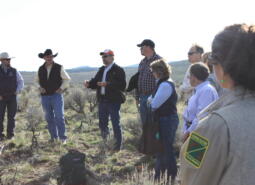
ACTIONS BY RURAL OREGONIANS
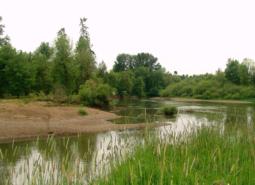
ACTIONS BY ALL OREGONIANS AT THE WATERSHED SCALE