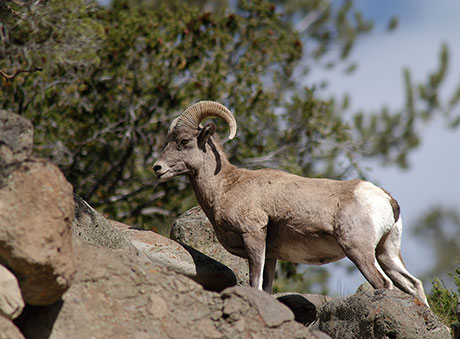
Rocky Mountain bighorn sheep are the largest-bodied bighorn in North America and one of two subspecies of wild sheep in Oregon. The bighorn sheep is a medium-sized, largely brownish bovid in the Caprinae subfamily with a white rump patch, muzzle, abdomen, and rear portion of the legs. The tail is blackish brown on the exposed surface. The hooves are equipped with a rubberlike pad that facilitates negotiating rocky terrain. The ears are relatively small and somewhat pointed. Both sexes are equipped with horns; those of males are massive and spiral outward, whereas those of females are relatively thin, recurved, and mostly directed upward and posteriorly. Horn growth reflects nutritional status and age. Bighorn sheep are capable of moving with speed and agility through precipitous cliffy and mountainous terrain.
Rocky Mountain bighorn sheep utilize large expanses of open, rugged canyons and mountain slopes with abundant perennial grasslands that are free of domestic sheep and goat grazing, with numerous rocky outcrops and rock cliffs. Habitat may include isolated stands of conifer and/or deciduous trees. In Oregon they populate the northeast corner of the state, in canyons of the Snake River and its tributaries, and in alpine areas of the Wallowa Mountains
Limiting factors
Threats and limiting factors to Rocky Mountain bighorn sheep include pneumonia bacteria present within bighorn sheep herds, contact with domestic sheep and goats, habitat loss and degradation due to wildfire and invasive annual grasses, and limited water supply.
Data gaps
• Conduct additional research to better understand the pneumonia complex within bighorn sheep.
• Evaluate the effects of impacts to habitat caused by fire and changing climate conditions.
Conservation actions
• Assess opportunities for reintroduction of bighorn to suitable indigenous habitats.
• Prevent domestic sheep and goats from coming into contact with wild populations
Key reference or plan
Oregon’s Bighorn Sheep and Rocky Mountain Goat Management Plan. Read here