Adults are 1 3/8 – 2 7/8 inches (35 – 47 mm) in length. On the upperside, wings are black and orange, with black marks occurring in a sparse pattern throughout; black margins also enclose pale orange spots. On the underside (visible with wings folded), the forewings are orange with sparse black markings; the chestnut-colored hindwings have four rough bands of silvered spots running along the middle of the wing and outer wing margin. In between these bands is a row of black or red-brown submarginal spots.
Overview
Species Common Name Silver-bordered Fritillary (butterfly)
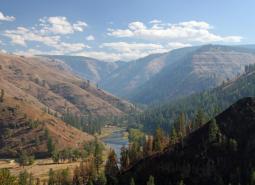
Boloria myrina is considered a habitat specialist of aquatic and riparian habitats within forests and woodlands of eastern Oregon and Washington. In OR and WA, the species is found only in specific patches of mid-elevation (1,200’ – 5,200’) bogs, deciduous riparian areas, and marshes or wet meadows containing a large amount of Salix and Viola sp. larval food plants. Adults lay eggs on or near the violets the caterpillars consume, usually marsh violet and bog violet; stream violet is also reported as a larval host. Favorite nectar sources for adults are composite flowers, including goldenrod and black-eyed Susans.
Limiting factors
Threatened by habitat alteration and loss due to succession, drought, or changes in hydrologic regimes. Competition with encroaching vegetation can inhibit the growth of the host plants and native nectar sources.
Data gaps
Document population status and trends. Research the relationship between grazing and population status.
Conservation actions
Survey suitable habitat for new populations. Monitor known populations and habitat. Maintain hydrologic regimes. Maintain and restore existing habitat with appropriate host and nectar plants. Remove invasive vegetation and reduce woody succession. Avoid pesticide use in and around occupied habitats.
Key reference or plan
Burls, K.J., H. Andrews, and R. Huff. 2021. Interagency Special Status/Sensitive Species Program (ISSSSP) Species Fact Sheet: Boloria selene. USDA Forest Service Region 6 and USDI Bureau of Land Management Oregon State Office. 18 pp. Read here