Adults have a wingspan of 4.5 – 6.3 cm. Forewing length measures 2.3-3 cm in males and 2.5-3 cm in females. Males yellow (rarely orange) dorsally, with black margins and yellow veins. Females usually albinistic or white, sometimes yellowish white or rarely yellow, black borders above are faint or absent. Dorsal forewing discal spot is black, sometimes absent in males, large round to oblong in females. Dorsal hindwing discal spot is yellow and faint in males, pale orange to white in females. The ventral forewing has variable black scaling (heavy to absent) and a small white discal spot, pale orange to white in females. Ventral hindwing in males varies from light to dark olive-green, yellow-green or gray-green, gray-green to blue-green in females. UV-reflectance is variable to absent in males, absent in females. Forewing is slightly elongated and pointed.
Overview
Species Common Name Sullivan's Sulphur (butterfly)
Species Scientific NameColias occidentalis sullivani
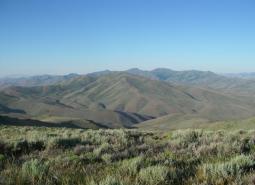
Populations are generally found on low hillsides adjacent to valley floors. Documented from 4,000 to 4,800 feet elevation in sagebrush shrublands with some herbaceous vegetation cover. Uses the desert bush pea, Lathyrus rigidus, as a larval food and host plant, as well as nectar plant, and populations appear closely tied to plant populations. Adults may also nectar on Asteraceae species.
Limiting factors
Threatened by overgrazing and fire suppression. Succession and competition with encroaching vegetation can inhibit the growth of the host plants and native nectar sources. Heavy recreational use of habitat may damage host plants. Desert bush pea is narrowly distributed.
Data gaps
Collect life history and population data. Assess distribution and determine range. Conduct genetic analysis and determine degree of hybridization.
Conservation actions
Monitor existing populations and habitat. Survey suitable habitat for new populations. Manage grazing to reduce impacts to the larval hostplant, Lathyrus rigidus, and maintain a diversity of nectar resources, particularly in the Asteraceae family for adults.
Key reference or plan
Burls, K.J., S. McKnight and E. Blevins. 2021. Interagency Special Status/Sensitive Species Program (ISSSSP) Species Fact Sheet: Colias occidentalis sullivani. USDA Forest Service Region 6 and USDI Bureau of Land Management Oregon State Office. 20 pp. Read here