Columbia yellowcress is an herbaceous perennial, arising from slender roots or rhizomes and covered in fine pubescence or papillose. The stems are somewhat erect, decumbent, or prostrate, from 1-40 cm long and branching repeatedly. Leaves oblanceolate to oblong with sinuate to pinnatifid entire to dentate margins, sometimes with irregular laciniate lobes. Lower leaves often petioled, 4-7 cm long, can be sessile or clasping, and upper leaves, 2.4-5.2 mm long, more often sessile or clasping than petioled. lnfloresences are spreading to ascending, 4-8 mm long, elongated racemes with flower pedicels mostly appressed, forming terminally and in the axils. Flowers contain four yellow petals, oblanceolate to spoonshaped, pedicellate, 2.7-4.2 mm long and 0.7-1.7 mm wide, and longer than the sepals. Sepals are ascending, oblong and pubescent, 2.0-3.5 mm long, persistent long after anthesis, and slightly saccate at base. Fruits are slightly compressed silicles that are ovate to oblong, turgid and pubescent. The pedicellate, 2-valved fruits are 3-7 mm long and 1.5-3 mm wide. When dry, the fruit dehisces and the persistent placentae and septum remain. Fruits generally produce between 20-40 ovoid-spheric seeds that are tan-orange and 0.7-0.9 mm long.
Overview
- Species Common Name Columbia yellowcress
- Species Scientific Name Rorippa columbiae
- State Listing Status Endangered
Ecoregions
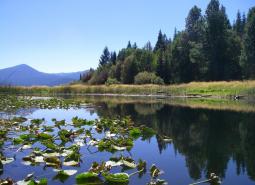
East Cascades
The East Cascade ecoregion extends from the Cascade Mountains' summit east to the warmer, drier high desert and down the length of the state. This ecoregion varies dramatically from its cool, moist border with the West Cascades ecoregion to its dry eastern border, where it meets sagebrush desert landscapes.
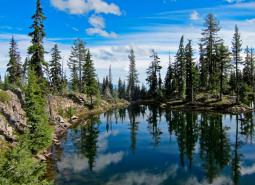
Klamath Mountains
The Klamath Mountains ecoregion covers much of southwestern Oregon, including the Klamath Mountains, Siskiyou Mountains, the interior valleys and foothills between these and the Cascade Range, and the Rogue and Umpqua river valleys. Several popular and scenic rivers run through the ecoregion, including the Umpqua, Rogue, Illinois, and Applegate rivers. Historically, this ecoregion is known …
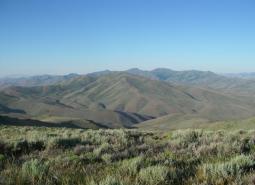
Northern Basin and Range
The Northern Basin and Range ecoregion covers the very large southeastern portion of the state, from Burns south to the Nevada border and from the Christmas Valley east to Idaho. It is largely a high elevation desert-like area dominated by sagebrush communities and habitats.
West Cascades
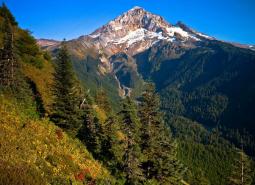
The West Cascades ecoregion extends from east of the Cascade Mountains summit to the foothills of the Willamette, Umpqua, and Rogue Valleys, and spans the entire length of the state of Oregon. It is largely dominated by conifer forests, moving into alpine parklands and dwarf shrubs at higher elevations.
Willamette Valley
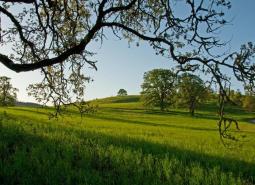
The Willamette Valley ecoregion is bounded on the west by the Coast Range and on the east by the Cascade Range. This long mostly level alluvial plain has some scattered areas of low basalt, and contrasts with productive farmland and large urban areas. It has the fastest-growing human population in the state resulting in challenges due to land-use changes.