Rough goldenweed is a stout tap-rooted perennial with erect stems, 30-70 cm tall, usually glabrous but sometimes slightly roughened distally. Oblanceolate to narrowly elliptic basal leaves are 7-20 cm long and 6-19 mm wide, with entire margins and variable surface texture from glabrous to with sparse shaggy hairs. Cauline leaves are sessile or petiolate and reduce in size with height. Mature plants contain 4-12 radiate heads in raceme-like arrays. The 6-15 mm tall involucres contain 4-6 series of oblanceolate to oblong phyllaries with entire, sometime roughened margins and glabrous to sometimes resinous-dotted surfaces. The 12-25 conspicuous ray florets are 6-10 mm long, yellow, and surround the 35-50 disc florets that are 7-11 mm long. Fruits are 4.5-6.5 mm, brown with pubescent surfaces and pappus bristles 6-8 mm long
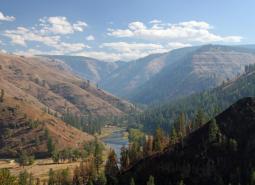
Rough goldenweed occurs in grasslands and prairies of the Snake River/Camas Prairie region. May also occur in transitional zones between prairie and ponderosa pine or Douglas fir dominated woodlands.
Limiting factors
Conversion of grassland and prairie habitat to agriculture has been the largest threat to this species. Other threats include seed predators, invasive plants, grazing, and wildfire.
Data gaps
Identify vulnerable stages in the plant’s life cycle. Assess genetic diversity and reproductive success of known populations.
Conservation actions
Survey potential habitat for new occurrences. Continuously monitor known occurrences to inform population trends and size. Collect and bank seed as insurance against local extirpation or extinction and to use in ex-situ research. Conduct ex-situ seed/plug production for introduction and augmentation efforts.
Key reference or plan
Marshall, DA. 2024. 2024 listing status assessment for Pyrrocoma scaberula (rough goldenweed). Oregon Department of Agriculture, Salem, Oregon.