
Thin-leaved pea is a perennial forb that is sparsely hairy to practically glabrous. The stems are strongly angled or narrowly winged and 30-100 cm long and have a climbing habit. The leaves are 6-10 cm long, alternate, compound and stipulate. The stipules are large and ovate to ovate-lanceolate with the margins coarsely undulate and the bases semi-sagittate. Leaves have 8-12 leaflets that are unpaired and ovate to lanceolate. Leaflets are 2-5 cm long, 0.7-3 cm broad, green above and paler below, glabrous, with welldeveloped tendrils. Inflorescences are 5-15 cm long racemes with peduncles that are often shorter than the leaves and mostly arranged on one side (secund). The white to cream flowers are 12-14(17) mm long, aging to light brown or orange. The calyx is 9-12 mm long with narrowly triangular lateral lobes. The flower banner pale greenish-cream with purplish-rose lines. The keel is approximately equal to the wings, if not slightly longer. Fruits are 3-5 cm long and 2-7 mm broad.
Overview
- Species Common Name Thin-leaved pea
- Species Scientific Name Lathyrus holochlorus
- Federal Listing Status Species of Concern
- State Listing Status Endangered
Ecoregions
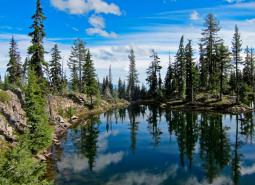
Klamath Mountains
The Klamath Mountains ecoregion covers much of southwestern Oregon, including the Klamath Mountains, Siskiyou Mountains, the interior valleys and foothills between these and the Cascade Range, and the Rogue and Umpqua river valleys. Several popular and scenic rivers run through the ecoregion, including the Umpqua, Rogue, Illinois, and Applegate rivers. Historically, this ecoregion is known …
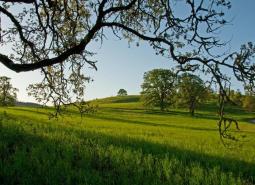
Willamette Valley
The Willamette Valley ecoregion is bounded on the west by the Coast Range and on the east by the Cascade Range. This long mostly level alluvial plain has some scattered areas of low basalt, and contrasts with productive farmland and large urban areas. It has the fastest-growing human population in the state resulting in challenges due to land-use changes.