
Whitebark pine is a long-lived conifer tree, typically 5-20 m tall with trunks up to 1.5 m in diameter, and a rounded or irregularly spreading crown. The mature bark is smooth, fissured into scales, and white to gray in color. The mature crown is often deformed due to wind and snowpack exposure. Buds are ovoid, light red to brown, and not resinous. The leaves are needles in clusters of five, upcurved, and 3-7 cm long. Whitebark pine seed cones are erect, measure 4-9 cm long, are gray to dark purple, with scale tip knobs angled and prickled. The cone scales do not open at maturity, but are usually torn apart by Clark’s nutcracker or squirrels. The Clark’s nutcracker will consume many seeds and cache some underground that will eventually grow into seedlings when conditions are satisfactory.
Overview
- Species Common Name Whitebark pine
- Species Scientific Name Pinus albucaulis
- Federal Listing Status Threatened
- State Listing Status Threatened
Ecoregions
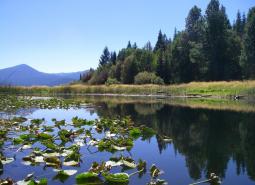
East Cascades
The East Cascade ecoregion extends from the Cascade Mountains' summit east to the warmer, drier high desert and down the length of the state. This ecoregion varies dramatically from its cool, moist border with the West Cascades ecoregion to its dry eastern border, where it meets sagebrush desert landscapes.
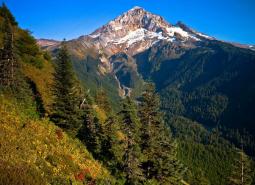
West Cascades
The West Cascades ecoregion extends from east of the Cascade Mountains summit to the foothills of the Willamette, Umpqua, and Rogue Valleys, and spans the entire length of the state of Oregon. It is largely dominated by conifer forests, moving into alpine parklands and dwarf shrubs at higher elevations.