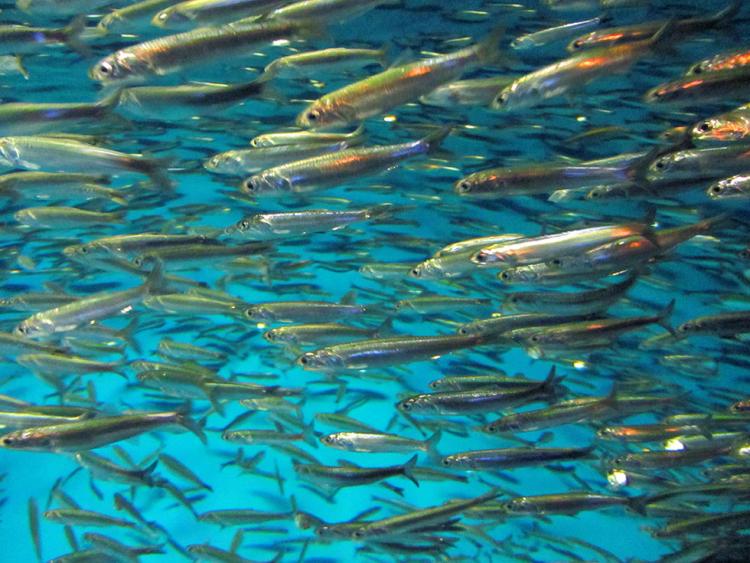
Northern anchovy are small, silver fish with long, thin bodies. They are green or blue on their back and silvery below. They look somewhat similar to many other forage fish species, but one distinguishing feature of northern anchovy is their mouth. Their lower jaw opens extremely wide which helps them feed on a wide variety of plankton. Northern anchovy are an energy rich food source for many ocean predators, including at least 90 species of birds, fishes, and marine mammals. They are an important link in the marine food web off our coast. They grow up to about 9.8 inches long and weigh up to about 2 ounces. Northern anchovy can live up to 7 years, but they rarely make it past 4. The northern anchovy found off Oregon is considered to be the northern subpopulation. They spawn mainly during the summer off Oregon in the waters of the Columbia River plume, but they can spawn, releasing sperm and eggs into the water, multiple times a year depending on food supply. They mature between 1 and 4 years old. The drifting eggs hatch in about 2 to 4 days. Larvae have a yolk sac attached that is absorbed within 36 hours, and they start feeding on their own, 4 days after hatching, when their mouth becomes functional. Northern anchovy abundance is tied to ocean conditions, that may include temperature, food availability, and predator abundance. They eat a wide variety of plankton that includes both phytoplankton and zooplankton. Populations of this species are known to go through boom and bust cycles. They inhabit both estuaries and the ocean.
Overview
- Species Common Name Northern anchovy
- Species Scientific Name Engraulis mordax