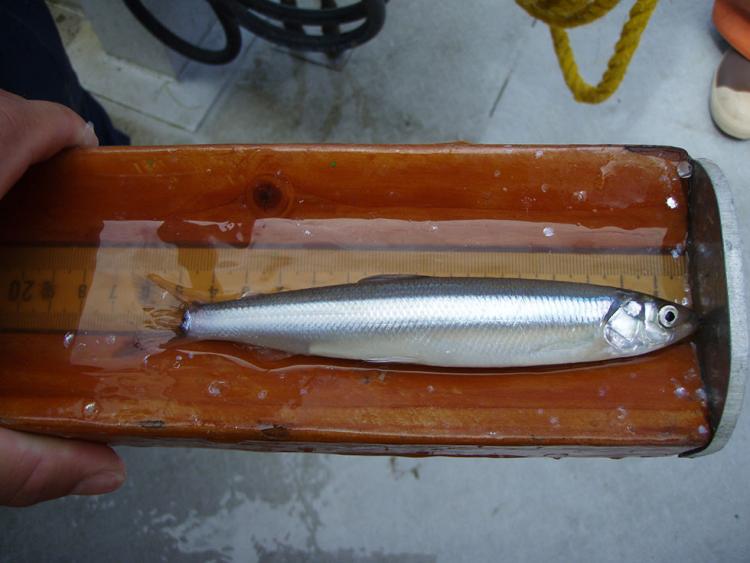
Surf smelt are in the smelt family. They are small, elongate fish that are silvery in color with a greenish colored back that are darker for males and brighter for females. The lower sides and belly of the male is yellowish, but the female is white in these areas. Their pelvic fins are located below the middle portion of their dorsal fin. They can grow up to 12 inches long and weigh up to about 1.6 ounces. They can live up to 5 years and mature at 1 to 2 years. Surf smelt gather in large schools to spawn at specific beach locations with coarse sand to fine gravel. The eggs are laid near the high tide line, with peak spawning times usually occurring around the full moon. Males and females move into waters a few inches deep, around the high slack tide, to release sperm and eggs. They move together in small groups that usually contain more males than females. The eggs sink to the bottom. Once fertilized, the outer membrane of the egg turns inside out to form a sticky pedestal that attaches to the sand. The eggs get buried in the sand as the tide recedes, where the embryos develop and hatch in 9 to 56 days, depending on water temperature. Adults eat a variety of crustaceans, but will also eat worms, fish eggs and, occasionally, small fish. Known predators include Chinook and coho salmon and other predatory fish. Many bird species may eat them as well, including bald eagles, great blue herons, common murres, rhinoceros auklets, and several species of terns. They are a coastal species and are a traditional food source for several Native American tribes.
Overview
- Species Common Name Surf smelt
- Species Scientific Name Hypomesus pretiosus