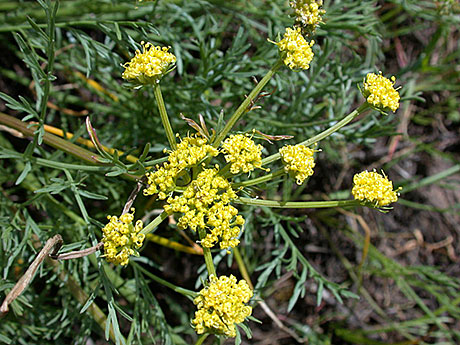
Cook’s desert parsley is a small, perennial plant that is rarely taller than 30 cm. Unless it is in flower, it is generally quite inconspicuous. The plant has a simple to branched taproot and thin, oblong leaves that are ternately divided into many narrow leaflets. Flowers are generally pale yellow in color and are produced in compound umbels on leafless stems. Fruits are oblong with lateral, corky wings.
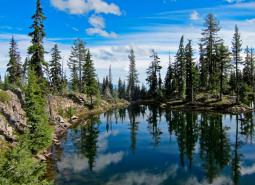
Cook’s desert parsley occurs in two major population centers. In Jackson County, this species is found in the Agate Desert in vernal pools. These pools usually range from 3-100 feet across and no more than 12 inches deep. In Josephine County, this species is found in seasonally-wet, grassy meadows on alluvial floodplains in the Illinois Valley, with underlying soil forming clay pan.
Limiting factors
Habitat loss and degradation have negatively impacted Cook’s desert parsley. Conversion of habitat to agriculture or residential development, livestock grazing, road and powerline right-of-way maintenance (including herbicide spraying), off-road vehicle use, invasive plant infestations, mining, and fire suppression resulting in shrubland encroachment are among specific threats. The species is highly vulnerable to climate change, particularly changes to temperature and hydrologic regimes and changes to pollinator diversity.
Data gaps
Research the impact of native grass cover on seedling recruitment and population stability. Research the effects of herbicide, mowing, and burning on Cook’s desert parsley growth and survival. Assess impacts of climate change on the species.
Conservation actions
Maintain current populations and restore vernal pool habitat at priority sites, including Denman Wildlife Area. Manage road construction and maintenance projects to avoid impacts to hydrology in and around known populations. Continue monitoring known populations. Conduct prescribed burns. Grow Cook’s desert parsley for seed to augment populations or introduce seed to new sites.
Key reference or plan
A Recovery Plan for Rogue and Illinois Valley Vernal Pool and Wet Meadow Ecosystems was released in 2012 by the US Fish and Wildlife Service (https://ecos.fws.gov/docs/recovery_plan/Rogue&Illinois%20Valley%20Final%20Recovery%20Plan%20031913.pdf). The most recent 5-Year Review was published in 2024 (https://ecosphere-documents-production-public.s3.amazonaws.com/sams/public_docs/species_nonpublish/19878.pdf).