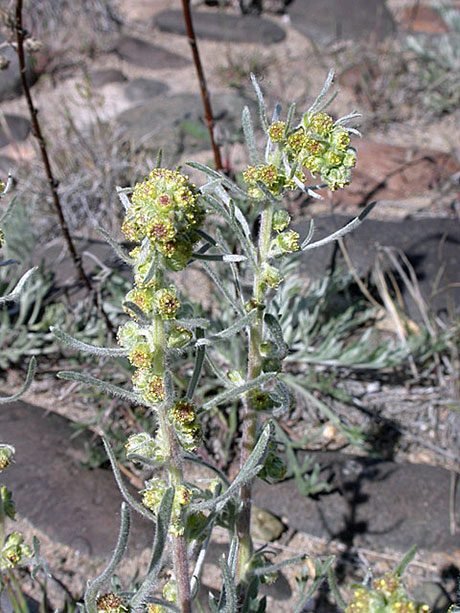
Northern wormwood is a low-growing (to 30 cm), tap-rooted biennial or perennial. The basal leaves are 2.5–10 cm long, 2-3 times divided into mostly linear divisions, and crowded into rosettes. Leaves and stems are covered with fine, silky hairs. The inflorescence is narrow, with relatively large flower heads. The outer flowers are pistillate and fertile, disk flowers are sterile, and the achenes and receptacle are glabrous.
Overview
- Species Common Name Northern wormwood
- Species Scientific Name Artemisia campestris var. wormskioldii
- Federal Listing Status Species of Concern
- State Listing Status Endangered
Ecoregions
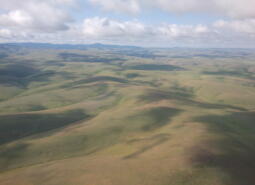
Columbia Plateau
The Columbia Plateau ecoregion was shaped by cataclysmic floods and large deposits of wind-borne silt and sand earlier in its geological history. It is dominated by a rolling landscape of arid lowlands dissected by several important rivers, and extends from the eastern slopes of the Cascades Mountains, south and east from the Columbia River to the Blue Mountains.
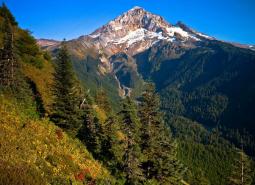
West Cascades
The West Cascades ecoregion extends from east of the Cascade Mountains summit to the foothills of the Willamette, Umpqua, and Rogue Valleys, and spans the entire length of the state of Oregon. It is largely dominated by conifer forests, moving into alpine parklands and dwarf shrubs at higher elevations.