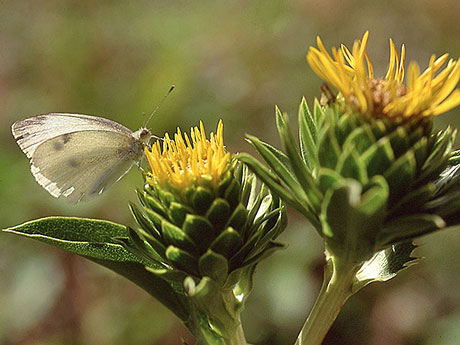
Snake River goldenweed is a perennial species with one to several stems 30-100 cm tall arising from a woody taproot. The plant is essentially glabrous throughout. Basal leaves are tufted, broadly elliptic, usually 15-50 cm long (including the petiole) and 520 cm wide. The numerous cauline leaves are sharply toothed and reduced, becoming sessile above, the lower leaves obovate, the upper ovate with a clasping base. Flowering heads are 2.5-4 cm wide and number 1-12, usually in an open corymbiform arrangement, the involucres approximately 2.5 cm high, with ovate-oblong, palemargined loose bracts. Ray and disk florets are yellow, the ray florets 0.6-1.2 cm long and numbering 17-50, the disk corollas approximately 1.5 cm long, disk florets numbering 80-100 or more. The achenes are elongate with 40-60 rigid, unequal brownish pappus bristles.
Overview
- Species Common Name Snake River goldenweed
- Species Scientific Name Pyrrocoma radiata
- State Listing Status Endangered
Ecoregions
Blue Mountains
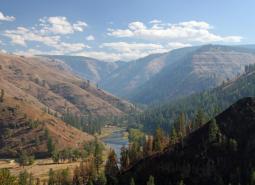
Located in NE Oregon, the Blue Mountains ecoregion is the largest ecoregion in the state. It provides a diverse complex of mountain ranges, valleys, and plateaus that extend beyond Oregon into the states of Idaho and Washington.
Northern Basin and Range
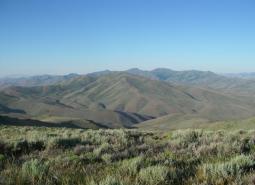
The Northern Basin and Range ecoregion covers the very large southeastern portion of the state, from Burns south to the Nevada border and from the Christmas Valley east to Idaho. It is largely a high elevation desert-like area dominated by sagebrush communities and habitats.