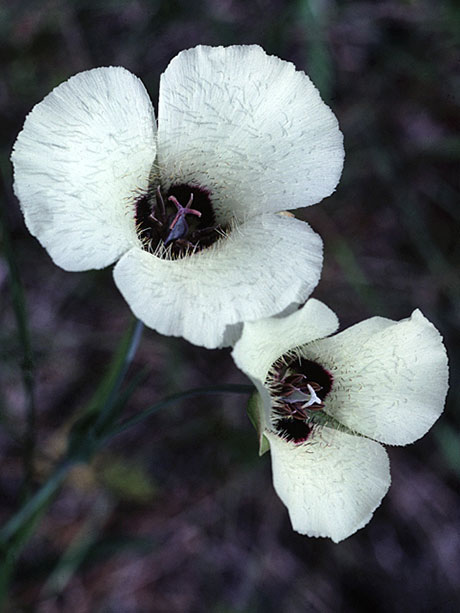
Umpqua mariposa lily is a bulbous perennial, 2-3 dm tall with a basal leaf averaging 32 cm in length. Like the closely related C. howellii, C. umpquaensis has hairs in parallel rows along the veins on the underside of the leaf. The one to several broadly cup-shaped flowers are 5.3-10.5 cm in diameter, hairy, and white to cream colored with a dark purple or black petal spot. Capsules are between 3 and 5.4 cm long and become pendant shortly after the flowers senesce.
Overview
- Species Common Name Umpqua mariposa lily
- Species Scientific Name Calochortus umpquaensis
- State Listing Status Endangered
Ecoregions
Klamath Mountains
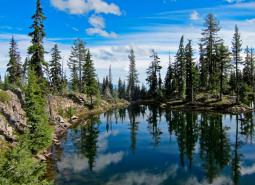
The Klamath Mountains ecoregion covers much of southwestern Oregon, including the Klamath Mountains, Siskiyou Mountains, the interior valleys and foothills between these and the Cascade Range, and the Rogue and Umpqua river valleys. Several popular and scenic rivers run through the ecoregion, including the Umpqua, Rogue, Illinois, and Applegate rivers. Historically, this ecoregion is known …

West Cascades
The West Cascades ecoregion extends from east of the Cascade Mountains summit to the foothills of the Willamette, Umpqua, and Rogue Valleys, and spans the entire length of the state of Oregon. It is largely dominated by conifer forests, moving into alpine parklands and dwarf shrubs at higher elevations.