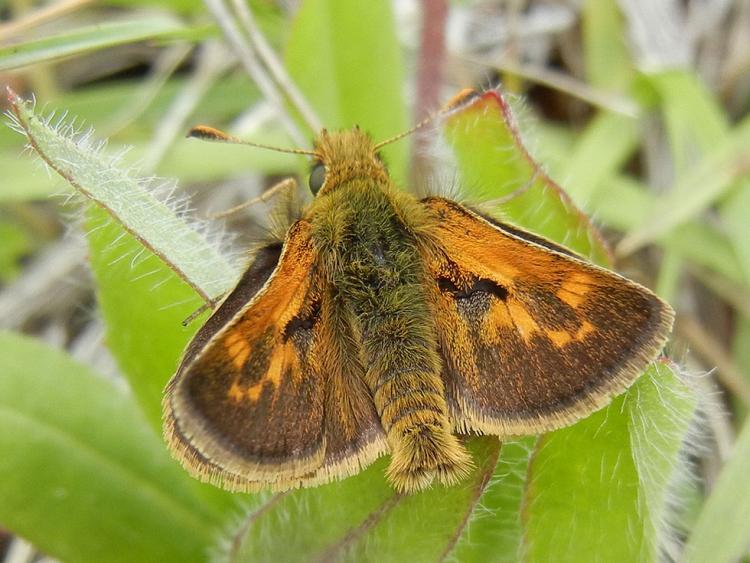
The Mardon skipper is a small (20-24mm; <1 in), tawny-orange butterfly with a stout, hairy body. The upper surface of the forewings and hindwings is orange with broad dark borders, and underwings have a distinctive discal band pattern of light yellow to white rectangular spots. Males are smaller than females and have a small, dark brown, slender and branched streak (stigma) on the upper surface of the forewing. Females have a more distinct ventral hindwing pattern.
Mardon skippers inhabit short, open grasslands or meadows. In the southern Oregon Cascades, Mardon skippers occupy mid-elevation grasslands that may include some type of water feature (i.e. spring, riparian, or wet meadow habitat), though they are also documented from dry grasslands. They are commonly associated with Idaho fescue and California oatgrass.
In coastal northern California and southern Oregon, Mardon skippers are found in grasslands in the fog belt, within 10 miles of the ocean, often on serpentine soils. Larvae feed on native fescue (grass) and adults nectar on clovers.
Limiting factors
This species is naturally rare with disjunct populations. Loss of grassland habitat and degradation of remaining grasslands by invasive plants are harmful to mardon skippers. Populations appear to be declining, are highly restricted, and face additional threats from drying meadows and increasing off-highway vehicle use.
Data gaps
Evaluate the effects of invasive plant control on mardon skippers. Assess distribution. Obtain annual population estimates and document trends. Document nectaring behavior and identify climate-resilient nectar resources.
Conservation actions
Maintain and restore meadow habitat, focusing on providing preferred host and nectar species. Continue ongoing habitat restoration and monitoring efforts. Remove invasive vegetation and reduce woody succession. Limit recreational activity at occupied sites. Monitor known populations.