H. hertleini is a medium sized snail with a thin and delicate shell. The shell is globose or depressed with a conic or low spire. The shell color is pale golden-brown with a narrow darker band, generally brown or reddish, located well above the periphery. The shell has 5 to 5.5 whorls increasing in size regularly and fairly rapidly, with a capacious body whorl. The shell diameter is generally 18 to 23 mm wide with a height that is roughly 70% or more of the diameter.
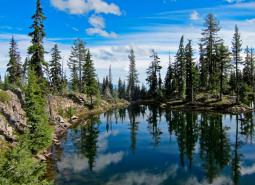
The Oregon shoulderband inhabits rocky areas, including talus deposits, and woody debris within moist, humid, forest habitats. These areas are often adjacent to habitat with seasonal herbaceous vegetation including substantial grass. This species requires permanent ground cover, including talus, rock fissures, or woody debris, and sufficient moisture. Leaf litter and loose soil are also necessary for egg laying. During the summer and winter, H. hertleini retreat to stable accumulations of rocks, such as talus deposits and rocky outcrops, where they become dormant for the season.
Limiting factors
The main threat to this species is habitat loss and fragmentation. Activities that likely impact this species include road development, mining, quarry development, timber harvest, fire and fire management, herbicide use, and recreation development. Disturbance to microhabitats (i.e., talus) and disturbance that reduces coarse woody debris, shading, or other refugia can be harmful.
Data gaps
Determine habitat requirements. Describe life history traits and population dynamics. Assess distribution and determine species range. Obtain current population size and trend data.
Conservation actions
Maintain sufficient levels of woody debris or shrub shading. Maintain undisturbed talus and rocky slopes with sufficient moisture and cool temperatures at occupied sites. Ensure adjacent areas provide adequate food sources including seasonal herbaceous vegetation. Monitor known populations and survey suitable habitat for new populations.
Key reference or plan
Martin, M. 2022. Interagency Special Status/Sensitive Species Program (ISSSSP) Species Fact Sheet: Helminthoglypta hertleini. USDA Forest Service Region 6 and USDI Bureau of Land Management Oregon State Office. 19 pp.