P. californica has a shell that is moderately high, conical, and perforate, with 6-7 deeply and evenly convex whorls; it is 4 mm in length, the aperture is thin, definitely adnate; the umbilicus is open; the shell is rather thin with a chestnut brown color.
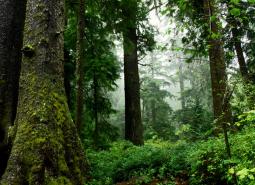
Pacific walkers are semi-aquatic snails that inhabit riparian areas. They are typically found among wet vegetation along freshwater sources. They are associated with springs and seeps, with some occurring in moist habitat near small streams, in forested habitats. This species may be limited to habitats with carbonate or karst features and habitats with low acidity.
Limiting factors
This coastal species has a very restricted distribution. Habitat loss and habitat alteration are likely primary threats to P. californica. Any activity or natural event that has the possibility to alter springs and seeps, including affects to water quantity (e.g., from groundwater withdrawal) and water quality (e.g., dissolved oxygen, pH, temperature, sedimentation, pollution), as well as activities that alter the terrestrial habitat surrounding the springs where this species occurs can be considered a threat to this species.
Data gaps
Determine species-specific habitat requirements and life history traits. Assess the tolerance range of this species to environmental change. Document species range. Collect current population status and trend data.
Conservation actions
Protect known sites of occurrence. Monitor known populations and habitats. Survey suitable habitat for new populations.
Key reference or plan
Blackburn, M., R. Hatfield, S. Foltz Jordan, and T. Stone. 2021. Interagency Special Status/Sensitive Species Program (ISSSSP) Species Fact Sheet: Pomatiopsis californica. USDA Forest Service Region 6 and USDI Bureau of Land Management Oregon State Office. 28pp.