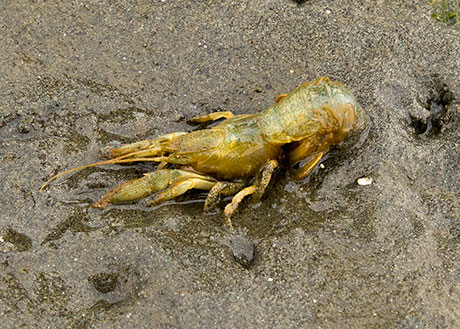
Blue mud shrimp are large (up to 11 cm), burrowing shrimp that have an extended broad abdomen and well-developed tail fan, a hairy rostrum with three teeth, and chelipeds that are nearly equal in size. Blue mud shrimp inhabit permanent burrows excavated in mudflats low in the intertidal zone, and the burrows typically have multiple openings and extend deep (> 1m) underground. Adult shrimp use their pleopods to pump seawater through the burrows where they capture and consume detritus. Bioturbation and burrowing by the mud shrimp result in increased flux of bioactive materials through the intertidal sediments. Adult and juvenile mud shrimp are preyed upon by Pacific staghorn sculpin (Leptocottus armatus) and may be an important prey item for other fishes. The pelagic larvae develop for an extended period at sea, and then preferentially settle back into areas occupied by adult shrimp and active burrows. Large numbers of the adults are infested with a non-indigenous parasitic isopod (Griffen’s isopod; Orthione griffenis) which castrates the host and greatly reduces their capacity to reproduce. The biogeographic range extends from Valdez (AK) to Morro Bay (CA), and populations have experienced local extinction and decline throughout much of their range.
Overview
- Species Common Name Blue mud shrimp
- Species Scientific Name Upogebia pugettensis