Background
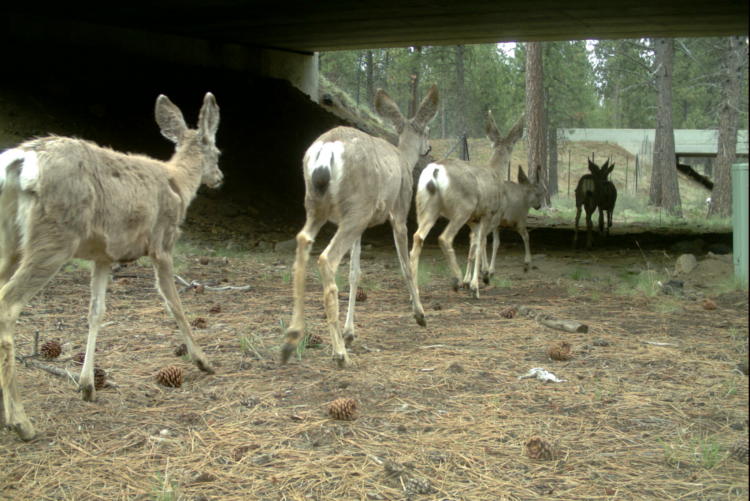
Animal movement is crucial for maintaining healthy populations and ecosystems. Land use changes and energy and water development, including residential and commercial development, conversion of natural habitat for crop and livestock production, resource extraction from activities like logging and mining, transmission lines, power lines and pipelines, water diversions and damming, and transportation infrastructure can all impede fish and wildlife movement. The direct result can be injury or mortality to individuals and biodiversity loss. The indirect result can be fragmentation of fish and wildlife habitat, putting populations at risk and increasing stress on ecosystems and ecosystem services.
Acknowledging the movement needs of species, fish and wildlife managers are working with land managers and the public to provide connectivity for fish and wildlife habitats across the landscape, on public and private lands, roadways, and waterways, to allow for safe passage of animals. Providing habitat connectivity is a primary management strategy to maintain species and ecosystem services under a changing climate.
Aquatic Passage
CMP Direct Threats 1, 4.1, 4.3, 7.2
Habitat connectivity is a key component of many facets of terrestrial and aquatic resource management. For Oregon’s native migratory fish (NMF), aquatic habitat connectivity is important and contributes to stable and healthy populations. Without habitat access and connectivity, NMF such as salmon, trout, suckers, mountain whitefish, lampreys, sturgeons, and many others become fragmented across the landscape. This can cause population isolation, increased exposure to disturbance, diminished reproductive potential, and often results in declining population size and reduced recovery capacity. Unimpeded passage provides fish access to critical areas like spawning, rearing, and foraging habitats, which are important for maintaining, recovering, and conserving populations. Obstructions to fish passage can cause migration delays and limit access to habitat, which can result in genetic isolation, thereby making fish more vulnerable to disturbance and mortality. Currently, thousands of miles of historically accessible stream habitat in Oregon are inaccessible to NMF because of manmade, artificial obstructions to fish passage.
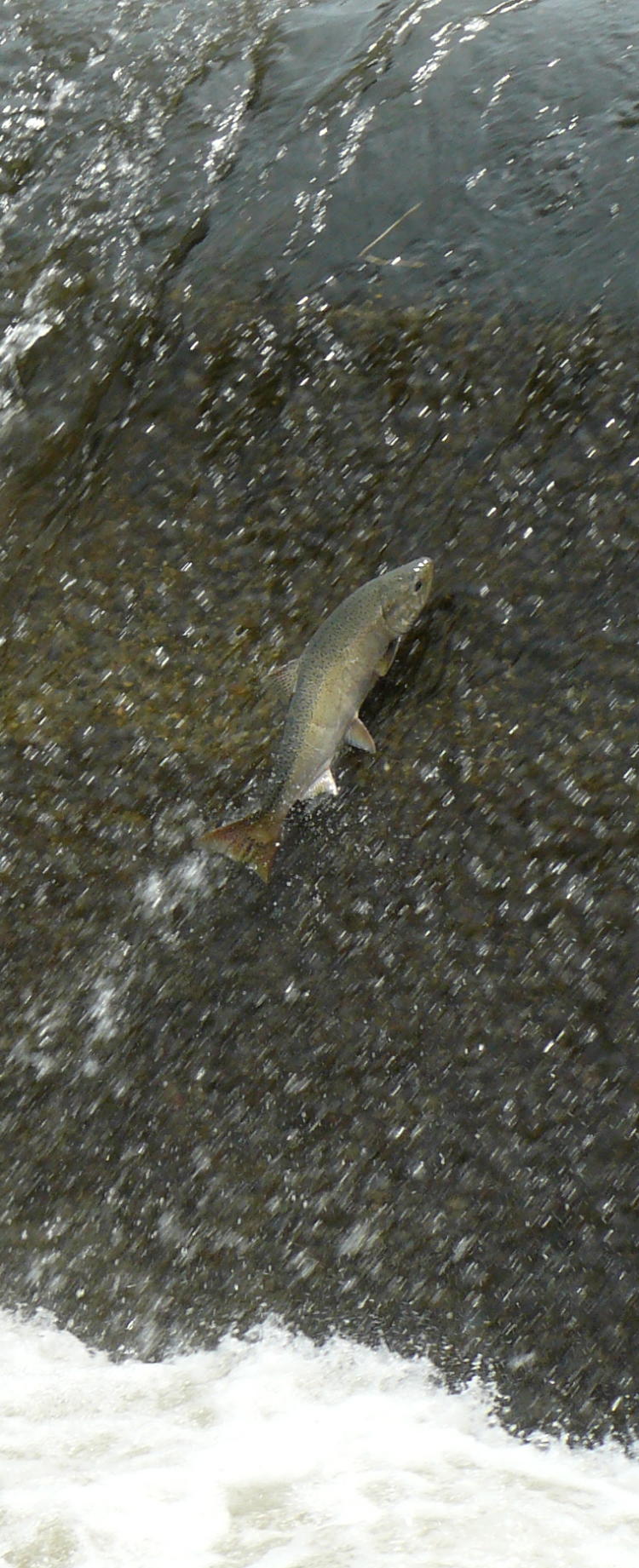
Oregon’s earliest fish passage laws were in place prior to statehood, but despite these laws, fish passage barriers are prevalent throughout the Oregon landscape. Over time, access to NMF habitats has been blocked or impaired by the construction of impassable culverts, dams, tide gates, dikes, bridges, and other man-made infrastructure. Many of these physical barriers alter natural flow regimes, create drastic changes in water surface elevations, and interrupt the natural transport of sediment and wood, further contributing to habitat degradation or loss. Additionally, water withdrawals and over-allocation can reduce water availability enough that fish passage is seasonally impaired, with flows so low that fish cannot migrate. Degraded water quality and warm water temperature may also preclude or delay fish passage and act as environmental barriers to species survival. Improperly sized transportation infrastructure (culverts, bridges, and fords) can impair passage of NMF as well as amphibians, reptiles, small and large mammals, and other terrestrial species, forcing wildlife to cross over roads where they are vulnerable to vehicles and predators. Providing passage at artificial obstructions is vital to maintaining, conserving, and recovering Oregon’s NMF.
Oregon’s fish passage policy (Oregon Revised Statutes 509.580 – 910 and corresponding Oregon Administrative Rules 635-412-0001 – 0065), administered by ODFW, require passage at all artificial obstructions where NMF are or were historically present and prior to when a “trigger” event (e.g., abandonment, major replacement, construction, or fundamental change in permit status) occurs. ODFW works with owners and operators of artificial obstructions in several ways to ensure adequate passage of NMF. Recognizing the unique nature of migratory fish in the Pacific Northwest, many other agencies and groups are also interested in assisting with providing fish passage.
Similar to fish passage, in 1991, the Oregon Legislature established the state’s first fish screening statutes (ORS 498.306) and a pilot cost-share program administered by ODFW to assist with construction, installation, and maintenance of fish screening and bypass devices at eligible water diversions. Fish screening and bypass devices can be placed at water diversions (e.g., irrigation systems, hydropower systems) to prevent fish from entering irrigation ditches, diversions, and hydroelectric turbines. ODFW’s Fish Screens Program is an important part of the Oregon Plan for Salmon and Watersheds, a voluntary plan aimed at the protection, restoration, and recovery of NMF, such as salmon and steelhead. Screens and bypass systems that align with current state and federal screening requirements ensure fish stay within natural waterways and are not harmed by diversion structures.
Fish passage and screening restoration are key to helping NMF persist and adapt to changing weather and hydrologic conditions. Addressing fish passage at artificial obstructions and providing fish screening at unscreened water diversion structures is critical to ensure all life stages of NMF and other aquatic and terrestrial species are able to move up and downstream and access essential habitat.
Aquatic Passage: Goals and Actions
Goal 1: Provide conditions suitable for natural movement of fish and aquatic animals throughout their native range.
Action 1.1. Continue work with OWEB, ODOT, ODF, OWRD, USFS, BLM, counties, local municipalities, irrigation districts, tribes, and other partners to inventory, prioritize, and provide fish passage at artificial obstructions, enhancing current work done by the ODFW Fish Passage Task Force to expand implementation of fish passage priorities.
Recently developed methods for prioritization of fish passage that incorporate considerations about transportation infrastructure and climate may help agencies working on these issues in the coming decade. Gathering comprehensive information is an important and ongoing task. Beginning in 2007, the ODFW Natural Resource Information Management Program (NRIMP) began the inventory data management process by creating the Oregon Fish Passage Barrier Data Standard (OFPBDS). This standard established the type of information (content), and the format of those data (structure) needed at every artificial obstruction site to accurately inventory and prioritize fish passage obstructions.
After creating OFPBDS, NRIMP began compiling barrier inventory data from multiple sources throughout the state. Data were obtained from local, state, and federal agencies, watershed councils, tribes, counties, and other entities that possessed fish passage barrier data. These data were compiled, standardized to match OFPBDS requirements, and loaded into a GIS database. This database represents the most thorough statewide inventory of artificial obstructions to date and includes information on the number and type of artificial obstructions in the state, as well as the level of fish passage at most barriers, and the physical characteristics of each obstruction. The spatial results of the OFPBDS can be viewed within the ODFW Compass mapping tool.
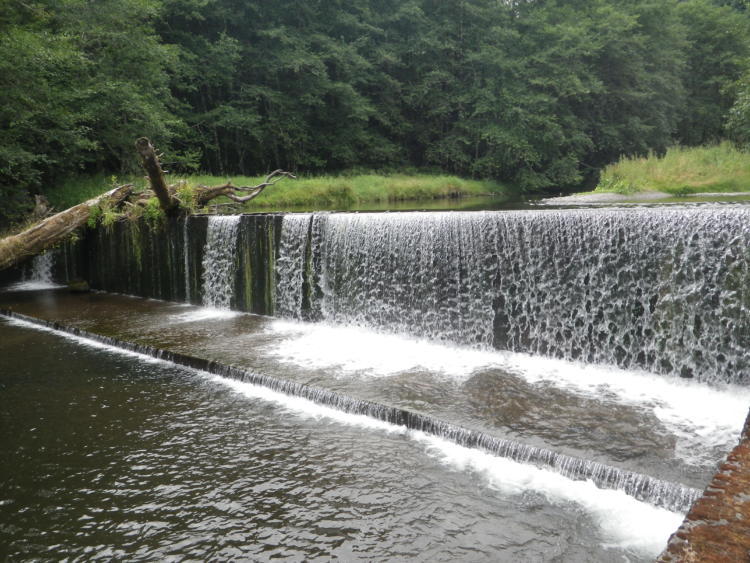
Ground-truthing is still necessary to verify the current conditions and severity of individual passage barriers. Artificial obstructions to fish passage are structures, such as culverts, dams, tide gates, and levees, that are placed in fish-bearing streams that preclude or prevent the passage of NMF. In 2015, there were approximately 27,800 documented artificial obstructions to fish passage in Oregon. About 17 percent of these barriers were documented as providing adequate fish passage, 21 percent were complete barriers to fish passage (i.e., block all species movement), 19 percent were partial barriers, and 43 percent had a “status unknown” passage condition. Of the 27,800 artificial obstructions, culverts made up the vast majority—over 23,000 (83 percent) of those inventoried—while dams are the next most common barrier type, representing over 2,500 (9 percent) of those inventoried.
ODFW developed, and the Oregon Fish and Wildlife Commission approved, a systematic method to prioritize artificial obstructions based on their value to NMF. The 2025 Statewide Priority Fish Passage Barrier list identifies the most critical barriers to fish passage in the state (based on the quality and quantity of habitat blocked, current level of passage, number of species in need of passage, and other factors) and contains over 600 high priority fish passage barriers. These statewide priority artificial obstructions include dams, culverts, tide gates, fords, bridges, and other obstructions. Dams make up the majority of the “top” priorities because they generally block large segments of habitat on larger river systems. The priority barriers have been organized into groups, with each group representing barriers of similar priority ranking.
All barriers on the Statewide Priority Fish Passage Barrier list are high priorities for ODFW. ODFW will continue to work with local, state, and federal partners to remove or provide fish passage at high priority barriers. Per state fish passage law, no new artificial obstructions can be constructed without fish passage, including artificial obstructions used for restoration. ODFW makes recommendations to permitting agencies through conditions on new water right permits, when applicable, to implement Oregon’s fish passage law. ODFW’s Fish Passage Program will continue to implement fish passage laws when trigger actions (e.g., new construction, major replacement, abandonment, fundamental change in permit status) occur at artificial obstructions and will continue to encourage other voluntary actions that provide fish passage.
Action 1.2. Maintain and restore habitat to ensure aquatic connectivity in priority areas such as Conservation Opportunity Areas and areas with high road density such as urban centers.
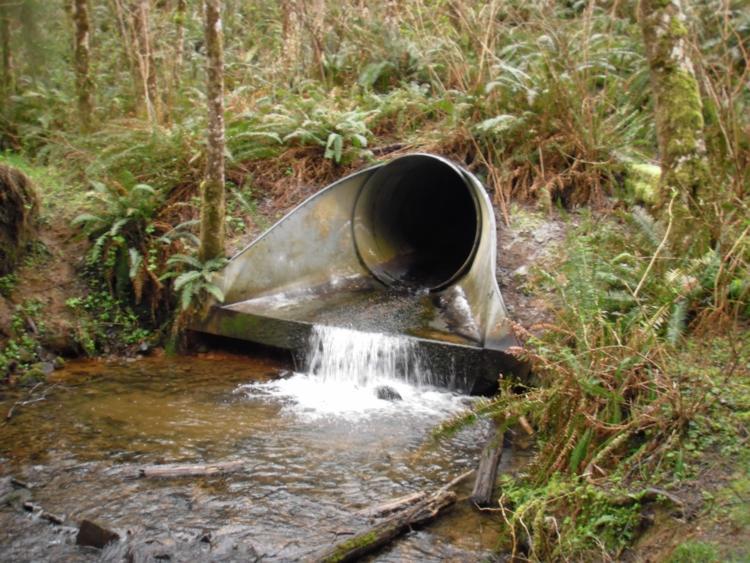
Road-stream crossing structures include culverts and bridges that can impact fish passage and aquatic ecosystems. Many culverts have been placed with the primary goal of moving water past the structure efficiently without considering fish and wildlife access through the culvert. Minimum streamflow is necessary for fish and other aquatic life to migrate through a waterway. Prioritize protecting or restoring the minimum flow necessary for fish passage. Poor water quality can also prevent fish from surviving in or migrating through an area. Many NMF are sensitive to poor water quality conditions, such as warm instream temperatures, increased fine sediment, low dissolved oxygen levels, or elevated levels of contaminants. Prioritize protecting and restoring water quality and healthy riparian corridors.
Road-stream crossing structures, including habitat improvement projects or mitigation, should be designed and built to maintain natural flow and hydrological regimes and provide a surface or substrate similar to or mimicking natural conditions. This “stream simulation” design goal will ensure the best conditions for passage of both fish and wildlife (including amphibians and aquatic insects). Flow and passage should be maintained through restoration of aquatic habitat connectivity. Prioritize efforts based on benefits to aquatic species and location within priority areas, including Conservation Opportunity Areas and densely-populated urban centers. Interested parties should also consult ODFW District Fish Biologists and the aquatic barriers database to identify high priority habitat for restoration.
In some situations, coordination among responsible parties and interested partners is required to address the effects of obstructions on hydrologic regimes. Coordinating with multiple owners across multiple regulatory levels and jurisdictional boundaries can take time and negotiation to reach an acceptable outcome but is critical to long-term success.
Fish passage structures, such as fishways and culverts, must be carefully designed and constructed to properly function for fish passage. ODFW and the National Marine Fisheries Service have published design criteria for fish passage. ODFW fish passage rules and design criteria can be found here. Agency biologists, consultants, owners and operators of artificial obstructions, and other regulatory entities must be aware of and understand the procedures, criteria, and guidelines to ensure that the best possible fish passage solution and stream function are being provided.
Providing fish passage with a fish ladder or properly sized culvert or bridge is an added expense to the owner or operator of an artificial obstruction. However, there are several financial incentive programs that can be of assistance. ODFW has a cost share grant program that can help with these costs. A tax credit is also available for landowners who install qualifying fish screening and fish passage solutions. Other entities, such as the Oregon Watershed Enhancement Board, also have funds available for high quality fish passage and habitat restoration projects. Identifying additional funding sources and incentivizing voluntary landowner passage and screening would be greatly beneficial.
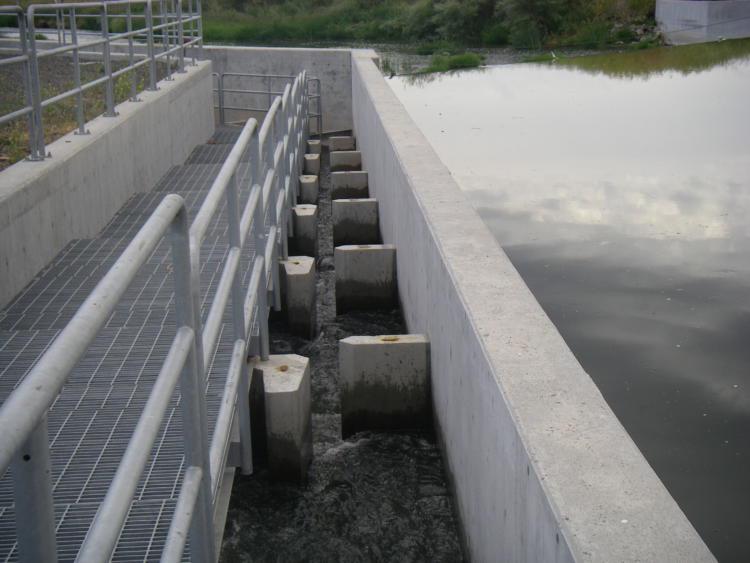
Action 1.3. When planning aquatic passage projects, consider the needs of other aquatic species and terrestrial wildlife in addition to fish.
Many efforts to address aquatic passage have emphasized fish, particularly salmonids, but do not necessarily provide adequate passage for all species of fish and wildlife. Pacific lamprey, for example, have a distinct set of passage needs that are often not met with common fish passage solutions and facilities. Specialized “lamprey ramps” have been used with success to provide adequate upstream passage for lamprey, and these structures are often needed in addition to salmonid fishways. Similarly, small details within a fishway, such as rounded corners, smooth transitions, and multiple flow paths, can often ensure that fish passage provides benefits to a broad array of NMF species. Although there are currently no legal requirements to ensure passage for wildlife, ongoing efforts to replace culverts present opportunities for developing, testing, and implementing methods to maximize benefit for a variety of species. Often, minor modifications to fish passage structures, such as dry benches or shoulders, can greatly increase usability for terrestrial wildlife. Aquatic invertebrates would benefit from making culverts as wide as possible to allow lateral movement of the stream. The embedment of culverts with natural streambed materials provides natural stream-like conditions for both aquatic and terrestrial species passage, including amphibians. In addition, maintenance and restoration of riparian habitat is important to provide wildlife passage adjacent to in-water habitats.
Action 1.4. Continue to screen unscreened priority water diversions to protect fish, using funds from ODFW’s Fish Screening and Passage Cost Sharing Program and working with state and federal funding partners. Implement outreach programs to encourage irrigators to screen intakes, and for construction crews and municipalities to learn best practices for culvert installation.
Irrigation, municipal, industrial, and hydroelectric water diversions can create barriers to movement by diverting fish out of natural waterways, causing fish loss in the millions. Continue to provide fish screens at water diversions to keep fish in their natural streams and lakes. Adequately designed screens can keep emigrating salmon and steelhead juveniles, as well as other resident species, from becoming entrained and eventually killed in irrigation diversions or hydroelectric projects. Continued funding, implementation, coordination, and collaboration with multiple stakeholder groups is important for native fish restoration. Provide outreach and technical assistance for irrigators, construction crews, and municipalities.
Terrestrial Animal Movement
CMP Direct Threats 1, 2, 3, 4, 5.3, 6, 7, 8, 11
All wildlife species need to move, to some extent, to fulfill their needs for survival or complete their life cycles. For some species, this movement may be limited to an area of a few square meters, whereas for others, their movements may span multiple continents. Some species move seasonally, following food resources, moving to areas more suitable for raising young, or avoiding harsh winter weather. Young individuals of many species need to disperse into new habitats to establish their own territories. Wildlife may also need to move to escape disturbance, such as wildfires, flooding, and drought. Human-caused changes to the landscape can affect the ability of wildlife to move across terrestrial landscapes by adding obstacles, impacting species behavior, and increasing habitat fragmentation. Habitat fragmentation can have detrimental impacts on many wildlife species, particularly species with small or declining populations.
Buildings, solar energy facilities, roads, fences, power lines, wind turbines, and other structures can serve as obstacles to species movement. Certain types of land use, like crop production and recreation, can also deter or prevent species movement. Movement is a strong urge in wildlife. Some types of movement, like movement along game trails, riparian corridors, or migration routes, are used over decades or centuries by generations of animals. When a new obstacle is developed in the route, like a roadway or housing development, wildlife may try to find a way through the area rather than avoid it. This can lead to increased mortality for wildlife and can endanger human safety. In human-dominated areas, wildlife are forced to move through a landscape of buildings, lawns, industrial complexes, and agricultural fields. Some wildlife species are not welcome in developed areas, and human-wildlife conflicts result. Barking dogs and free-roaming cats, lights from houses, security lighting, and streetlights, fencing, vehicle traffic, and other features people take for granted can be frightening or even lethal to wildlife.
Some wildlife undertake long-distance migrations and need staging or stopover areas to rest and refuel during travel. Habitat conversion or degradation can impact important staging or stopover sites, thus affecting the animals that depend on them. Power lines, tower guy wires, and wind turbine blades introduced into migratory flyways of birds and bats impose aerial barriers to flight.
Connectivity is the degree to which the landscape facilitates wildlife movement, and it is key for wildlife to be able to adapt to changing conditions. Work intended to enhance wildlife connectivity necessitates consideration of a diversity of species, taxa, life history strategies, and responses to different types of stressors that may act as barriers to movement. How barriers and habitat fragmentation affect wildlife connectivity depends greatly on the species, habitat type, and type of barrier. For example, a two-lane highway may pose a relatively minor barrier to elk but may be impossible for a salamander to cross. A wind energy facility may not impede red fox movement on the ground, but the spinning turbine blades may pose substantial risk to migrating bats.
These issues can be addressed through careful planning and mitigation. Human developments and infrastructure can be designed to avoid crucial movement areas for wildlife. Habitat connectivity can be maintained for wildlife through conservation-based design of interconnected protected areas, maintenance or restoration of habitat corridors within urban areas, development of wildlife crossing structures along roadways, careful siting of renewable energy development and resource extraction efforts, open space conservation, removal of old or unnecessary fencing, and maintenance or restoration of important migratory stopover sites.
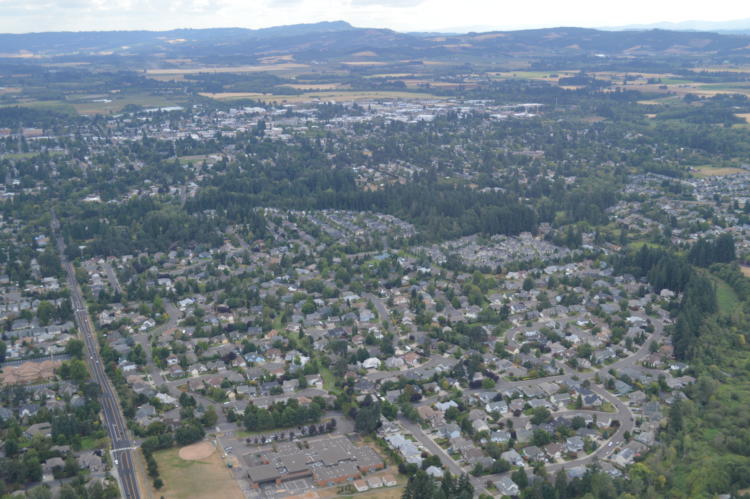
TERRESTRIAL ANIMAL MOVEMENT: Goals and Actions
Goal 2: Provide connectivity of habitat for the broad array of wildlife species throughout Oregon.
Human-caused changes to the landscape may affect connectivity for individual species in a variety of ways, depending on the species’ habitat requirements, mobility, and behavior. Connectivity is species-specific: habitat that facilitates the movement of one species may impede the movement of another, and different species react to barriers to movement in different ways. Maintaining connectivity for wildlife necessitates consideration of a diversity of species and a variety of movement types and must ensure that wildlife can: 1) fulfill their daily, seasonal, and life history needs, including movements between foraging areas, movements to and from sites for breeding and/or rearing young, and migratory movements; 2) disperse into new habitats and territories; 3) maintain genetic interchange between populations; 4) respond to events like wildfires, droughts, and flooding; and 5) adapt to changing climate conditions by moving into new areas to access suitable habitat, sufficient water, and/or tolerable temperatures.
Species with low mobility are at extreme risk of impacts from habitat fragmentation, as they may lack the ability to move away from disturbance. More mobile species may be better able to adapt to habitat fragmentation by dispersing into suitable habitat elsewhere. However, as a result of this greater mobility, these species may also be more likely to come into conflict with humans and human-caused barriers like development and roadways. Accordingly, all of Oregon’s wildlife species are susceptible to impacts to connectivity due to landscape change. When evaluating animal movements, consider all types of movement, including terrestrial, in-stream, aerial, underground, seasonal, migratory, dispersal, and nocturnal movement needs.
When new development is proposed, consider its context within the surrounding landscape. Will it obstruct an important movement area for wildlife? How close is it to other developed areas, and what are the cumulative impacts at the landscape scale? Would a higher-density, clustered development leave more open space available for wildlife movement, or would a lower-density development provide greater permeability for wildlife? Leave habitat intact where possible or provide alternative connecting habitat nearby. Work with community leaders, planners, and agency partners to identify and conserve habitat important for movement, like Priority Wildlife Connectivity Areas, and to fund and implement site-appropriate mitigation measures.
It is necessary to consider a diversity of habitat types across both urban and rural areas. In developed areas, habitat corridors, such as riparian corridors or urban greenways, may be the only parts of the landscape suitable to facilitate wildlife movement. Outside of developed regions, however, wildlife may move more opportunistically, and larger areas of intact habitat that permit diffuse movement are just as important to maintaining long-term wildlife connectivity.
Action 2.1. Promote conditions suitable for habitat connectivity throughout Oregon.
There is no one-size-fits-all approach for successful wildlife connectivity efforts. The types of actions needed to improve and/or protect connectivity for wildlife will vary based on geography, habitat, species presence, level of disturbance, land ownership, and local, county, state, and federal policies. Permanently protecting habitat through land acquisition, execution of conservation easements, specific designation within policy, or long-term management to promote wildlife use is the principal action needed to secure habitat connectivity for wildlife.
In many areas of the state, habitat loss and modification due to development, agriculture, resource extraction, and the spread of invasive species impact connectivity for wildlife. While some species may still use these habitats to move, marginal-quality habitats affect the long-term value of the landscape for facilitating species movement, may hinder the ability of wildlife to adapt to changing conditions, and may be more susceptible to catastrophic events such as wildfire and the spread of disease. In these areas, habitat connectivity may be restored by removing and preventing reestablishment of invasive species, managing landscapes to promote resiliency to wildfire, and promoting native ecological communities.
Wherever possible, remove or modify barriers to enhance connectivity. While habitat use may be species-specific, physical impediments to movement, such as fences, dams, Jersey barriers, and riprap, impede connectivity for many species and can carry a risk of injury or mortality for species attempting to cross. Physical barriers can also be created by invasive vegetation. Invasive vegetation may alter habitat conditions needed to facilitate movement of native species, changing habitat structure or out-competing native vegetation used by native species for food or shelter. Invasive wildlife may also impede connectivity of native species, competing with native species for limited resources or preying on native species and/or their eggs or young.
In addition to actions taken to protect, enhance, and restore habitat, wildlife habitat connectivity should be considered in advance of any land use, development, resource extraction, energy, or transportation project or planning process. Incorporate information on wildlife habitat connectivity and key life history needs, consider the diversity of species present that may potentially be affected, and recognize the impacts that any land use change and habitat fragmentation may have on habitat quality and landscape permeability. Avoid habitat development or disturbance within critical movement areas, such as Priority Wildlife Connectivity Areas, urban greenways, riparian corridors, and migratory pathways.
Priority Wildlife Connectivity Areas have been identified for Oregon, highlighting the parts of the landscape with the highest overall value for facilitating wildlife movement. Priority Wildlife Connectivity Areas include both areas of good-quality habitat within intact, relatively undisturbed parts of the landscape, as well as the best remaining marginal habitat to help wildlife navigate through developed or degraded areas. Each part of the interconnected network of Priority Wildlife Connectivity Areas contains information to assist in determining what types of actions are needed within a given area to most benefit wildlife movement and connectivity in Oregon. Guidance is available for using Priority Wildlife Connectivity Areas and considering wildlife habitat connectivity in the planning and implementation of development, resource extraction, habitat management, and other initiatives that may impact wildlife movement via the Oregon Wildlife Corridor Action Plan.
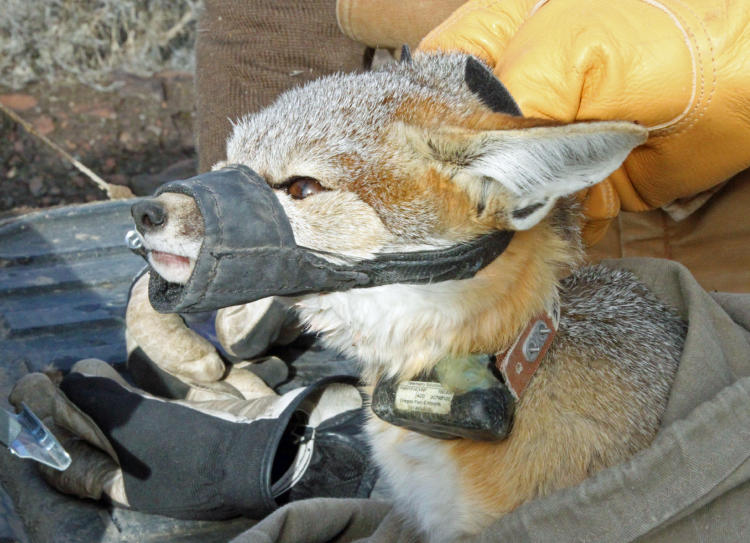
Action 2.2. Enhance wildlife habitat and connectivity with consideration of climate change impacts.
Fluctuations in climate can impact the quality and quantity of wildlife habitat for some species, resulting in potential shifts in species ranges. The range for one species may decline or become fragmented, while expanding for another. Species that can move to more climatically suitable locations will do so by migrating or shifting their ranges as the climate changes. Populations that fail to move or adapt risk extirpation or extinction.
Connected landscapes are a critical component of climate resiliency. While habitat loss and fragmentation are the primary drivers of biodiversity loss, climate change compounds and intensifies the effects of these issues. Maintaining and restoring landscape connectivity is the most frequently proposed conservation strategy to aid wildlife in adapting to changing climates, enhancing resilience for wildlife populations by enabling them to move with shifting climates and adapt to events like wildfire, flooding, and droughts. Connectivity provides several benefits over alternative adaptation approaches, as it allows wildlife to respond to changes when needed and at their own pace. Additionally, providing connectivity for wildlife helps avoid potential issues with the uncertainties around how different species may respond to different climate stressors, such as changes in temperature, moisture, food availability, and water availability.
The ability of wildlife to shift their ranges, respond to changes in temperature and precipitation, and escape rising waters, severe storms, wildfire, and other climate impacts will be directly affected by the extent to which habitats are connected, as well as the number and location of barriers on the landscape, such as buildings, fences, and roadways. Maintaining or enhancing natural landscapes, providing habitat connectivity, and securing climate refugia are primary management strategies to support species viability in response to a fluctuating climate. Management actions intended to account for climate change will need to be continuously evaluated as new information becomes available to help ensure habitat connections and refugia are developed that support both current and future populations.
Additional actions should focus on reducing the effects of climate-related stressors on wildlife to help support movement and migration. Ensure water sources remain available and accessible to wildlife and consider supplemental provisioning of water in arid or drought-prone areas. Remove or modify barriers to movement wherever possible. Promote activities that enhance wildfire resiliency, such as forest restoration and fuels management activities. Provide species with a range of options to adapt to climate change by restoring and expanding areas along a gradient of climates, elevations, and topographic complexities. A landscape-scale network of high quality, interconnected habitats offers an efficient approach to climate adaptation, allowing wildlife to move freely to access resources and tolerable temperatures when needed. A number of maps and tools have been produced to assist with projects and planning efforts to improve climate resiliency in Oregon.
Action 2.3. Work with ODOT, counties, cities, tribes, and other partners to identify and address key areas of wildlife mortality on roadways and consider animal movements when planning for new roads or modifications to existing roads.
Roadways and vehicular traffic are significant contributors to fragmentation of habitat and impacts to wildlife connectivity. Most species face at least some level of mortality risk associated with roadways, and many species display behavioral avoidance of the activity, noise, lights, vibrations, and smells associated with roads. Nearly all roads have some potential for transportation mitigation efforts to reduce wildlife injury and mortality. However, some roads pose a greater risk to wildlife connectivity than others, based on factors such as road width, traffic volumes, traffic speed, and proximity of the road to higher-quality habitats.

Wildlife movement should be considered during the planning phase of new roads or projects to modify existing roads. Engage in long-term planning to ensure wildlife passage needs are documented throughout the state for the full diversity of the state’s wildlife species. Avoid high quality wildlife habitat whenever possible and incorporate consideration for wildlife passage in the project design and goals for project outcomes. Incorporate wildlife passage structures and associated directional walls or fencing, with structural elements and features designed to benefit a wide diversity of species. Consider dry land passage for wildlife when removing or replacing culverts under roadways to benefit fish passage—relatively minor modifications to designs for fish passage can greatly improve passage for terrestrial wildlife. Additionally, standalone projects for constructing wildlife crossing structures should be considered where highways intersect with Priority Wildlife Connectivity Areas. Engage in pre- and post-construction monitoring of wildlife crossing structures to evaluate use and effectiveness over time. Ensure crossing structures and associated features such as fencing are maintained and repaired as necessary.
Continue collecting data to better identify high-priority sites for mitigation. Priority Wildlife Connectivity Areas, telemetry data from wildlife movement studies, carcass data collected by road maintenance crews and public salvage, Traditional Ecological Knowledge (TEK), and community science data, such as observations recorded through the Roadkills of Oregon project on iNaturalist, can help identify areas where vehicle-related mortalities for wildlife are of high concern. Transportation mitigation may still be beneficial in the absence of any documented roadkill if the traffic volumes, speeds, and/or road width have made the road a complete barrier to species movement. Additional research may be needed to advance understanding of wildlife-transportation corridor conflicts, as well as design approaches, so that preventative, cost-effective solutions can be incorporated into project designs.
Action 2.4. Consider animal movement when planning new energy development and resource extraction activities.
Energy production and resource extraction activities such as logging and mining often have significant impacts on wildlife and wildlife habitat. For example, federal requirements for solar facilities mandate perimeter fencing at a minimum height of six feet, completely blocking movement and habitat access for all but the smallest terrestrial species. Identify optimal locations for siting new projects or facilities, avoiding Priority Wildlife Connectivity Areas and other areas important for wildlife movement and migration. Consider potential impacts on both local species and long-distance migratory species. Integrate information on wildlife connectivity into environmental review and permitting processes. Research and monitor the impacts of energy development and resource extraction on species movement.
Action 2.5. Promote strategies to improve permeability of agricultural areas for wildlife.
Agricultural landscape use, including crop production and livestock grazing, can have varying effects on wildlife movement. Some types of agriculture can provide co-benefits for wildlife, whereas others create risks for human-wildlife conflict. Consider wildlife movement and migration when planning for agricultural production. Mitigation techniques, such as the use of prairie strips between row crops, may help lessen the impacts of crop production on wildlife. Low-intensity and diversified production permit greater movement of wildlife. Wildlife-friendly fencing allows for livestock containment while lessening the risk of injury or mortality to wildlife from fence entanglement, making fenced areas more permeable to wildlife movement. Provide financial incentives for agricultural management activities that benefit species movement, such as the Wildlife Habitat Conservation and Management Program, Riparian Lands Tax Incentive Program, or Oregon Farm Bill Programs.
Action 2.6. Promote strategies to increase permeability of urban landscapes for wildlife.
While urban landscapes are often highly modified, some wildlife species have adapted to use these spaces, and many species will take advantage of remnant natural habitats in areas like riparian corridors, parks, open spaces, greenways, and preserves. Many of these high value stepping stones across urban areas have been identified within Priority Wildlife Connectivity Areas. Many actions can be taken to benefit wildlife movement within developed areas. Examples include connecting urban natural areas and riparian corridors, supporting and promoting the use of green infrastructure in urban planning, reducing noise and light pollution, and reducing direct hazards to wildlife, such as minimizing avian collisions with windows. For more information, see the section on Conservation in Urban and Suburban Areas.
Action 2.7. Promote strategies to reduce the impacts of outdoor recreation on wildlife movement and habitat permeability.
Human recreation in natural environments can affect the willingness of wildlife to use habitat, even in high-quality habitat areas. Activities like hiking, biking, foraging, hunting, fishing, camping, skiing, and off-road vehicle use can create sensory stressors for wildlife, with sound, light, and unusual smells that may deter species from moving through certain areas. Human recreation may contribute to destruction of sensitive vegetation, harassment of wildlife from off-leash pets, spread of invasive species, and contamination of areas with refuse. Many species will avoid areas near trails, campgrounds, and access roads when humans are present. Recreation management can help mitigate these impacts, balancing the need for human access to natural spaces with wildlife habitat needs. Institute road and/or area closures to protect species during sensitive times of year and decommission roads when possible. In high-use regions, establish permitted entry systems to decrease recreational pressure. Restrict off-road vehicle use, including motorized vehicles, snowmobiles, electric vehicles, and bicycles in priority areas. Limit recreation activities near wildlife crossing structures. Explore additional legal and funding avenues to increase law enforcement of travel management plans and motorized vehicle restrictions. Consider Priority Wildlife Connectivity Areas in the development of long-term management plans for public lands. Continue to research the impacts of outdoor recreation on wildlife behavior, movement, and fitness.
Action 2.8. Identify, maintain, and restore important stopover sites for migratory wildlife.
Not all species that rely on habitat within Oregon are year-round residents; many reside outside the state and visit Oregon while traveling elsewhere to breed or overwinter. Species on long-distance migrations may use habitats within Oregon infrequently, only relying on stopover sites to rest and refuel, but these areas are as essential to wildlife survival as the territories they occupy for longer periods. To fully address wildlife connectivity, connectivity planning efforts within the state must consider the habitat needs of these long-distance migratory species, such as birds, monarch butterflies, and bats. Impacts to habitat used as migratory stopovers can contribute to population declines of species that spend most of the year beyond Oregon’s borders.
Use existing information on the location and value of known stopover sites when planning for new development. Many sites, such as wetlands and mudflats, are in lowland areas which are often targeted for development. Some areas, such as agricultural fields, can be important for migrating birds, especially shorebirds. Work with partners to maintain and restore priority sites, such as The National Audubon Society’s Important Bird Areas or important shorebird areas. Look for ways to avoid or minimize impacts on important sites. If impacts are unavoidable, mitigate impacts by providing alternative sites nearby and minimize disturbance during critical migration periods, such as spring and fall. Seek opportunities to work with landowners to provide and enhance habitat for migrating wildlife. Engage in cross-boundary partnerships to help promote conservation of wildlife habitat both within and outside of Oregon to benefit migratory species.
Action 2.9. Continue to collect terrestrial wildlife movement data and refine maps and models to better understand wildlife habitat permeability and connectivity.
Two types of information are crucial to understanding wildlife movement and habitat connectivity: (1) documented wildlife occurrence, including wildlife observation data as well as fine-scale data tracking movement pathways of individual animals, and (2) geospatial maps and models for vegetation, topography, habitat structural characteristics, barriers, and other aspects of the landscape that might influence species movement and habitat use. Both empirical observations and modeled data are useful in mapping landscape permeability and connectivity for wildlife. Information should be made available to planning organizations and the public to facilitate conservation of habitat.
Geospatial data required to accurately depict habitat quality for wildlife are often inadequate or nonexistent, and many of Oregon’s wildlife species have significant data gaps, both in occurrence data identifying species presence on the landscape and in basic understanding of species’ life history processes, such as habitat requirements and drivers of movement, that allow for effective modeling and mapping of species connectivity. Some features on the landscape that might influence movement have not been mapped (e.g., noise attenuation, light pollution), have been incompletely mapped (e.g., fences, solar facility footprints, logging access roads, fire severity, diversion channels, trails, soil types), or have not been mapped at a fine enough resolution (e.g., talus, colluvium, grassland cover/types, forb cover, stream morphology/flow/depth/substrate) to adequately inform understanding of wildlife movement and habitat connectivity. Additionally, the scale of many existing geospatial data layers does not capture all relevant landscape features that might influence wildlife movement, particularly for smaller-bodied and/or less-mobile species.
Engage in research to verify species habitat use and requirements, including identification of any significant impediments to movement. Prioritize research on under-studied species, particularly Species of Greatest Information Need and Species of Greatest Conservation Need. Many species lack sufficient occurrence data for evaluation of habitat connectivity, particularly small mammals, reptiles, and invertebrates. Collect additional wildlife occurrence data, placing emphasis on acquiring observation and movement data to help statistically validate connectivity model output. Prioritize development of fine-scale, statewide geospatial habitat maps and models for features important to wildlife connectivity, including vegetation classes, shrub cover, and other structural habitat features. Identify and map locations of potential barriers to movement statewide, including fencing, roadways, solar facilities, diversion channels, and trails.
ADDITIONAL RESOURCES
Wildlife Crossing Structure Handbook Design and Evaluation in North America
Facilitating Wildlife Passage through Fish Culverts
USFS Wildlife Crossings Toolkit
Freshwater Connectivity Toolkit
ODFW Fish Passage Requirements
Native American Fish and Wildlife Society Tribal Wildlife Connectivity Working Group
Land Trusts and Wildlife Crossing Structures
Connectivity and Climate Change Toolkit
Making Renewable Energy Wildlife Friendly
Metro Habitat Connectivity Toolkit
IUCN Guidelines for Conserving Connectivity through Ecological Networks and Corridors
Oregon Wildlife Foundation Trail Planner’s Guidebook
Prairie Strips to Enhance Wildlife Movement through Agricultural Areas