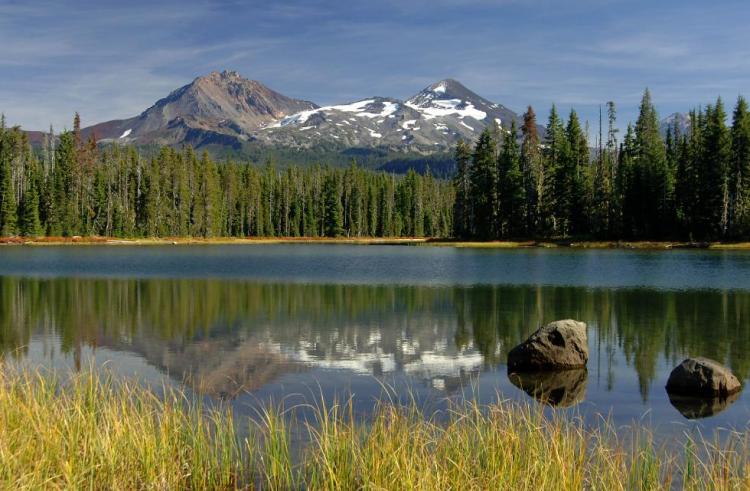
Natural lakes are relatively large bodies of freshwater surrounded by land that were formed through geological processes, such as glacial scouring, tectonic movements, volcanic activity and river meander cutoffs. In Oregon, natural lakes are defined as standing water bodies larger than 20 acres, including some seasonal lakes. Depth is not a reference for characterization of a natural lake.
Limiting Factors and Recommended Approaches
Limiting Factor: Drought
Many lakes in south central and southeast Oregon have been drying naturally since the last glacial period. The effect of this natural drying process is being exacerbated by anthropogenic climate change. Droughts have resulted in a change in precipitation patterns, loss of natural runoff, and an increase in evapotranspiration from natural lakes. Increased demand for out-of-stream water use is associated with prolonged drought, and ground water pumping and management are drying out some natural lakes, especially in south central and southeastern Oregon. These dry or diminished lake beds impact waterfowl, recreation, water availability, water quality, aesthetics and human health. Lake Abert has been affected by many drought-related factors, including reduced water flow into the lake, increased salinity, impacts to food sources for the migrating waterfowl, and decreased habitat and biodiversity. In Crater Lake, scientists have observed an increase in the lake’s temperature, a decrease in snowfall, and impacts on species such as American pika and whitebark pine. Drought limits water availability for recreation, fish and wildlife, and human use and puts stress on the fish and wildlife species that depend on these lake systems.
Recommended Approach
Monitor and measure stream flows, groundwater levels, lake levels, and water use. Implement modern technology to monitor water use from natural lake systems. Where applicable, work toward improving irrigation efficiency and delivery systems to use less water while protecting agricultural interests. Develop and implement groundwater management plans. Develop and adopt instream water rights for high priority natural lakes and upstream river reaches contributing flow. Continue to support collaborative water management solutions to identify, develop, and implement voluntary projects that result in reliable water supplies to natural lakes in late summer, when water quality impacts are the highest. Manage water in the state with the long-term health and sustainability of natural lakes as a goal. Continue to educate Oregonians about conscientious water use.
Limiting Factor: Water Quality
Nonpoint source pollution may contain fertilizers, pesticides, or oil-based contaminants at levels high enough to cause significant lethal or sub-lethal effects in native fish and wildlife. Nonpoint source pollution can enter lakes through runoff from surrounding lands or streams, and from groundwater. In some lakes, use of motorized recreational watercraft can degrade water quality through pollution.
Cyanobacteria blooms have become more common and prevalent in natural lakes and waterways. Cyanobacteria can produce cyanotoxins that can cause serious illness or death in pets, livestock and wildlife. These toxins can also make people sick, and in sensitive individuals, cause a rash or skin, ear and eye irritation. The frequency, extent, and magnitude of harmful algal blooms in waterbodies is a response to a variety of individual and combinations of factors, including changes in water temperature, nutrient loading, and hydrologic conditions within watersheds.
During wildfires, ash can enter the natural lake and increase heavy metal concentrations in the water. Ash adds nutrients like nitrogen and phosphorus into the ecosystem. Algae feed on these nutrients and the nutrients and algae affect the food chain and the clarity of the lake water.
Recommended Approach
The diffuse, intermittent nature of nonpoint source pollutants make traditional management and control of pollutants very challenging. One of the most effective means of controlling nonpoint source pollutants is through education and regulation of land use and associated land management practices. Minimize use of pesticides and herbicides, and follow pesticide use labels for proper application. Implement Agricultural Water Quality and DEQ Total Maximum Daily Load water quality plans. Plant vegetation around driveways, shorelines and on slopes, so the vegetation can absorb nutrients, filter out pollutants, and trap sediment. Maintain septic tanks with regular pumping and inspection at least every 3-5 years. Pick up pet waste and dispose of it in the trash. Educate recreational users of projected and actual cyanobacterial blooms in natural lakes and waterbodies. When recreating, carefully consider recreational vehicle use and timing of use in sensitive water bodies.
Limiting Factor: Habitat Loss
Habitat loss has occurred in natural lakes from residential housing, shoreline development, energy development, agriculture, and infrastructure development. This results in the loss of natural buffer zones, which are essential for filtering sediments and nutrients, stabilizing shorelines by slowing water flow, reducing erosion, and providing critical habitat for various fish and wildlife species by offering food sources and shelter along lake edges. Water withdrawals (both surface and groundwater), water diversion, and drought can significantly alter the natural flow and levels of lakes, impacting the availability of lake habitats.
Recommended Approach
Provide outreach and education on avoidance and minimization of impacts from development actions. This may include limiting development, including residential housing, road and rail placement along the shoreline of natural lakes to protect fringe wetlands that buffer the lake, or utilizing a raised trail to maintain hydrology. Support managed public access to lakes to promote self-education and advocacy of natural habitats. Limit the footprint of docks and boathouses on natural lakes, follow ODFW Residential Dock Guidelines, or use established public ramps. Protect native, intact habitat along the shoreline. Where possible, remove dikes along the shoreline of natural lakes or modify dike location and structure to restore fringe wetlands along the shoreline of the lake. Restore damaged habitat by re-grading the shoreline to the natural slope, planting native vegetation, controlling erosion with better management of stormwater and culvert replacement. Where natural lakes have been modified with dams, explore options for dam removal and restoration of more natural hydrology of the lake. Minimize future water diversion and water use to protect the water flow into and depth of natural lakes.
Limiting Factor: Invasive species
Invasive species can compete with native species for food and space, spread diseases, and produce toxins. Zebra and quagga mussels are highly invasive and can enter natural lakes from boat hulls, motors, trailers, livewells, and standing water. New Zealand mud snails can hitchhike on watercraft and fishing gear. Some of the Asian carp species degrade natural lakes by outcompeting native fish species, increasing water turbidity, and limiting waterfowl and shorebird production and use. Eurasian watermilfoil spreads through seeds and vegetative fragments. Invasive turtles and frogs can spread naturally or through introduction by a previous pet owner.
Recommended Approach
Provide outreach and education to the public regarding the impacts of invasive and exotic species on natural lake ecosystems. This includes outreach about the requirement to stop at ODFW boat check stations to inspect motorized boats and canoes, kayaks and paddleboards for invasive species (i.e., aquatic zebra or quagga mussels, snails, and aquatic plants) to ensure that the invasive species are not being transported between water bodies. Support programs to prevent carp and other non-native fish (i.e. catfish and non-native trout), bullfrogs, pet turtles, Eurasian milfoil, purple loosestrife and other invasive species from being transported and released into natural lakes. Conduct voluntary monitoring and control efforts.
Limiting Factor: Wildfires
Wildfires can have detrimental impacts on natural lakes and can compromise lake water quality both during active burning and for months and years after the fire is contained. Accidental human caused fires during the fire season can also create severe impacts to the lake and surrounding area. Wildfires and accidental human caused fires remove vegetation that, when intact, helps slow precipitation and hold soil in place, which can lead to increased stormwater runoff and erosion. Runoff and smoke can carry debris, sediment, ash, nutrients and other contaminants into the lakes. Wildfires can also affect air quality and recreation at natural lakes. Forest fires near and at Crater Lake have resulted in such poor air quality and visibility that the Crater Lake National Park has been closed, hikers on the Pacific Crest Trail have been rerouted, and major events have been cancelled.
Recommended Approach
Continue education regarding the impacts of wildfires on natural lakes’ air quality, water quality and recreational opportunities. Encourage the public to follow recreation rules for lakes and the surrounding area (i.e., do not build fires outside of an authorized camping/fire pit or build fires at the lake edge, do not drive vehicle on grass roads or in natural areas during posted fire seasons). Enforce fire bans and increase awareness when they go into effect. Where appropriate, thin forests and manage fuels in high priority areas surrounding lakes.
Limiting Factor: Water Quantity
Water is limited in some parts of the state and is projected to become scarcer under a changing climate and expanded human use. In standing waterbodies, water scarcity can lead to higher concentrations of contaminants, lowering water quality as less fresh water is available to dilute nutrients or pollutants. As water quantity diminishes in lakes and adjacent floodplains, fish are unable to access the shoreline habitat for spawning and access upstream habitat for life cycle requirements and/or to move to more favorable conditions. Groundwater pumping and water diversions for out-of-stream uses occur in every basin and these uses can impair water quality and quantity, aquatic species use, and conditions upstream, within, and downstream of the lakes. Late summer is a time of particular concern regarding water quantity.
Recommended Approach
Maintain, protect, and restore the natural hydrologic cycle for stream flow into lakes. (KCI: Water Quality and Quantity). Develop and adopt instream water rights to increase quality habitat in and along natural lakes. Develop and implement groundwater management plans in the lake basins. Manage water in the state with the long-term health and sustainability of surface and groundwater sources. Continue to educate Oregonians about conscientious water use.