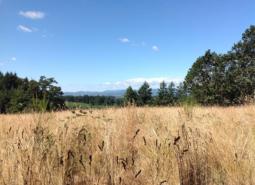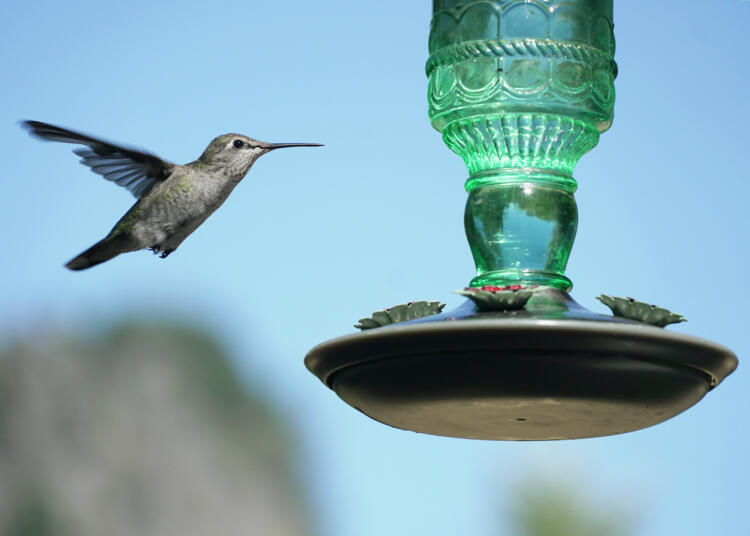
Incentivizing landowners to maintain or restore private forests, ranches, and other working lands is a key strategy to retaining quality habitat across the landscape. In Oregon, there are dozens of voluntary programs that contribute to habitat conservation across the state. Government programs can be funded and administered by the state, federally funded but state-administered, or federally funded and administered. Some local governments, private, and non-profit organizations also offer conservation incentives. Below are examples of state voluntary conservation programs, federal conservation programs, and local government, private, and nonprofit conservation programs.
State Voluntary Conservation Programs
ODFW-administered Programs
The Oregon Department of Fish and Wildlife has a variety of resources to provide to land managers and private landowners to support conservation of fish, wildlife, and their habitats, including technical assistance, grant programs, and tax incentive programs.
ODFW Technical Assistance
ODFW staff are great resources for landowners and managers seeking advice and assistance with voluntary conservation actions to benefit working lands while supporting healthy, resilient fish and wildlife populations. ODFW biologists, including biologists with fish, wildlife, and habitat expertise are located in every ODFW Watershed District, can provide information and guidance for SGCN, Key Conservation Issues, and Key Habitats, and regularly work with landowners and communities directly and help connect them with conservation resources.
ODFW Grant Programs
Oregon Conservation and Recreation Fund
The Oregon Conservation and Recreation Fund (OCRF) is an ODFW-administered grant program that supports projects that implement the Oregon SWAP and create new opportunities for wildlife-associated recreation and education. Projects must have a nexus to Key Habitats, SGCN, and/or the goals and actions in the SWAP and can be implemented on private or public lands. The program seeks to attract a diversity of applicants and provides extra support for underrepresented and underserved communities and organizations. The OCRF Grant Program typically offers grant funding twice per year through competitive solicitation.
Private Forest Accord Grant Program
The Private Forest Accord (PFA) Grant Program supports projects that conserve or restore habitat for aquatic organisms covered by the Oregon Department of Forestry Habitat Conservation Plan. Prospective applicants are encouraged to address the limiting factors and priority conservation actions called for in the various conservation and recovery plans available for the Habitat Conservation Plan’s covered species. Covered species include fish (all native salmon and trout, mountain whitefish, Pacific eulachon/smelt, green sturgeon) and five amphibian species (Columbia torrent salamander, southern torrent salamander, coastal giant salamander, Cope’s giant salamander, and coastal tailed frog). The PFA Grant Program prioritizes funding projects that 1) restore degraded habitat, 2) preserve land and water, and/or 3) reduce or eliminate threats to aquatic habitats. The PFA Grant Program offers grant funding at least once per year through competitive solicitation. The PFA represents a generational shift in forestry operations in Oregon, and implementation of the PFA can help to provide robust and healthy habitat for a broad suite of species. For further information on the PFA in the SWAP, see the Late Successional Mixed Conifer Key Habitat and the Pollution, Land Use Changes, and Water Quality and Quantity Key Conservation Issues pages.
ODFW Access and Habitat (A&H) Program
The Access and Habitat (A&H) Program was created in 1993 by the Oregon legislature to provide an incentive-based program to improve public hunting access and wildlife habitat on private lands. The program focus is to foster partnerships between landowners and hunters for the benefit of wildlife. This program, administered by ODFW and 100% hunter-funded, provides direct funding to improve wildlife habitat, increase public hunting access to private lands, and/or solve wildlife damage issues. Projects can be implemented on private or public lands. Eligible projects include improvement of vegetation and forage, development of wetland habitat, control of invasive vegetation, development of water sources in arid regions, reclamation of habitat by restrictions on vehicle access, seeding after wildfire, land acquisition, and seasonal road management and hunter access, including access to private lands and access through private lands to otherwise inaccessible public lands. Projects are given high priority if they reduce economic losses to landowners and involve funding commitments or in-kind contributions from other organizations and agencies.
ODFW Restoration and Enhancement (R&E) Program
The Restoration and Enhancement Program is a grant program that provides $2-3 million per year to fishery projects throughout Oregon. It supports increased recreational fishing opportunities and works to improve the commercial salmon fishery. The restoration program focuses on projects to repair and replace fish production equipment and facilities, and on collecting information on physical and biological characteristics of streams, lakes, or estuaries. The enhancement program focuses on projects to increase fish production (either hatchery or natural production), increase recreational or commercial opportunities or access to the fish resources, or improve fish management capabilities. Any public or private nonprofit organization may request funds to implement fish restoration or enhancement projects.
ODFW Fish Screening or Passage Cost Share Grant
Oregon water users may be eligible for an ODFW cost-share incentive program and state tax credit designed to promote the installation of agency-approved fish screening or fish passage devices in water diversions. Funds for fish screening and passage projects are to be used to share costs with applicants.
ODFW Tax Incentive Programs
ODFW Wildlife Habitat Conservation and Management Program (WHCMP)
This program provides property tax benefits and technical assistance to landowners that voluntarily conserve habitat for native wildlife. Participating counties and cities identify farmland, forestland, and/or other significant habitats and ask ODFW to designate these lands as eligible for the program. An interested eligible landowner, whose property is within the boundaries of participating counties or cities and meets both the state criteria identified in OAR 635-430-0027 and the relevant Watershed District criteria listed on the WHCMP website, works with a cooperating agency to draft a wildlife habitat conservation and management plan. ODFW reviews the draft plan for completeness, conservation benefits, and adherence to the state and Watershed District criteria. If approved, the property receives a wildlife habitat special assessment and is assessed for property taxes at a relatively low value, similar to the tax rates that would apply if the land were being farmed or used for commercial forestry. Farming and forestry may continue, as long as these activities are compatible with the fish and wildlife objectives of the management plan. For most landowners, this program allows their property to be used for conservation, and the property shifts from farm or forest special assessment to wildlife habitat special assessment. The program does not provide cost-share, grant, or rental payments to landowners.
ODFW Riparian Lands Tax Incentive Program (RLTIP)
This tax program offers property tax exemption for riparian land up to 100 feet from a stream. Landowners conserve and restore riparian lands to protect the economic and ecological benefits to soil, water, fish, and wildlife. For riparian land to qualify for this program, it must be outside adopted urban growth boundaries and zoned for forest or agricultural use. Landowners within urban growth boundaries may qualify if individual cities choose to participate.
Other State Agency Conservation Programs
ODF and ODA Stewardship Agreement Program
A landowner may enter into a voluntary stewardship agreement with the Oregon Department of Forestry (ODF) and/or the Oregon Department of Agriculture (ODA), whereby they agree to meet and exceed applicable regulatory requirements and to conserve, restore, and improve fish and wildlife habitat or water quality. A stewardship agreement is a voluntary written plan, with authority designated within state statutes, whereby a landowner agrees to meet the natural resource protection standards of the Oregon Forest Practices Act through alternate practices. Stewardship Agreements were authorized by the 2006 Oregon legislature. The legislative change recognized that in a time of dynamic change in scientific information and social values, improvements to fish and wildlife habitat and water quality cannot succeed through laws and government actions alone. The program was developed to enhance what the legislature described as a characteristically Oregonian “spirit of volunteerism and stewardship”. The program provides incentives for landowners who voluntarily meet and exceed regulatory requirements to improve wildlife habitat and water quality. Landowners and the State Forester work collaboratively to create long-term agreements that consider natural resource conservation and routine forest management from a property-wide perspective, rather than at the scale of single projects.
The Small Forestland Investment in Stream Habitat Program (SFISH) is a grant program designed to help small forestland owners implement projects that result in an environmental benefit to fish or mitigate risks to natural resources arising from the construction, operation, or maintenance of forest roads or related activities. The program is administered by the Oregon Department of Forestry (ODF) in consultation with ODFW.
Since 1999, the Oregon Watershed Enhancement Board (OWEB) has provided grants to help Oregonians take care of local streams, rivers, wetlands, and natural areas. Community members and landowners use scientific criteria to decide jointly what needs to be done to conserve and improve rivers and natural habitat in the places where they live. OWEB grants are funded from the Oregon Lottery, federal dollars, state General Fund, and salmon license plate revenue. OWEB’s strategic plan (2024) is intended to provide high-level strategic guidance and direction to help restore and protect Oregon’s watersheds in light of significant driving forces like human use, population growth, urbanization, and climate change, and ensures priorities are aligned with those developed in the SWAP.
A great option for private landowners who want to complete smaller scale restoration projects is the OWEB Small Grants Program. This program is for less complex, on-the-ground restoration projects costing up to $15,000.
For larger projects, OWEB’s regular grant programs include:
- Acquisition grants:
- Engagement
- Monitoring
- Restoration
- Technical Assistance
- Partnerships and Capacity
- Focused Investment Partnerships
In addition to OWEB’s main conservation grants, the Oregon Agricultural Heritage Program (OAHP) is an important, voluntary conservation tool for land owners and managers. The purpose of the OAHP is to increase the economic viability of Oregon’s agricultural operations and economic sector, enhance fish or wildlife habitat, water quality, and other natural resources on Oregon’s working lands, and reduce conversion and fragmentation of Oregon’s working lands. The OAHP helps fund conservation management plans on working lands, conservation covenants or easements to preserve the continued use of working lands for agricultural purposes and for natural resource protection purposes, technical assistance, and succession planning to ensure continued use of working lands for agricultural purposes when land changes ownership. OAHP grants are typically administered through a competitive solicitation process.
OWRD Grants and Incentive Programs
The Oregon Water Resources Department (OWRD) seeks to build partnerships and incentivize Oregonians to pursue integrated and innovative solutions for complex water challenges and an uncertain water future. This work is accomplished through strategic investments, adaptive planning, cooperative partnerships, accessible information, and effective coordination. OWRD has several funding opportunities that allow strategic investments in order to achieve a secure and sustainable water future, addressing instream and out-of-stream needs for all Oregonians and Oregon’s environment, economy, communities, and cultures.
Grant types and incentive programs include:
- Planning Grants to support place-based, collaborative, and integrated water planning efforts.
- Feasibility Study Grants fund qualifying costs of studies to evaluate the feasibility of developing water conservation, reuse, and storage projects.
- Water Project Grants & Loans provide grants and loans to evaluate, plan, and develop instream and out-of-stream water projects that have economic, environmental, and social/cultural benefits.
- Allocation of Conserved Water Program allows a water user who conserves water to use a portion of the conserved water on additional lands, lease or sell the water, or dedicate the water to instream use.
Oregon Ocean Science Trust
The Oregon Ocean Science Trust is a state organization established in 2013 to fund research in Oregon’s ocean waters. The duties of the Trust are to promote peer-reviewed competitive research and monitoring to increase knowledge and understanding, promote innovation and collaboration, enhance the state’s capacity for peer-reviewed research, and provide a competitive grant program to conduct research related to Oregon’s ocean and coastal resources
Federal Conservation Programs in Oregon
U.S. Fish and Wildlife Service Programs
The United States Fish and Wildlife Service (USFWS) administers a variety of grant programs and provides technical assistance to support voluntary conservation by landowners. A comprehensive summary of grant programs administered by the USFWS can be found here.
North American Wetlands Conservation Act Grant Program
Under the North American Wetlands Conservation Act, the USFWS provides matching grants to organizations and partnerships to “protect, enhance, restore, and manage waterfowl, other migratory birds and other fish and wildlife, and the wetland ecosystems and other habitats upon which they depend, consistent with the North American Waterfowl Management Plan”. In the U.S. two competitive grant programs advance this effort: U.S. Standard Grants and U.S. Small Grants. To facilitate the development of successful grant proposals, the USFWS recommends contacting the Migratory Bird Joint Venture associated with the region within which the project is located for technical assistance.
Partners for Fish and Wildlife
The USFWS Partners for Fish and Wildlife Program “…provides free technical and financial assistance to landowners, managers, tribes, corporations, schools and nonprofits interested in improving wildlife habitat on their land.” This USFWS program provides free technical and financial assistance in the development of habitat restoration projects that are voluntary and customized to meet landowners’ needs. These projects are designed to benefit federal trust species, which include migratory birds and species that are endangered, threatened, or at-risk.
There is no formal application process. Instead, an interested landowner contacts the state program coordinator, and they work together, along with public and private conservation partners, to develop the project. Program funds are used for sharing restoration project costs and are not available to lease, rent, or purchase property.
State and Tribal Wildlife Grants
Through the State and Tribal Wildlife Grants Program, the USFWS provides annual grants to states, territories, and tribes to support cost-effective conservation aimed at keeping wildlife from becoming endangered. These grant funds are used to address conservation needs as identified within each state’s State Wildlife Action Plan. The non-competitive funding is allocated based on land area and population, and state agencies provide a minimum of 25% matching funds. In Oregon, these funds have primarily been used to fund ODFW staff positions needed to implement Oregon’s State Wildlife Action Plan and to support coordinated planning and leadership regarding Key Conservation Issues.
The USFWS additionally allocates a portion of funding to the Competitive State Wildlife Grant Program, which administers competitive grants to support interstate collaboration on species conservation.
Farm Bill Programs
The Farm Bill is one of the largest sources of conservation funding in the federal government and is a critical tool in the management and restoration of fish and wildlife habitat. It provides producers with financial and technical assistance and promotes conservation stewardship through a number of conservation programs, primarily offered through the Farm Service Agency and the Natural Resources Conservation Service. These programs can be broadly grouped into four main areas: working lands programs, land retirement programs, conservation easement programs, and partnership programs.
The 2018 Farm Bill Field Guide to Fish and Wildlife Conservation, prepared by the North American Bird Conservation Initiative, is a tool to assist the staff of federal and state fish and wildlife agencies, non-governmental conservation organizations, joint ventures, and other conservation partners in implementing Farm Bill conservation programs. It is primarily designed for those who work collaboratively with private landowners and agricultural producers to improve soil health, water quality, and fish and wildlife habitat.
Conservation Reserve Program (CRP)
The Conservation Reserve Program (CRP) is a voluntary program that encourages landowners and farmers to convert marginal cropland or highly erodible and other environmentally sensitive acreage to vegetative cover, such as native grasses, trees, and riparian buffers. The CRP pays farmers annual rental payments under 10–15-year contracts and provides cost share assistance to establish long-term, resource-conserving covers. The Conservation Reserve Enhancement Program (CREP) is an offshoot of the CRP and is designed to protect environmentally sensitive land by removing those lands from agricultural production or implementing conservation practices to enhance or protect those resources.
Agricultural Conservation Easement Program
The Agricultural Conservation Easement Program provides financial and technical assistance to help conserve agricultural lands and wetlands and their related benefits. Under the Agricultural Land Easements (ALE) component, the Natural Resources Conservation Service (NRCS) helps private and tribal landowners, land trusts, and state and local governments protect working agricultural lands and limit non-agricultural uses of the land through conservation easements. Under the Wetlands Reserve Easements (WRE) component, NRCS helps to restore, protect, and enhance enrolled wetlands.
Healthy Forest Reserve Program
The focus of the Healthy Forest Reserve Program (HFRP) is to encourage landowners to manage their land for sustainable, profitable timber harvests while promoting forest conditions that improve habitat for the threatened Northern Spotted Owl. Participating landowners will receive long-term assurances that no additional regulatory restrictions under the Endangered Species Act will be imposed beyond the current baseline conditions if they follow a plan that benefits Northern Spotted Owls. In Oregon, HFRP has enrolled lands in Lane, Douglas, and Jackson Counties. HFRP is a voluntary program established for the purpose of restoring and enhancing forest ecosystems to promote the recovery of threatened and endangered species, improve biodiversity, and enhance carbon sequestration.
Environmental Quality Incentives Program
The Environmental Quality Incentives Program (EQIP) is administered by the NRCS and aims to help farmers, ranchers, and forest landowners integrate conservation into working lands. The program provides technical and financial assistance to agricultural producers and forest landowners to address natural resource goals such as improved water and air quality, conserved ground and surface water, increased soil health, reduced soil erosion and sedimentation, improved or created wildlife habitat, and mitigation against drought and increasing weather volatility. Each state develops more specific statewide and local priorities. Oregon EQIP is implemented through Conservation Implementation Strategies (CIS), which provide financial assistance through strategic conservation priorities and are informed by local community input in each county/region. Private land in agricultural production is eligible for this program with an approved plan and a contract for one to ten years. Practices are based on a set of national priorities that are adapted to each state.
Conservation Stewardship Program
The NRCS Conservation Stewardship Program (CSP) helps agricultural producers maintain and improve their existing conservation systems and adopt additional conservation enhancement activities to address priority resource concerns. Participants earn CSP annual payments for conservation performance and selected enhancements—the higher the performance, the higher the payment.
Regional Conservation Partnership Program (RCPP)
The Regional Conservation Partnership Program (RCPP) is a partner-driven approach to conservation that funds solutions to natural resource challenges on agricultural land. RCPP projects fall under two different categories: RCPP Classic and RCPP Alternative Funding Arrangements (AFAs). RCPP Classic projects are implemented using NRCS contracts and easements with producers, landowners, and communities, in collaboration with project partners. Through RCPP AFAs, NRCS provides funding to partners to support conservation activities with eligible producers and landowners on eligible land. RCPP AFA funding reimburses partners for conservation activities done for or on behalf of producers, landowners, or other entities. The RCPP program advances the conservation impact across large landscapes through public-private partnerships that leverage collective resources and collaborate on common goals to deliver results for agriculture and conservation.
Conservation Innovation Grants (CIG)
Conservation Innovation Grants (CIG) is a competitive program intended to stimulate the development and adoption of innovative conservation approaches and technologies, while leveraging federal investment in environmental enhancement and protection. Under CIG, EQIP funds are used to award competitive grants to non-federal governmental or non-governmental organizations, tribes, or individuals.
The Forest Legacy Program is administered by the U.S. Forest Service (USFS) in partnership with State agencies to protect private forestlands from conversion to non-forest uses, and to promote stewardship and sustainable management of private forest lands by maintaining working forests that conserve important forest resource and conservation values for future generations. Forest Legacy provides funds for eligible private forestlands for the purchase of development rights through either conservation easement or fee-title acquisition into public ownership. Each state develops an assessment of need that identifies high-priority private forestlands to protect. To receive federal funding, states submit an application package to the USFS, which uses a competitive process in distributing grant funds. The program funds up to 75 percent of project costs.
The program operates in designated Forest Legacy Areas where important forests may be lost to non-forest uses. The Forest Legacy Program seeks projects that strengthen local communities through state, local, and private partnerships in conservation. Landowner participation in the Forest Legacy Program is voluntary. In 2011, Oregon revised its objectives for the Forest Legacy Program from the original 2001 Assessment of Need. As a result of the changes, the Oregon Forest Legacy Areas were also updated and now include 36 potential Forest Legacy Areas with boundaries adjusted to include large tracts of private industrial forestland proximate to public forestlands. These areas were chosen to focus efforts where important forest resources are at risk. Ecological, social, and economic factors were considered in identifying and prioritizing the Forest Legacy Areas. The designated Forest Legacy Areas correspond closely to the forest Ecoregions identified Oregon’s SWAP, particularly the Coast Range, Willamette Valley, Klamath Mountains, East Cascades, West Cascades, and Blue Mountains.
Bureau of Reclamation WaterSMART Program
The Bureau of Reclamation’s WaterSMART program offers grant opportunities for water efficiency and conservation, habitat restoration and improved fish passage, drought planning and watershed management projects.
Through National Oceanic and Atmospheric Administration (NOAA) Fisheries, multiple grant opportunities are available for restoring fish passage through barrier removal, completing aquatic habitat restoration, and improving coastal resilience.
Local Government, Private, and Non-Profit Conservation Programs
There are many local government, private, and non-profit organizations that promote voluntary habitat conservation actions across Oregon, all with different guiding principles and goals. While not an exhaustive list, the following includes a number of groups or organizations that provide conservation incentives, technical assistance, and/or connections to resources.
Local Soil and Water Conservation Districts
There are 45 Soil and Water Conservation Districts (SWCDs) in Oregon, located within every county in Oregon. SWCDs are a type of local government entity called a special district. SWCDs work with private landowners and other partners on a voluntary basis to address locally identified resource concerns. Many SWCDs offer financial assistance, technical assistance, and conservation education and outreach. Some of the categories SWCD staff assist landowners with include water quality, soil health, urban conservation, rangeland and forest management, fish and wildlife (including pollinator) habitat conservation and restoration, wildfire resiliency and recovery, and weeds and invasives. See the Oregon Association of Conservation Districts webpage to locate your local SWCD.
Local Watershed Councils or Groups
Watershed Councils/Groups are based in local communities across the state of Oregon. They are led by experts in natural resources and guided by boards made up of local community members. Watershed councils assess and monitor environmental conditions and conduct voluntary conservation projects to restore and enhance waters and lands for native species, and for people. They work with local partners, like landowners, community members, companies/industries, elected officials and municipal/state agencies. In general, watershed councils focus on restoring aquatic ecosystem and watershed function based on local resource needs and conditions. Find your local Watershed Council via OWEB‘s interactive map.
Land Trusts
A land trust is a nonprofit that works with individuals and partners to conserve land. In Oregon there are over 25 land trusts, all with varying conservation goals. Some land trusts protect places like waterways and wildlife habitats, some focus on parks and community gardens, and some work with working farms and ranches to conserve agricultural lands and uses. Land trusts find grants and fundraise for private donations to purchase land to conserve directly, or to work with private landowners to establish conservation easements. If interested in protecting and conserving your natural lands, you can find a land trust near you or a land trust that works statewide via the Coalition of Oregon Land Trusts webpage.
Pacific Marine and Estuarine Fish Habitat Partnership
Pacific Marine and Estuarine Fish Habitat Partnership (PMEP) is nationally recognized for its voluntary collaboration efforts with local state, tribal, and federal governments along with non-government and private organizations focused on gathering and synthesizing information to help protect and restore West Coast fish habitat. They have numerous projects and have grant opportunities, as well as opportunities for volunteers.
Oregon Wildlife Foundation
Oregon Wildlife Foundation (OWF) is an Oregon-based nonprofit organization with a mission to empower the lasting conservation of Oregon’s fish, wildlife, and community enjoyment of our natural resources. OWF was created in 1981 by business leaders and members of the Oregon Fish and Wildlife Commission to accept donations for and provide funding support to fish, wildlife, and public access projects throughout Oregon. Through partnerships with other nonprofits, private industry, and ODFW, OWF has directed tens of millions of dollars to projects around Oregon aimed at conserving the fish, wildlife, and natural places that make Oregon so special. They offer small reimbursable grants for approved conservation activities.
Habitat Joint Ventures
Habitat Joint Ventures, including the Intermountain West Joint Venture and the Pacific Birds Habitat Joint Venture in Oregon, work collaboratively to bring together the people working to conserve birds and their habitats. They work both at the regional and flyway scale to conserve birds and their habitats across jurisdictional boundaries. Joint Ventures help to build strong partnerships and provide support and guidance to a variety of entities, including state and federal agencies, NGOs, tribes, hunting and fishing organizations, farmers, and others across all landownership types. These groups work to create positive outcomes for both communities and habitats that support birds.
Species-focused Conservation Groups
A variety of taxa-focused conservation groups work throughout Oregon to create, maintain, or restore habitat for their species of interest. While many of the projects these groups implement are focused on conservation of species that are not identified as SGCN, the impact of the work these groups do often expands beyond focal species and can create long-lasting benefits to a broad suite of native species reliant on similar habitat types or impacted by similar threats.
Bird Alliance of Oregon
Bird Alliance of Oregon works to inspire people to love and protect birds, helping connect people to nature through advocacy, education, and conservation work. The organization engages the public through programs like classes, outings, camps, and mentorship and community partnership programs. Bird Alliance of Oregon also operates the largest and busiest wildlife rehabilitation facility in the region, treating more than 4,000 injured and orphaned native wildlife each year.
Blacktail Deer Foundation
The Blacktail Deer Foundation (BDF) is a spin-off of the Mule Deer Foundation. It was created to give MDF and its partners, volunteers, and other stakeholders interested specifically in black-tailed deer conservation a focal group for increased effectiveness and efficiency to impact issues and areas where black-tailed deer need it most. The BDF offers small grants for habitat restoration work through their regional conservation coordinator (Oregon and Washington).
Ducks Unlimited
Ducks Unlimited (DU) is a national nonprofit organization that conserves, restores, and manages wetlands and associated habitats for North America’s waterfowl, which also benefits other wildlife and people. In Oregon, wetland and associated habitats are conserved and restored across the state through DU, with resources for seeking grants, acquiring permits, planning and implementing restoration actions, and conserving lands.
Mule Deer Foundation
The Mule Deer Foundation (MDF) is a regional nonprofit organization with a mission to ensure the conservation of mule deer, black-tailed deer, and their habitat. The MDF offers small grants for habitat restoration work through their regional conservation coordinator (Oregon and Washington).
Oregon Hunters Association
Oregon Hunters Association mission is “Protecting Oregon’s Wildlife, Habitat and Hunting Heritage.” OHA is an organization of 26 chapters and 12,000 conservation-minded sportsmen dedicated to advocating for wildlife, enhancing habitat, and passing along Oregon’s hunting heritage. OHA conducts annual OHA chapter and regional multi-chapter projects that are implemented to restore and enhance habitat for wildlife. OHA offers grant funding to support habitat restoration, including the Oregon Hunters Association Mule Deer Fund that provides grant funding annually to projects that restore or enhance conditions for mule deer.
Partners in Amphibian and Reptile Conservation
Partners in Amphibian and Reptile Conservation (PARC) is a partnership dedicated to the conservation of reptiles and amphibians and their habitats. PARC is organized into five regional working groups that focus on both national and regional conservation challenges, including the Northwest working group (NW PARC). PARC provides amphibian and reptile educational resources, lesson plans for K-12 curricula, and guidelines and management principles for state and federal government agencies, conservation organizations, local governments, private landowners, and the public to promote effective reptile and amphibian management and help conserve reptile and amphibian populations.
Rocky Mountain Elk Foundation
Rocky Mountain Elk Foundation (RMEF) is a national nonprofit, wildlife conservation organization. RMEF’s mission is to ensure the future of elk, other wildlife, and our hunting heritage by protecting, conserving, restoring, and enhancing natural habitat. RMEF offers grant funding for habitat stewardship, wildlife management and research, land conservation and access, and hunting heritage and conservation outreach.
Trout Unlimited
Trout Unlimited (TU) is a national nonprofit organization that has been actively engaged in fisheries conservation in Oregon since 1995. The core of TU’s mission is to “connect, protect, and restore coldwater fisheries and their habitat.” In Oregon, staff are engaged in fish passage, in-stream restoration, youth education efforts, and public policy in support of this mission.
Wild Sheep Foundation
Founded in 1977 and then known as the Foundation for North American Wild Sheep (FNAWS), the Wild Sheep Foundation (WSF) is a conservation organization dedicated to restoring wild sheep populations. Their mission is to enhance wild sheep populations and their habitats, promote scientific wildlife management, educate the public and youth on sustainable use and the conservation benefits of hunting while promoting the interests of the hunter. The parent international organization and the associated state chapters and affiliate organizations conduct fund raising events annually. Funding generated by these events is available through annual Grant-In-Aid (GIA) programs for research and management projects supporting their mission.
Xerces Society
The Xerces Society for Invertebrate Conservation is a nonprofit organization dedicated to the conservation of invertebrates and their habitats, with a focus on pollinators like bees and butterflies, endangered species conservation, and reducing pesticide use and impacts. Through research, advocacy, education, and habitat management planning, Xerces works with farmers, land managers, scientists, and the public to support invertebrate biodiversity and ecosystem health.
Forest Conservation Groups
A variety of organizations work across Oregon to promote the mission of sustainably managed working forests and voluntary actions to benefit fish and wildlife species. Many private landowners in Oregon are either members of these groups or are certified by these organizations, demonstrating broad commitment to stewarding wildlife in Oregon while maintaining working forests. Partners include the Sustainable Forestry Initiative, Oregon Small Woodlands Association, the Oregon Tree Farm System, the Oregon Forest Resources Institute, Oregon Forest Industries Council, and Oregonians for Food and Shelter among others.
Oregon Forest Industries Council
The Oregon Forest Industries Council (OFIC) is a statewide trade association representing large private forest landowners and wood products manufacturers in Oregon. OFIC directly represents twenty-two percent of Oregon’s forestland and serves as a principal representative of the Private Forest Accord (PFA) within the ODFW PFA Grant program, the Oregon Department of Forestry’s Adaptive Management Program, the OSU Fish and Wildlife Habitat in Managed Forests Program and many others. OFIC plays a vital role as partners in securing and directing funding from landowners, the legislature, grant programs, and others towards the study, practice, and direct implementation of conservation in Oregon’s forestlands.
OFIC’s core mission is to advocate on behalf of its members to maintain a positive, stable business operating environment for Oregon’s forest products community that fosters long-term investments in healthy forests; to ensure a reliable timber supply from Oregon’s public and private forestlands; and to promote stewardship and sustainable management of forestlands that protect environmental values and maintain productive uses on all forestlands.
Bonneville Environmental Foundation
The Bonneville Environmental Foundation (BEF) is an advisor and funder to a wide range of foundations, watershed organizations, community groups, government agencies, tribal nations, and water stewardship nonprofits, and offers adaptive approaches, unbiased expertise, and a deep understanding of how to leverage resources and relationships to build capacity to restore watersheds. Examples of activities they support include native plant procurement, fundraising to support watershed groups, and capacity building support for watershed groups.
Sustainable Northwest
Sustainable Northwest is a nonprofit organization that partners with communities throughout the Northwest on projects that promote smart water use, clean energy, healthy forests, farms, and ranches. Their work focuses on regenerative ranching, clean energy, water, forests, and wood markets, and they offer educational materials, financial incentives, and hands-on support for community involvement and planning in each of these focal areas.
LANDSCAPE SCALE CONSERVATION IN OREGON
WHO IS THIS CONSERVATION TOOLBOX FOR?
ACTIONS BY URBAN AND SUBURBAN OREGONIANS
ACTIONS BY RURAL OREGONIANS
ACTIONS BY ALL OREGONIANS AT THE WATERSHED SCALE