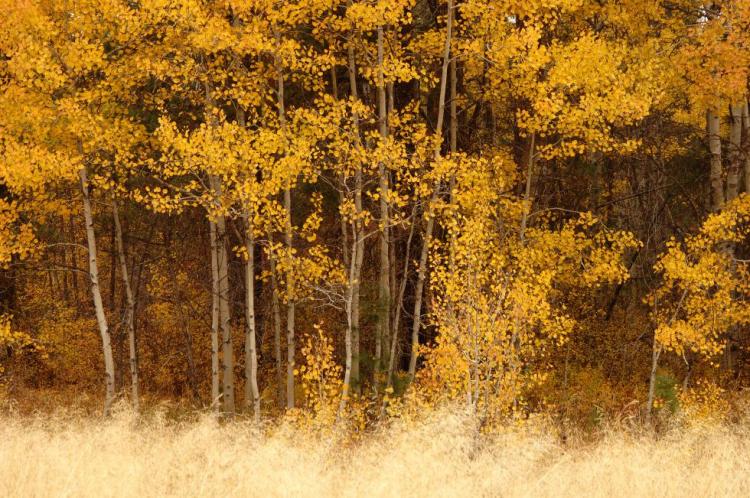
Aspen (Populus tremuloides) woodlands are woodland and/or forest communities dominated by aspen trees with a forb, grass, and/or shrub understory. Aspen woodlands also occur within conifer forests.
Limiting Factors and Recommended Approaches
Limiting Factor: Altered Fire Regimes
Aspen stands often depend on natural fire and disturbance to reduce competition from conifers and stimulate the growth of sprouts from roots. Fire suppression has resulted in conifer encroachment and lack of reproduction in aspen communities.
Recommended Approach
Carefully reintroduce natural fire regimes using site-appropriate prescriptions, accounting for the area size and vegetation characteristics that affect resiliency and resistance to disturbance. Prescribed fire has been successful with regenerating aspen groves by increasing sprouting. Use mechanical treatment methods (e.g., masticating, cutting for firewood) to control encroaching conifers. Apply treatments appropriately with respect to season, size, and location. Pursue landscape level treatments, working to restore connectivity of aspen communities. The inclusion of mechanical ground disturbance to stimulate the growth of sprouts from root structures may be one approach to offsetting the lack of fire, but the results of this type of treatment are less predictable.
Limiting Factor: Overgrazing
Overgrazing has limited aspen recruitment through direct consumption or trampling of sprouts and indirect effects such as limiting water availability. When conditions are over-grazed, aspen may sprout but not fully grow into trees. Heavy cattle and ungulate pressure can also impact the soil, herbaceous layer, and recruitment. The direct consumption of aspen and terminal buds tends to be the greatest when sites are used by multiple species such as cattle, sheep, deer, and elk.
Recommended Approach
Limit over-grazing. Use fencing and exclosures to encourage reproduction at high priority sites until trees exceed browse height. Grove protection may be necessary for up to 10 years if elk are also present. Implement grazing plans to maintain aspen health, such as limiting grazing during spring and summer.
Limiting Factor: Invasive Species
Invasive plants, introduction of non-native pasture grasses, and historical overgrazing have altered the understory of many aspen stands. Invasive plants may also limit aspen suckering by crowding out and overtopping young sprouts. Junipers have reduced soil moisture in many rangeland aspen groves, increasing the presence of more drought-tolerant upland plants. Prolonged intensive grazing by livestock can lead to increased noxious weeds if grasses and sedges are overutilized. Stewardship actions intended to help aspen (e.g., conifer removal, fire) often stimulate noxious weeds, which thrive in disturbed and open areas.
Recommended Approach
Emphasize prevention, risk assessment, early detection, and quick control to prevent new invasive species from becoming fully established. Control invasive plants using site-appropriate herbicides and methods. Reintroduce native bunchgrasses and flowering plants at priority restoration sites. Minimize soil disturbance in high priority areas to prevent the establishment of invasive plants.
Limiting Factor: Drought
Persistent drought is already occurring in some regions, and climate change is increasing the frequency and severity of extreme weather events, including heatwaves and droughts. Climate models predict that more frequent, longer, and more severe regional drought conditions will increase as summer precipitation continues to decrease, exacerbating wildfire risk and reducing water availability. Drought has been shown to increase aspen mortality and reduce recruitment, which could lead to long-term declines in aspen habitat. The interactive effects of increased drought, chronic grazing, and fire suppression are an increasing concern in Oregon.
Recommended Approach
Implement monitoring to detect changes in regeneration, growth, and mortality in drought prone areas. Manage grazing to reduce effects on the water table. Reduce or eliminate encroaching vegetation that competes with aspen for water. Actions that reduce the impacts of other stressors will also improve aspen resilience to drought.