Key Habitats are habitats of conservation concern within Oregon that provide important benefits to Species of Greatest Conservation Need. There are 12 Key Habitats within Oregon’s State Wildlife Action Plan, designated by ecoregion, including habitats found in the Nearshore ecoregion. The SWAP also describes Specialized and Local Habitats that represent important landscape features not adequately addressed through the 12 Key Habitats. Each Key Habitat includes a general description, conservation overview, and a list of limiting factors and recommended approaches. This information is intended to provide a broad summary of the habitat and its most significant conservation needs. Conditions may vary by site, watershed, or ecoregional level based on differences in soil, climate, and management history. Local conditions will need to be considered when determining site-appropriate conservation actions.
Key Habitat Methodology
In Oregon’s original State Wildlife Action Plan, the State Wildlife Action Plan (released in 2006), Key Habitats were determined in a two-step process. First, best available and most recent (in 2006) vegetation maps were compared to historical vegetation maps from 1850 to indicate vegetation types experiencing high degrees of loss since European settlement in Oregon. Second, similar vegetation types were classified into “habitats”, which were then evaluated for historical importance at the ecoregional scale, emphasizing the amount of remaining habitat being managed for conservation values, known limiting factors and potential issues impacting habitats, ecological similarity of habitats, and the importance of each habitat to Species of Greatest Conservation Need. The habitats determined to be of the most importance throughout the state were defined as Key Habitats and were designated by ecoregion. Nearshore Habitats describe the Coastal and Marine Ecological Classification Standard (CMECS) habitat classification approach. See Appendix – Marine Habitat Classification for more information.
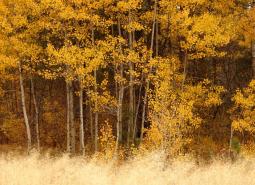
Aspen Woodlands
Aspen (Populus tremuloides) woodlands are woodland and/or forest communities dominated by aspen trees with a forb, grass, and/or shrub understory. Aspen woodlands also occur within conifer forests.
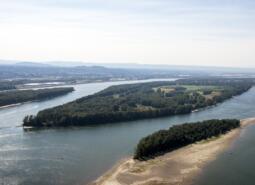
Nearshore Key Habitats
Nearshore Habitats encompass the coastal and marine habitats in the area from the 3 nautical mile outer limit of Oregon’s territorial sea, where water depths average 66 m (216 ft) and range from 17 m to 194 m (56 to 308 ft), to the supratidal areas of the shoreline affected by wave spray and overwash …
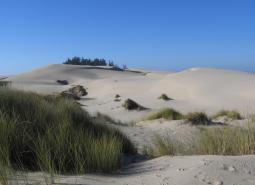
Coastal Dunes
Occurring along the Oregon coastline, coastal dunes provide habitat for species that prefer open, sandy habitats with a high degree of disturbance from winds and tides.
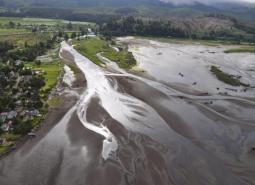
Estuaries
Estuaries are broadly defined as partially enclosed coastal bodies of tidally influenced water with one or more inputs of freshwater, and with a free or intermittent connection to the open sea. Estuaries typically occur at locations where freshwater from rivers, streams, or creeks meets saltwater from the nearshore ocean, creating a tidal basin that experiences frequent …
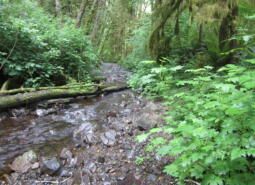
Flowing Water and Riparian Habitats
Flowing Water and Riparian Habitats include all naturally occurring flowing freshwater streams and rivers throughout Oregon as well as the adjacent riparian habitat.
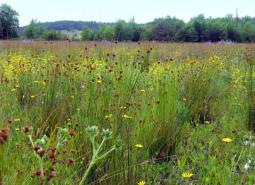
Grasslands
Grasslands include a variety of upland grass-dominated habitats, such as upland prairies, coastal bluffs, and montane grasslands.
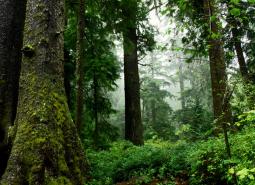
Late Successional Mixed Conifer Forests
Late successional mixed conifer forests provide a multi-layered tree canopy, including large-diameter trees, shade-tolerant tree species in the understory, and a high volume of dead wood, such as snags and logs.
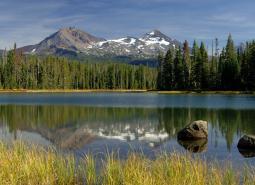
Natural Lakes
Natural lakes are relatively large bodies of freshwater surrounded by land that were formed through geological processes, such as glacial scouring, tectonic movements, volcanic activity and river meander cutoffs. In Oregon, natural lakes are defined as standing water bodies larger than 20 acres, including some seasonal lakes. Depth is not a reference for characterization of …
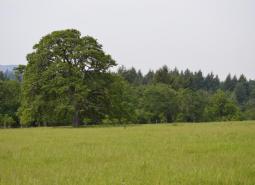
Oak Habitats
There are several oak habitat types in Oregon, where oaks comprise most of the canopy. These can include oak woodlands, oak forest, oak chaparral, and riparian oak. Oak savanna is covered in the Grasslands Key Habitat. Oaks may also co-dominate a canopy in oak/fir, oak pine, and oak hardwood habitats.
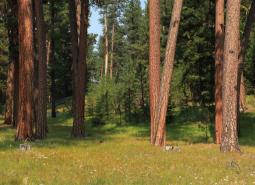
Ponderosa Pine Woodlands
Ponderosa pine woodlands are common in Oregon’s eastside ecoregions. While dominated by ponderosa pine, these woodlands may also have lodgepole pine, western juniper, aspen, western larch, grand fir, Douglas-fir, mountain mahogany, incense cedar, sugar pine, or white fir, depending on ecoregion and site conditions. Known for their open forest structure, these woodlands generally have fewer …
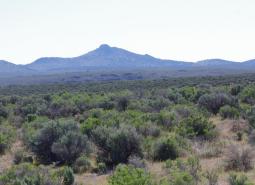
Sagebrush Habitats
Sagebrush habitats include all sagebrush steppe- and shrubland-dominated communities found east of the Cascade Mountains.
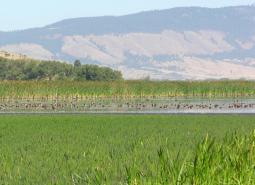
Wetlands
Wetlands are habitats that are inundated or saturated by surface water or ground water at a frequency and duration sufficient to support vegetation typically adapted for life in sodden soil conditions. While dominated by periods of inundation, the natural ecological cycle may also include dry intervals. Permanently wet habitats include backwater sloughs, oxbow lakes, peatlands, …