Overview
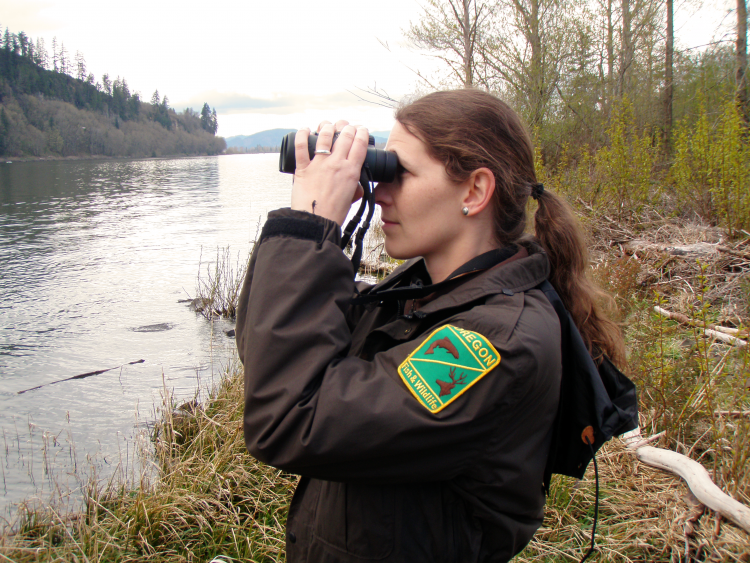
Monitoring is a systematic process by which fish and wildlife populations and their habitats are observed and assessed. Monitoring efforts can be temporary to long-term in duration and can involve the use of a variety of techniques such as tracking, camera trapping, electrofishing, disease surveillance, and other surveys to gather data on species distribution, abundance, habitat, behavior, and health. Transects, data loggers, and remote sensing can help record shifts in fish and wildlife habitats over time. Even those species that are cryptic or elusive can be detected and tracked, using techniques such as acoustic recording, track plates, and environmental DNA (eDNA) sampling. By monitoring, researchers and managers can identify population trends, assess the effects of environmental changes on species and their habitats, and help evaluate the success of management activities. These efforts can also provide information for addressing human-wildlife conflicts, which helps to facilitate coexistence. Monitoring efforts are critical for informing conservation strategies that protect Species of Greatest Conservation Need (SGCN) and Key Habitats, and for filling data gaps for Species of Greatest Information Need (SGIN).
Importance of Monitoring

Monitoring is a cornerstone of effective conservation efforts, particularly for species that are poorly understood. Many species in Oregon have not been studied extensively, making it challenging to implement targeted conservation strategies. For some species, even basic information on species’ presence is lacking. Without data describing the status and distribution, population trends, and impacts to these species from key issues such as pollution, habitat loss and fragmentation, and climate change, effective conservation and management cannot be achieved. For example, certain land management decisions may devastate sensitive populations, but without data to support the need for species protections, little can be done to influence land use planning. In the marine environment, nearshore resources are poorly understood relative to the state’s other natural resources. Yet, the demands for information and data for conservation and management purposes continue to grow (see Appendix – Nearshore Research and Monitoring).
For species about which little is known, monitoring can result in crucial insights to help guide conservation actions. Through systematic monitoring of fish, wildlife, and their habitats, researchers can gather critical baseline data on population size, distribution, and behavioral patterns, which are essential for conservation planning. These data can help identify key habitats, breeding areas, and movement pathways, enabling more focused and effective protection measures that address the specific challenges faced by different species. Monitoring data also allow for prioritization of different conservation actions, helping ensure that the most significant threats are rapidly addressed.
Moreover, monitoring can enhance understanding of the ecological roles that lesser-known species play within their ecosystems. For example, some species may function as a critical linkage in food webs. Others may have disproportionate impacts on community structure, creating or modifying habitats used by other species. By ensuring that a broad diversity of species are routinely monitored, conservationists can assess the broader ecological impacts of species’ decline and take action to mitigate those effects.
Monitoring efforts are also critical to identifying emerging threats, such as disease outbreaks, illegal or unsustainable trade of animals, plants, or their parts, the spread of invasive species, new pollutants, and novel challenges brought on by shifting climate patterns. Consistent monitoring of a diversity of species throughout the state allows for adaptive management to more efficiently respond to changing conditions. As new information is gathered, conservation strategies can be adjusted to account for emerging threats, allowing for timely interventions that help prevent species declines.
Monitoring Strategies
A well-designed monitoring program takes an adaptive management approach using verifiable and reliable science. In addition to general monitoring efforts to enhance understanding of SGCN, SGIN, and their habitats, monitoring should occur prior to and following implementation of any conservation or management project. By assessing how different management actions succeed or fail, iterative changes can be made to management plans to improve overall outcomes. This process of assessing needs, planning management actions, implementing efforts, monitoring project success, learning from monitoring data, and adapting management strategies is critical to the success of conservation efforts.
Monitoring may occur at different timescales, from temporary to long-term in duration, and at different geographic scales, from local to regional to statewide and beyond. While different questions may be addressed and different variables measured at each scale, a monitoring plan should focus data collection on a clearly defined purpose. Results from local, site-specific monitoring projects should be shared with statewide, regional, national, and even international efforts to allow for examination of larger-scale population or ecological trends. Monitoring plans should outline what will be monitored, the most suitable technique for accomplishing monitoring, the frequency and duration of the monitoring effort, and assessment of costs. Monitoring may be directed toward individual species or species groups, habitat conditions, ecological function, or ecological integrity.
Depending on the current level of understanding of a given species, studies may need to focus on collecting data regarding:
- Range and distribution
- Population status and trends (at various scales)
- Life history traits
- Response to different types of habitat management or human activity
- Effects of Key Conservation Issues
- Interactions with other species
- Specific limiting factors (e.g., the degree of contaminants in fish found in the lower Columbia River) or novel threats
- Habitat quality indicators and/or changes in habitat
- Health and disease risk
Other monitoring efforts may seek to assess the outcomes of specific conservation or management actions, such as habitat restoration, species translocation or reintroduction, or invasive species removal efforts. Species or habitat variables should be monitored over time to determine project effectiveness, and adaptive management approaches should be used to ensure project goals are met. This type of effectiveness monitoring is critical to determining if a project has been successful at meeting its biological and ecological objectives. More information on effectiveness monitoring is available on the OWEB Effectiveness Monitoring page.
There are a wide variety of monitoring tools and approaches, ranging in complexity and expense. Habitat monitoring focuses on evaluating changes of specific habitat features over time, such as vegetation composition, water chemistry, stream bed characteristics, canopy cover, seral stages, ocean temperatures, or decay class of downed wood. Population monitoring focuses on evaluating changes to species over time. Some techniques for population monitoring require capture of individual study animals for counting, marking, or outfitting with tracking devices. Netting, pitfall trapping, banding or tagging, capture-recapture studies, telemetry studies, certain types of fish population monitoring, and disease and parasite sampling necessitate capture. Other techniques are non-invasive and leverage technological advancements to passively collect data. These approaches include the use of things like motion-detecting cameras, autonomous recording units, remote sensing, data loggers, and unmanned aerial vehicles. Advancements in genetics have also allowed for the collection and analysis of genetic material left behind by organisms in the environment, called environmental DNA, or eDNA. Genetic assessments can be completed on DNA extracted from the water column or sediments, as well as scat, hair, saliva, and urine.

Natural resource professionals should seek collaborative ways to make monitoring affordable, practical, relevant, and easily accessible. Data and information derived from monitoring should be easily understood, well-documented, and available in a variety of formats for different audiences (e.g., scientists, public and private land managers, policy makers). Monitoring protocols should be developed and shared so that resulting data can easily be combined and analyzed. Monitoring results should be shared with peers and decision-makers to the broadest extent possible, encouraging strategic and efficient adjustments to conservation actions and policies based on monitoring data. Mapping the locations of conservation projects is one approach that allows land managers to allocate resources more efficiently and reduce duplication of efforts. Over time, this type of data sharing and geospatial mapping of on-the-ground projects allows managers to evaluate cumulative progress towards conservation goals.
Community Science
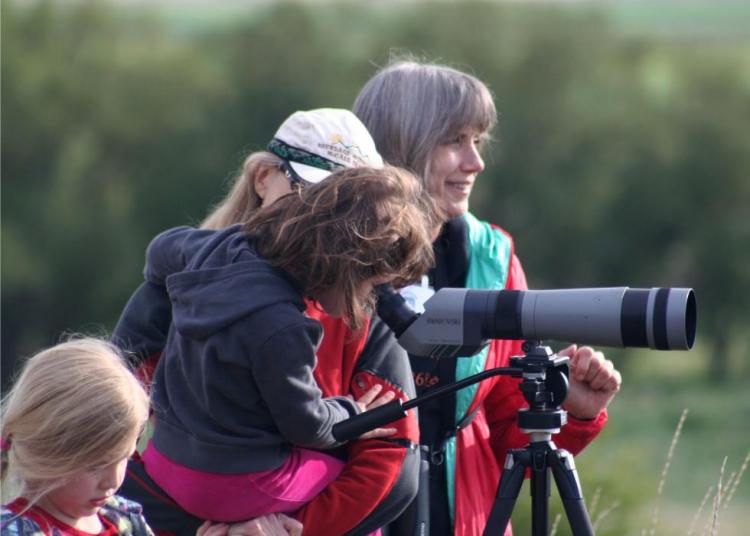
Community-based monitoring can greatly expand our ability to collect data. Through community science, Oregonians can contribute valuable biological knowledge they have gained from spending time in places in which they live and recreate. For example, birdwatchers and anglers understand the distribution and behavior of their favorite species, and farmers and other landowners have deep familiarity with the species that occur on the lands they manage. Community-based monitoring can tap into this knowledge, increase the amount of data that can be collected, and reduce the overall costs of data collection. Community-based monitoring also encourages Oregonians to take an active part in conservation, teaching people about their local environment and providing a forum for feedback and discussions related to conservation actions currently underway on their land or in their neighborhood. Participation in community science also leads to more stewardship and support for local conservation efforts.
By supporting and building on these efforts, scientists and Oregonians can work together to address monitoring priorities.
Examples of Ongoing Community Science Efforts in Oregon
| Community Science Project | Location |
|---|---|
| North American Breeding Bird Survey | International |
| Salmon and Trout Enhancement Program (STEP) | Statewide |
| eBird | International |
| Bird Alliance of Oregon | Local, regional |
| North American Butterfly Association Butterfly Counts | North America |
| Oregon Shores Conservation Coalition | Oregon Coast |
| Dragonfly Migration Monitoring | North America |
| Journey North | International |
| Cascadia Wild Wildlife Surveys | Mt. Hood National Forest |
| Pacific Northwest Bumble Bee Atlas | Oregon, Washington, and Idaho |
| iNaturalist | International |
| Oregon Forest Pest Detectors | Statewide |
| Coastal Observation and Seabird Survey Team | Oregon Coast |
Community Science Resources
- Zooniverse: “The Zooniverse is the world’s largest and most popular platform for people-powered research. This research is made possible by volunteers—millions of people around the world who come together to assist professional researchers. Our goal is to enable research that would not be possible, or practical, otherwise. Zooniverse research results in new discoveries, datasets useful to the wider research community, and many publications.”
- National Wildlife Federation (NWF): The National Wildlife Federation maintains a citizen science hub that provides resources to NWF programs, including Wildlife Watch, which collects wildlife observations. “Citizen science is where the public volunteers time to assist scientists in their research. Citizen scientists can support professional researchers in a lot of ways – by submitting data, sharing experiences, or spreading valuable information. Scientists benefit from having a lot more data to analyze and a pool of volunteers willing to help.”
- Oregon Naturalist Program: The Oregon Naturalist program provides an opportunity to learn about natural resources through the study of rigorous science and research-based content: the natural history of plants, animals, habitats, and geology, the history and processes of landscape change, as well as the most relevant topics in present-day sustainable natural resource management. Participants volunteer for natural resources programs, agencies, organizations, and other groups in their communities.
- Alliance of Natural Resource Outreach and Service Programs: The Alliance of Natural Resource Outreach and Service Programs is a national network of natural resource education and service programs which provide leadership, information, and resources to support science-based outreach and service programs in the field of natural resources. Partnering programs train conservation volunteers to enhance and expand natural resource conservation and education across the nation.
Data Management
Data collection is a critical component of any monitoring program. Quality data are needed to evaluate the impacts of conservation actions on species and habitats and inform adaptive management. Identification of critical data management needs should be considered and addressed early in the planning phases for any monitoring project.
Some important components of data management include:
- Identification of the entity responsible for maintaining the data
- Data storage space and hardware considerations
- Identification of any data sensitivities and development of safeguards for sensitive data
- A plan for scheduled data backups, and associated hardware and/or software to perform backups
- A file organization system that is logical and consistent with clear file/folder naming conventions
- A pipeline to transfer field-collected data to digital repositories and, if necessary, convert to formats suitable for analysis (for example, converting PDFs to CSV or another tabular file format)
- Timely conversion of field data, if collected using paper-based collection methods, to appropriate digital format
- Protocols for quality assurance and quality control to ensure transcription and other errors are identified and corrected
- A project metadata template that includes major information components, including but not limited to:
-
- Description of the dataset and its purpose
- Limitations of the dataset
- Preferred citation for the dataset
- Contact information for the creator or organization(s) maintaining the dataset
- Table field definitions with units of measure, if applicable
- Coordinate system information, if applicable
- A plan for data distribution among internal staff and between staff and external project partners, if applicable
Data Management Resources
- ODFW’s Natural Resources Information Management Program: provides data and metadata standards for ODFW staff, and the ODFW Data Clearinghouse
- Oregon Department of Administrative Services Geographic Enterprise Office: provides statewide data management and GIS resources, including the Oregon Spatial Data Library
- Data.gov: access all federally managed open data, including USFWS, USFS, and Bureau of Land Management
- NatureServe data management tool Biotics 5: methodology and data standards for species-related tabular datasets
Tracking and Reporting Results
The results of conservation actions should be tracked and reported to ensure that project goals are being met and to promote project successes.
Effective tracking and reporting includes:
- Identifying specific metrics that are useful for measuring progress. Metrics should be quantifiable, such as number of acres restored, number of birds surveyed, or number of landowners given technical assistance. Ideally, these metrics will be determined during the project development phase.
- A project narrative that concisely summarizes the project goals and methods, highlights important results and addresses limitations/potential for further work.
- For multi-agency projects, the development of a consistent tracking and reporting framework so that the reliability of progress markers, and subsequent reporting of results, is maintained.
In addition to reporting to ensure monitoring efforts are meeting identified goals, publication of monitoring results can be valuable. Making results publicly available in the form of agency reports or in peer-reviewed scientific journals can help advance scientific understanding of species and their habitats and can help improve conservation actions and monitoring approaches for future efforts.