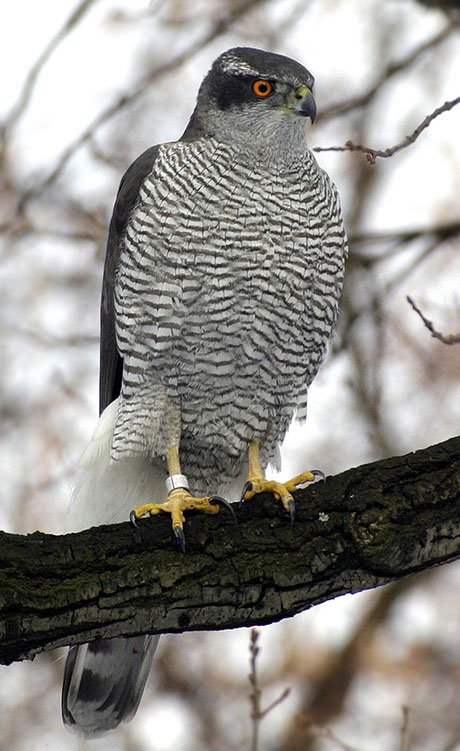
The American Goshawk is a raven-sized hawk, and like other hawks in the genus Accipiter is adapted to maneuver through forest landscapes to ambush and capture prey. The American Goshawk is a forest species, occupying a variety of forest types. They predominantly nest in dense stands of mature or late seral conifers, but additionally are found less frequently nesting in other forest types. American Goshawks have short round wings and long tails. Adult plumage is gray on the upper-parts and barred pale gray/white on underparts. Immatures are generally brown with striping on underparts. Typically has a strong white stripe above the eye
The American Goshawk was previously known as the Northern Goshawk, with taxonomic revision by the American Ornithological Society in 2023. Three subspecies recognized in North America. A. a. atricapillus is the only subspecies regularly occurring in Oregon.
Overview
- Species Common Name American Goshawk
- Species Scientific Name Accipiter atricapillus
- Federal Listing Status Species of Concern
- State Listing Status Sensitive
Ecoregions
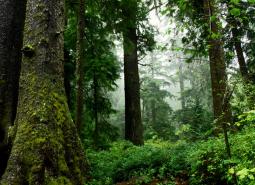
Coast Range
Oregon's Coast Range, known for its dramatic scenery, is extremely diverse, with habitats ranging from open sandy dunes to lush forests and from tidepools to headwater streams. It follows the coastline and extends east through coastal forest to the border of the Willamette Valley and Klamath Mountains ecoregions
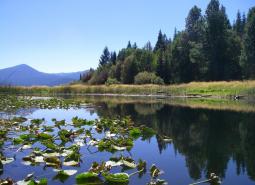
East Cascades
The East Cascade ecoregion extends from the Cascade Mountains' summit east to the warmer, drier high desert and down the length of the state. This ecoregion varies dramatically from its cool, moist border with the West Cascades ecoregion to its dry eastern border, where it meets sagebrush desert landscapes.
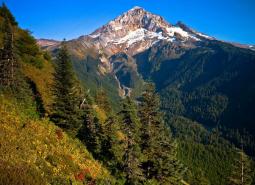
West Cascades
The West Cascades ecoregion extends from east of the Cascade Mountains summit to the foothills of the Willamette, Umpqua, and Rogue Valleys, and spans the entire length of the state of Oregon. It is largely dominated by conifer forests, moving into alpine parklands and dwarf shrubs at higher elevations.