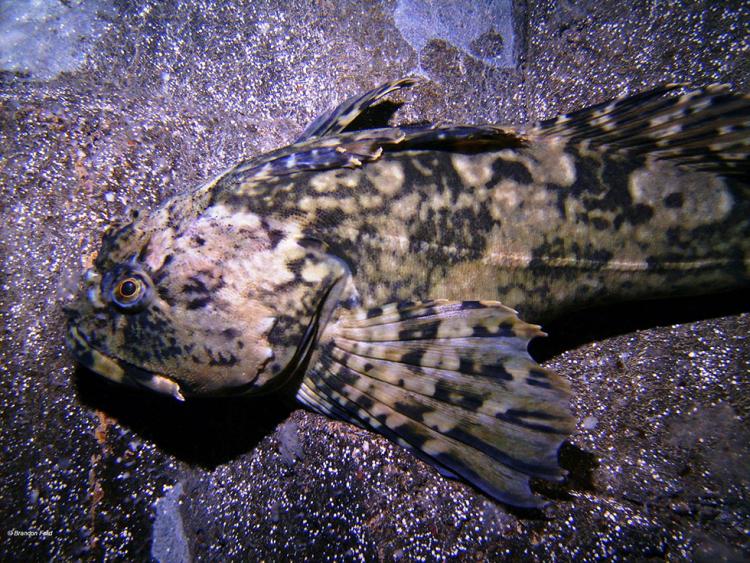
Cabezon are one of the largest members of the cottid family of fishes, a family commonly known as sculpins. Cabezon can be brown, red, or green with dark mottling. They have a long, branched skin flap over each of their eyes. They live on the bottom, mostly in rocky areas, but sometimes in areas where rock and sand or mud meet. They are hearty fish that do well in captivity which has made them a popular target in the commercial live fish fishery on the west coast. They are also prized by recreational fishermen. Cabezon can grow to 39 inches long and weigh 25.2 pounds. They can live up to 19 years. Female cabezon off Oregon mature by the age of 8. They are batch spawners, laying several batches of eggs each year. They lay a sticky egg mass up to 18 inches in diameter and 2 inches thick. The eggs are toxic to humans. Males guard the eggs which hatch in about 25 to 49 days. The larvae live as plankton in the water column for 3 to 4 months before settling to the bottom in nearshore shallow waters, including tide pools, when they are about an inch long. Tagging studies suggest that cabezon have small home ranges with some staying in the same place for years. Adult cabezon eat a variety of worms, shrimps, crabs, snails, octopi, squids, and fish species, as well as fish eggs.
Overview
- Species Common Name Cabezon
- Species Scientific Name Scorpaenichthys marmoratus