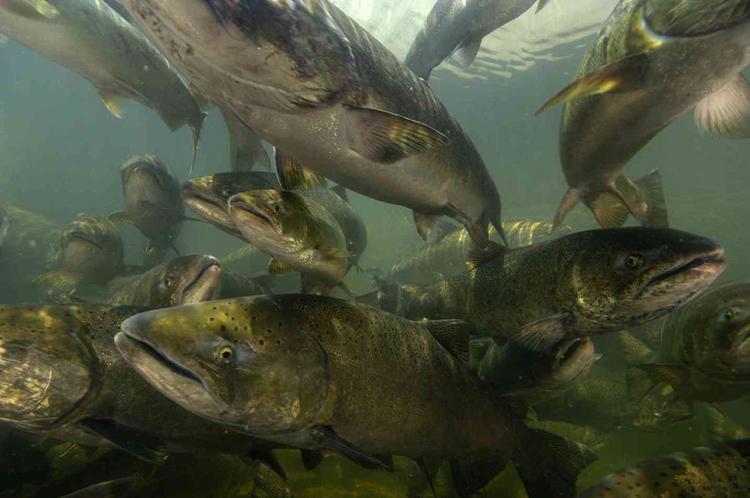
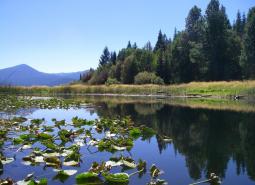
Require streams with clean gravel, complex habitat, and cool temperatures for spawning and rearing. Require access for anadromous migration. Productive nearshore marine habitat that provides high-quality prey in sufficient quantity for rapid growth at time of ocean entry. Requires suitable oversummering habitat. Requires early entry into the Klamath River in order to reach and navigate through Upper Klamath Lake prior to seasonal elevated temperatures.
Limiting factors
Water quality. Alterations of hydrology and watershed function. Hybridization with fall run Chinook as a result of Iron Gate Dam. Fish passage. Riparian condition. Marine survival.
Data gaps
Impacts of restored fish passage on the Klamath River in 2024 and any resultant changes to Spring Run Chinook. Evaluation of thermal regimes in Upper Klamath Basin and evaluation of spawning success in newly accessed habitats. Evaluation of outmigration patterns and predation on juvenile salmon. Mechanisms affecting marine survival and spatial, temporal utilization of nearshore marine waters.
Conservation actions
Maintain and restore aquatic and riparian habitat in Upper Klamath Basin to facilitate expansion of recolonizing salmon following restored fish passage in 2024. Identify and address any fish passage issues at Keno Dam and Link River Dam. Identify and address any screening needs in the Upper Klamath Basin that impact salmon.
Key reference or plan
Implementation Plan for the Reintroduction of Anadromous Fishes into the Oregon Portion of the Upper Klamath Basin.