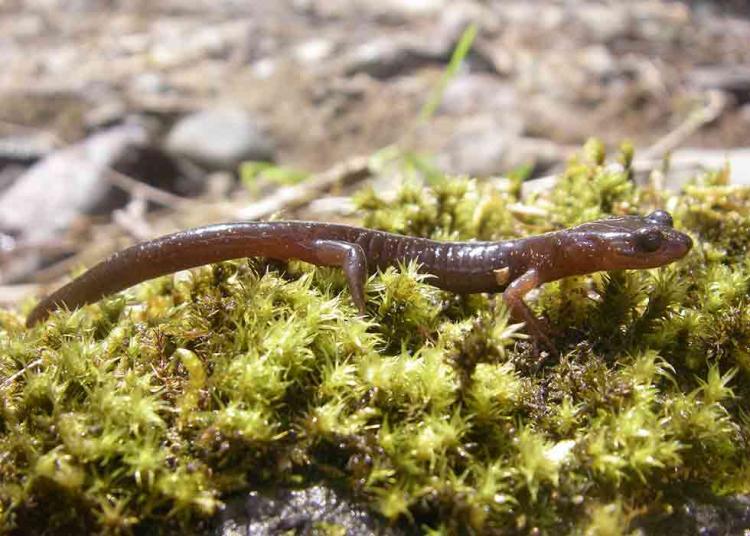
Clouded salamanders are slim, relatively long-legged amphibians that are both terrestrial and arboreal; they live their lives in damp coastal mature forests, and are often found high above the ground in the forest canopy. They are members of the large family of plethodontid salamanders, which are characterized by reduced lungs and two grooves that extend from their nostrils to each side of the mouth. Adult clouded salamanders have smooth, moist skin that is brown to gray in color with metallic patches of gray, silver, pale gold, or bronze. At maturity, they are 1.8 to 3.0 inches in length from snout to vent, and 3.0 to 5.1 inches in total length. They have long, squared-off toes and strong, prehensile tails (capable of grasping) adapted for climbing. Males have broader, more triangular heads than females. They have 16 costal grooves on their sides between the front and back legs. Juveniles are similar in appearance to adults, with an orange stripe that runs down the center of their backs. Similar species to clouded salamanders are the wandering salamander and the black salamander. Black salamanders have toes with rounded tips, whereas clouded salamanders have toes that are squared off. The clouded salamander and wandering salamander were separated into two species in 1998 based on genetic evidence, and are difficult to distinguish in the field. The range of these two species overlaps in a small portion of northwestern California. Outside of this area of overlap, geographic location is the best way to distinguish between the two species. The clouded salamander is endemic to Oregon and extreme northern California.
Overview
- Species Common Name Clouded Salamander
- Species Scientific Name Aneides ferreus
- State Listing Status Sensitive
Ecoregions
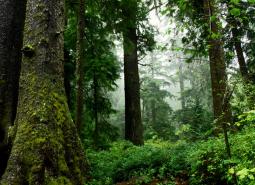
Coast Range
Oregon's Coast Range, known for its dramatic scenery, is extremely diverse, with habitats ranging from open sandy dunes to lush forests and from tidepools to headwater streams. It follows the coastline and extends east through coastal forest to the border of the Willamette Valley and Klamath Mountains ecoregions
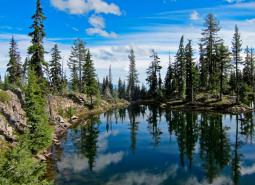
Klamath Mountains
The Klamath Mountains ecoregion covers much of southwestern Oregon, including the Klamath Mountains, Siskiyou Mountains, the interior valleys and foothills between these and the Cascade Range, and the Rogue and Umpqua river valleys. Several popular and scenic rivers run through the ecoregion, including the Umpqua, Rogue, Illinois, and Applegate rivers. Historically, this ecoregion is known …
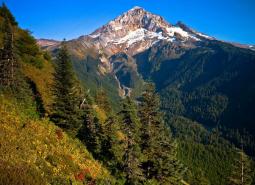
West Cascades
The West Cascades ecoregion extends from east of the Cascade Mountains summit to the foothills of the Willamette, Umpqua, and Rogue Valleys, and spans the entire length of the state of Oregon. It is largely dominated by conifer forests, moving into alpine parklands and dwarf shrubs at higher elevations.
Willamette Valley
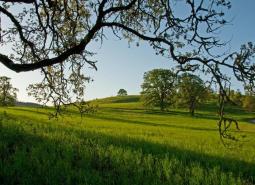
The Willamette Valley ecoregion is bounded on the west by the Coast Range and on the east by the Cascade Range. This long mostly level alluvial plain has some scattered areas of low basalt, and contrasts with productive farmland and large urban areas. It has the fastest-growing human population in the state resulting in challenges due to land-use changes.