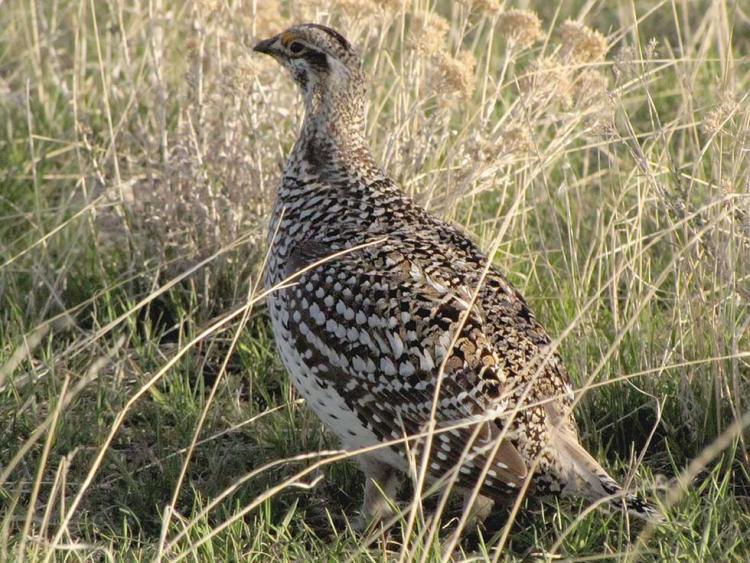
Columbian Sharp-tailed Grouse were extirpated from Oregon by the 1970s, but reintroductions have been attempted since. This subspecies is the palest and grayest of all six sharp-tailed grouse subspecies.
The back is mottled black and buff white, while the underside is white or white with brown markings. Two middle tail feathers extend beyond the other tail feathers and appear pointed. Sexes have similar plumage, but males have violet apical sacs on the side of their neck which are inflated during breeding displays.
Overview
Species Common Name Columbian Sharp-tailed Grouse
Species Scientific NameTympanuchus phasianellus columbianus
Columbian Sharp-tailed Grouse prefer bunchgrass prairies with a healthy forb component interspersed with riparian areas and draws containing deciduous shrubs and trees.
Limiting factors
Historically, significant habitat loss from the conversion of bunchgrass prairie to cropland prior to 1915 led to the extirpation of Columbian Sharp-tailed Grouse from Oregon. The small, declining reintroduced population north of Enterprise is limited by drought, fire, fence strikes, predation, genetic isolation, and the availability of winter habitat.
Data gaps
• Assess habitat suitability for Oregon sites.
• Identify additional candidate sites for restoration and reintroduction.
• Address limiting factors to stabilize or increase the reintroduced population.
• Identify viable source population for reintroduction.
Conservation actions
• Monitor leks and wintering areas.
• Work with landowners to enhance habitat and healthy grazing regimes.
• Manage and protect large expanses of suitable habitat and establish connectivity between occupied and candidate sites.
Key reference or plan
Guidelines for the Management of Columbian Sharp-tailed Grouse Populations and their Habitats. Read here