Common Nighthawks are mostly active at dusk and dawn, when they hawk for insects. They have long slender wings with white patches visible in flight. When perched on the ground, its cryptic brown gray and black mottling makes the bird virtually invisible. Males have a white throat and white bar on its undertail; females have a tawny throat and do not have white on the undertail. The Common Nighthawk is a Nearctic migrant with one of the longest migrations of any North American breeding bird.
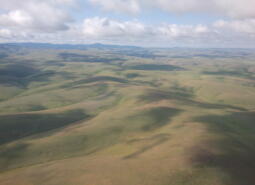
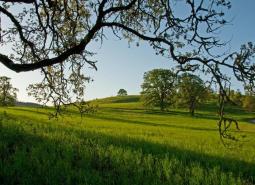
Common Nighthawks use gravel bars and other sparsely-vegetated grasslands or forest clearings for nesting on the ground. They are aerial insectivores, and require an adequate prey base of insects. As long distance migrants, they need suitable habitat on breeding, wintering, and stopover sites.
Limiting factors
Over the past forty years, Common Nighthawks have experienced significant population declines. Although data on specific threats are limited, the long-term decline may be linked to ongoing loss and degradation of habitat, increased nest predation, and pesticide use impacts to prey populations. Changes in hydrology due to hydropower dams and wildfire suppression have contributed to habitat losses. Increased predation by corvids, gulls, and domestic cats, along with declines in aerial insect abundance, have also negatively affected the species. Aerial insectivores, in general, are declining at faster rates than other guilds of birds due to a litany of factors including decreased prey abundance, habitat loss, phenological changes due to climate warming, and conditions on migratory stopover or wintering grounds
Data gaps
• Inventory suitable habitat for nesting birds.
• Assess impacts to insect prey base
• Data needed to understand threats on wintering habitats and migratory pathways
Conservation actions
• Maintain sparsely-vegetated grassland patches.
• Restore natural disturbance regimes.
• Restore riparian and wetland habitat to support the insect prey base of nighthawks.
• Reduce use of non-target pesticides
• Develop partnerships with biologists and communities in migratory pathways and wintering habitats to facilitate full life-cycle conservation
Key reference or plan
Rockwell, S.M., A.L. Holmes, B. Altman. 2022. Conservation Strategy for Landbirds in Sagebrush Steppe and Riparian Habitats of Eastern Oregon and Washington. Version 2.1. Read here
Population and habitat objectives for landbirds in prairie, oak, and riparian habitats of western Oregon and Washington. Read here
The Willamette Valley Landowner’s Guide to Creating Habitat for Grassland Birds. Read here