
Common Nighthawks are mostly active at dusk and dawn, when they hawk for insects. They have long slender wings with white patches visible in flight. When perched on the ground, its cryptic brown gray and black mottling makes the bird virtually invisible. Males have a white throat and white bar on its undertail; females have a tawny throat and do not have white on the undertail. The Common Nighthawk is a Nearctic migrant with one of the longest migrations of any North American breeding bird.
Overview
- Species Common Name Common Nighthawk
- Species Scientific Name Chordeiles minor
- State Listing Status Sensitive
Ecoregions
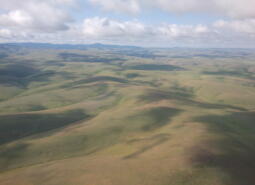
Columbia Plateau
The Columbia Plateau ecoregion was shaped by cataclysmic floods and large deposits of wind-borne silt and sand earlier in its geological history. It is dominated by a rolling landscape of arid lowlands dissected by several important rivers, and extends from the eastern slopes of the Cascades Mountains, south and east from the Columbia River to the Blue Mountains.
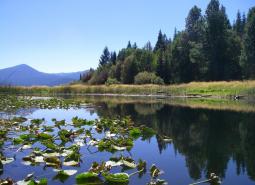
East Cascades
The East Cascade ecoregion extends from the Cascade Mountains' summit east to the warmer, drier high desert and down the length of the state. This ecoregion varies dramatically from its cool, moist border with the West Cascades ecoregion to its dry eastern border, where it meets sagebrush desert landscapes.
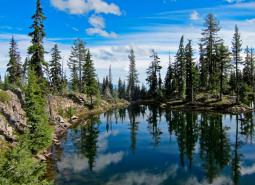
Klamath Mountains
The Klamath Mountains ecoregion covers much of southwestern Oregon, including the Klamath Mountains, Siskiyou Mountains, the interior valleys and foothills between these and the Cascade Range, and the Rogue and Umpqua river valleys. Several popular and scenic rivers run through the ecoregion, including the Umpqua, Rogue, Illinois, and Applegate rivers. Historically, this ecoregion is known …
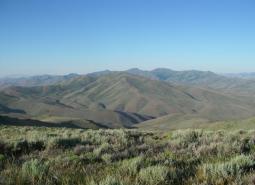
Northern Basin and Range
The Northern Basin and Range ecoregion covers the very large southeastern portion of the state, from Burns south to the Nevada border and from the Christmas Valley east to Idaho. It is largely a high elevation desert-like area dominated by sagebrush communities and habitats.
Willamette Valley
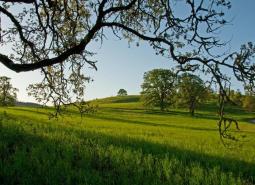
The Willamette Valley ecoregion is bounded on the west by the Coast Range and on the east by the Cascade Range. This long mostly level alluvial plain has some scattered areas of low basalt, and contrasts with productive farmland and large urban areas. It has the fastest-growing human population in the state resulting in challenges due to land-use changes.