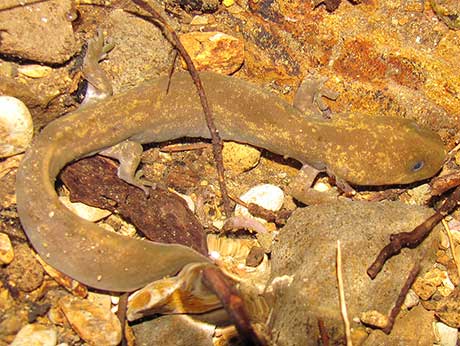
These medium-sized salamanders are unique in that they rarely transform into terrestrial adults: with few documented exceptions, Cope’s giant salamanders remain in a paedomorphic form (sexually mature adults with aquatic, juvenile characteristics), retaining their bushy external gills with wide, laterally compressed tail fins that they use to navigate the water throughout adulthood. Cope’s giant salamanders are one of the largest salamanders in Oregon, growing up to 4.75 inches from snout to vent and 8 inches in total length. They have stout bodies, with long heads about the width of their body. In their common aquatic form, they are dark brown in color with distinctive yellowish-tan patches, and have short bushy external gills. In their rare terrestrial form, they are marble brown and tan in color with short, lightly mottled tails. Cope’s giant salamanders are one of four closely related giant salamander species in their genus. They are the smallest of the four species, and are the only one that regularly remains in a paedomorphic form.
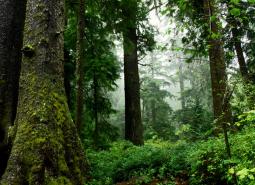
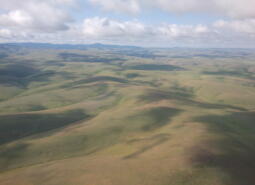
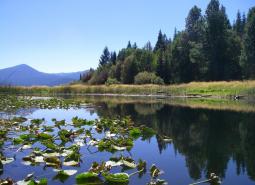
Cope’s giant salamanders inhabit cold, clear, permanent streams in coniferous forests. They are typically associated with high gradients and coarse substrates (e.g., basalt). This species is often found in pools within fast-flowing streams and uses deep cobble, small boulders, in-channel logs, and other microhabitat features for foraging, refugia, and egg-laying. Streambanks are used during high moisture conditions or at night for foraging, and potentially other activities. Cope’s giant salamanders are nocturnal and spend much of the day under rocks, logs, and other debris, or in cavities in stream banks. Habitat differs for the isolated population found at a tributary of White River in Wasco County. This site is a rocky stream with steep canyon walls; the adjacent upland habitat is agricultural land.
Limiting factors
This species has a limited range in Oregon. Cope’s giant salamanders rarely metamorphose, so they are highly vulnerable to channel dewatering and barriers to stream connectivity. Given their small gill surface area, they are also sensitive to increases in temperature and sediment which may occur as a result of road building, timber harvest, and/or wildfire. Climate change may further affect habitat quality for Cope’s giant salamander, particularly in warmer, drier areas within the species’ range.
Data gaps
• Assess occupancy, distribution and habitat connectivity needs.
• Gather basic information on life history, population size and trends, dispersal, and reproduction (parental care, number of clutches per female per year).
• Determine the frequency of naturally-occurring terrestrial (metamorphosed) individuals.
• Evaluate the effects of land management practices, fertilizers, pesticides, non-native fish, disease, and herbicides on this species.
• Clarify the need for management units to preserve adaptive capacity and genetic diversity.
• Evaluate risks to species from climate change.
• Determine the effectiveness of riparian reserves towards protection of habitat for Cope’s giant salamander.
Conservation actions
• Retain stream buffers to maintain cool water temperatures and water clarity.
• Minimize sediment coating or embedding of rocky substrates.
• Maintain aquatic and riparian habitat connectivity; replace culverts as needed to remove barriers in continuous, natural streambed and streambank habitat.
• Restrict chemical applications near streams.
• Reduce impacts of non-native predators in streams through eradication efforts, removal, or preventing establishment.
• Consider the species’ habitat needs during forest planning and management activities.
• Monitor salamander response to habitat restoration actions or recommended practices to determine whether conservation outcomes are achieved.
Key reference or plan
Conservation Assessment for the Cope’s Giant Salamander Read here