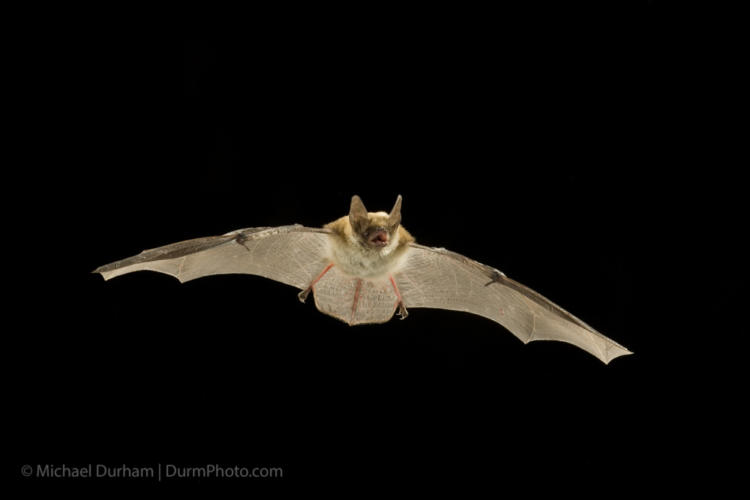
The fringed myotis is a long-eared vesper bat or “evening bat,” with long, dark ears, dark brown wings, and a dark muzzle. The dorsal fur ranges from yellow to copper to dark brown and olive, with the base of the hairs being very dark. This species gets its name thanks to its set of small stiff hairs, or subtle “fringe,” along the tail membrane. These hairs, although petite at 1.0-1.05 mm, can help distinguish the species from other long-eared bats. The membranes across the tail and wings are thick and the wing-to-tail ratio is small, characteristic of highly maneuverable bats. The ears are long and extend past the nose when laid down forward; the tragus is also long and narrow. The fringed myotis has a large foot, approximately half the length of the tibia, and it does not have a keeled calcar. Although large for its genus at 8 to 10 cm in length, it is a relatively small bat compared to other Oregon species, weighing approximately 7 grams. There is sexual dimorphism within the species, with females being larger in the head, body, and forearm length.
Overview
- Species Common Name Fringed Myotis
- Species Scientific Name Myotis thysanodes
- Federal Listing Status Species of Concern
- State Listing Status Sensitive
Ecoregions
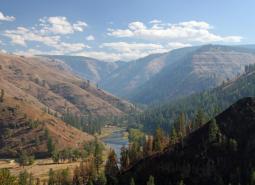
Blue Mountains
Located in NE Oregon, the Blue Mountains ecoregion is the largest ecoregion in the state. It provides a diverse complex of mountain ranges, valleys, and plateaus that extend beyond Oregon into the states of Idaho and Washington.
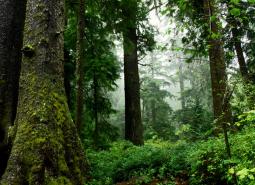
Coast Range
Oregon's Coast Range, known for its dramatic scenery, is extremely diverse, with habitats ranging from open sandy dunes to lush forests and from tidepools to headwater streams. It follows the coastline and extends east through coastal forest to the border of the Willamette Valley and Klamath Mountains ecoregions
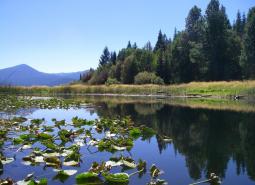
East Cascades
The East Cascade ecoregion extends from the Cascade Mountains' summit east to the warmer, drier high desert and down the length of the state. This ecoregion varies dramatically from its cool, moist border with the West Cascades ecoregion to its dry eastern border, where it meets sagebrush desert landscapes.
Klamath Mountains
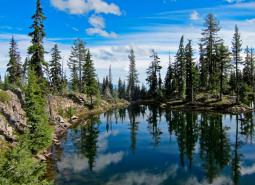
The Klamath Mountains ecoregion covers much of southwestern Oregon, including the Klamath Mountains, Siskiyou Mountains, the interior valleys and foothills between these and the Cascade Range, and the Rogue and Umpqua river valleys. Several popular and scenic rivers run through the ecoregion, including the Umpqua, Rogue, Illinois, and Applegate rivers. Historically, this ecoregion is known …
Northern Basin and Range
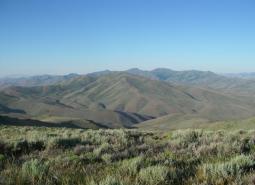
The Northern Basin and Range ecoregion covers the very large southeastern portion of the state, from Burns south to the Nevada border and from the Christmas Valley east to Idaho. It is largely a high elevation desert-like area dominated by sagebrush communities and habitats.
West Cascades
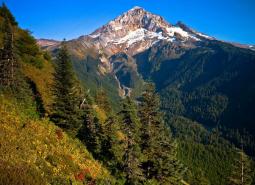
The West Cascades ecoregion extends from east of the Cascade Mountains summit to the foothills of the Willamette, Umpqua, and Rogue Valleys, and spans the entire length of the state of Oregon. It is largely dominated by conifer forests, moving into alpine parklands and dwarf shrubs at higher elevations.
Willamette Valley
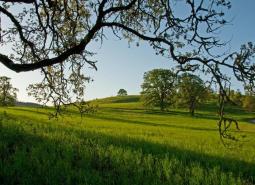
The Willamette Valley ecoregion is bounded on the west by the Coast Range and on the east by the Cascade Range. This long mostly level alluvial plain has some scattered areas of low basalt, and contrasts with productive farmland and large urban areas. It has the fastest-growing human population in the state resulting in challenges due to land-use changes.