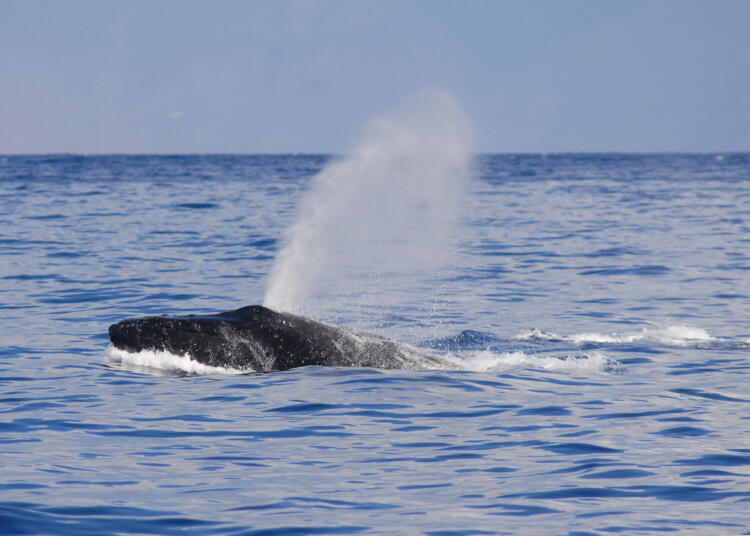
Humpback whales can grow up to about 60 feet long, weigh about 40 tons, and may live up to 90 years. They have a dorsal fin, very long pectoral fins that can reach about 15 feet long, and their flukes have unique patterns of color and scalloped trailing edges for each individual. The upper jaw of the humpback whale is covered with tubercles and contains numerous baleen plates, which function to filter small prey such as krill and plankton from the water. They make long migrations from high latitude feeding areas, to low latitude calving areas. Critical habitat designations for the Central America and Mexico DPS include portions of the California Current Ecosystem off Oregon, which serve as feeding habitat.
Overview
Species Common Name Humpback Whale (Central America and Mexico DPS)
Species Scientific NameMegaptera novaeangliae
Federal Listing Status Endangered (Mexico DPS), Threatened (Central America)
Humpback whales need adequate food in high concentrations in their feeding areas. They need warmer waters for calving.
Limiting factors
Threats to humpback whales include entanglement in fishing gear, vessel strikes, vessel-based harassment, and ocean noise.
Data gaps
• Environmental factors that drive distribution in Oregon waters during the feeding season.
• Vulnerability to climate change impacts.
Conservation actions
• Reduce or eliminate injury and mortality caused by fisheries, fishing gear, and vessel collisions.
• Minimize effects of vessel disturbance.
• Continue the international moratorium on commercial whaling.
• Collect as much data as possible from dead whales through the ODFW Marine Mammal Health and Stranding Program.
• Follow regulations on gear marking to help gather more information on entanglement to help design proactive conservation measures.