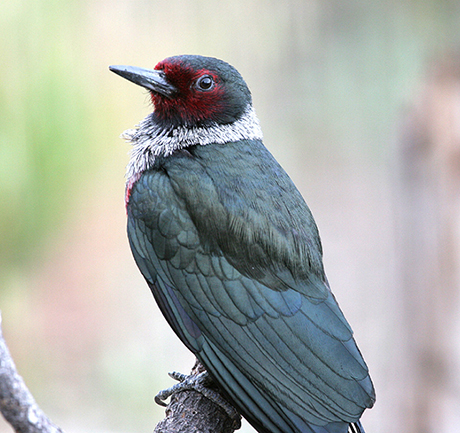
Lewis’ Woodpecker (Melanerpes lewis) is a medium-sized woodpecker with greenish black iridescent head, back, wings, and tail. It also has a notable silvery gray collar and upper breast, dark red face, and pinkish or salmon red lower breast and belly. Both sexes similar but the male is slightly larger. The legs and feet are gray, bill is black. In Oregon, breeding Lewis’s Woodpeckers are associated with open woodland habitats including Oregon white oak, ponderosa pine, and riparian cottonwoods. They are also strongly associated with recently burned forests. Lewis’s Woodpecker winters in oak woodlands and oak-pine woodlands where the winter climate is mild enough that emergent insects are sometimes available. They use acorns as their main forage, and winter populations of Lewis’s Woodpecker may be large in oak woodlands experiencing good mast years.
The Lewis’s Woodpecker is endemic to western North America. Individuals breeding in Oregon include both year-round residents and migratory populations.
Overview
- Species Common Name Lewis’s Woodpecker
- Species Scientific Name Melanerpes lewis
- Federal Listing Status Species of Concern
- State Listing Status Sensitive
Ecoregions
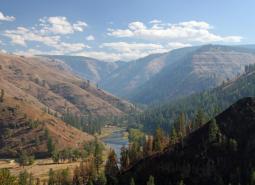
Blue Mountains
Located in NE Oregon, the Blue Mountains ecoregion is the largest ecoregion in the state. It provides a diverse complex of mountain ranges, valleys, and plateaus that extend beyond Oregon into the states of Idaho and Washington.
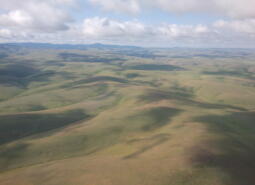
Columbia Plateau
The Columbia Plateau ecoregion was shaped by cataclysmic floods and large deposits of wind-borne silt and sand earlier in its geological history. It is dominated by a rolling landscape of arid lowlands dissected by several important rivers, and extends from the eastern slopes of the Cascades Mountains, south and east from the Columbia River to the Blue Mountains.
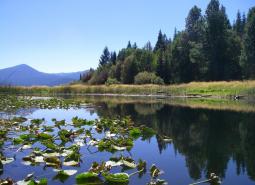
East Cascades
The East Cascade ecoregion extends from the Cascade Mountains' summit east to the warmer, drier high desert and down the length of the state. This ecoregion varies dramatically from its cool, moist border with the West Cascades ecoregion to its dry eastern border, where it meets sagebrush desert landscapes.
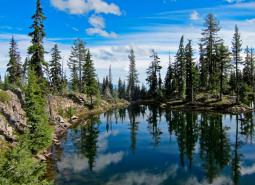
Klamath Mountains
The Klamath Mountains ecoregion covers much of southwestern Oregon, including the Klamath Mountains, Siskiyou Mountains, the interior valleys and foothills between these and the Cascade Range, and the Rogue and Umpqua river valleys. Several popular and scenic rivers run through the ecoregion, including the Umpqua, Rogue, Illinois, and Applegate rivers. Historically, this ecoregion is known …
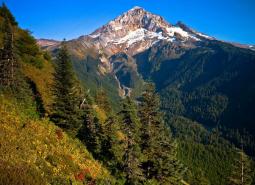
West Cascades
The West Cascades ecoregion extends from east of the Cascade Mountains summit to the foothills of the Willamette, Umpqua, and Rogue Valleys, and spans the entire length of the state of Oregon. It is largely dominated by conifer forests, moving into alpine parklands and dwarf shrubs at higher elevations.