Stephanomeria malheurensis flowers Photo Credit: Oregon Department of Agriculture
Malheur wire-lettuce is an annual species, with seeds that germinate in the early spring (usually starting around the first week of April) and subsequently form glabrous-leaved basal rosettes up to 15 cm in diameter. The rosette typically bolts in late May-June, forming a wiry network of flowering branches generally less than 30 cm long. Flower heads are numerous and clustered or single on short peduncles, with 5-6 (rarely up to 11) florets per head. Flower heads contain 5-6 ligules approximately 8.2-9.4 mm long and 3.2-3.6 mm wide starting in late June. Flowers are white or light to dark pink, and can change to salmon-colored with age. Fruits mature from July through October. Each head produces 5-sided, generally rugose-tuberculate achenes averaging 3.3-3.8 mm long and bearing 9-12 pappus bristles.
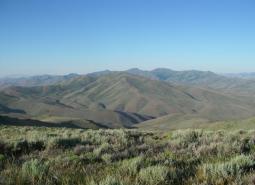
Malheur wire-lettuce is found in eastern Oregon sagebrush steppe. The species occurs on the tops of broad hills, above surrounding flats. Malheur wire-lettuce is often associated with volcanic tuff layered with thin crusts of limestone.
Limiting factors
Small population size puts Malheur wire-lettuce at risk of extirpation due to stochastic events. Competition from invasive plants, including cheatgrass, is an important threat. Herbivory and soil compaction by researchers may also be harmful to this species. The species is highly vulnerable to climate change, due to predicted increased variability in precipitation and alterations to hydrologic regimes.
Data gaps
Investigate seed bank survivorship to determine the length of time seeds remain viable (both in soil and in storage). Research seed germination and establishment requirements.
Conservation actions
Identify suitable habitat for reintroduction. Treat weeds to create additional suitable habitat. Continue to minimize mining activity near Malheur wire-lettuce. Continue banking seeds for future needs.
Key reference or plan
5 year review: https://ecosphere-documents-production-public.s3.amazonaws.com/sams/public_docs/species_nonpublish/19350.pdf