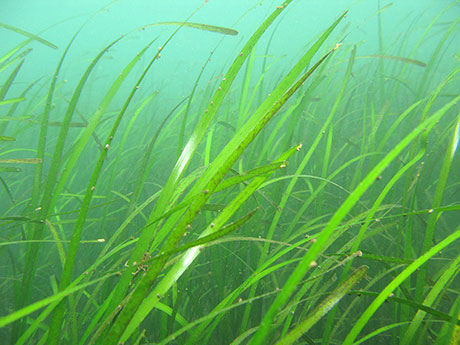
Native eelgrass is a flowering plant found in estuaries and protected waters in Oregon. It has blades up to about 0.5 inch wide and can grow to lengths of just over 3 feet long. It grows in sandy and muddy substrates within a narrow depth range where it can get adequate light, but is rarely exposed to air at low tide. It can reproduce both sexually and asexually. It has creeping rootstalks, known as rhizomes, that grow horizontally through the substrate and form clusters of roots at nodes. Large beds of eelgrass can form from vegetative reproduction from its rhizomes with a whole meadow of eelgrass sometime being essentially one colonony that is genetically identical. Eelgrass can also reproduce sexually and it produces both male and remale flowers on the same plant. The flowers are about 4 inches long and can produce several thousand seeds per square yard of plants. Native eelgrass forms important habitat for both salmon and groundfish species.
Overview
- Species Common Name Native Eelgrass
- Species Scientific Name Zostera marina