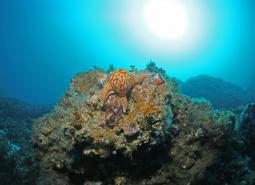
The pinto abalone is a medium-sized abalone (maximum shell length 150 mm, most individuals are less than 80 mm) with a thin, ear-shaped shell, and an epipodium that is light green-brown with tinges of orange. The shells have a scalloped growing edge, the external surface is typically green-brown (but can also be white and blue), and they have 3 to 6 raised excurrent openings (tremata). Very few pinto abalone have been observed in Oregon where they inhabit rocky shores and live on or under rocks and in deep crevices. Their known depth range extends from the low intertidal zone into subtidal areas to a depth of 10 m (maximum depth 100 m). Like other abalone, they are herbivores that capture drift algae and graze upon benthic diatoms, coralline algae, seaweeds and kelp. Pinto abalone have separate sexes and they aggregate to broadcast their gametes freely into the surrounding seawater when they spawn. Fertilized eggs develop into embryos and free-swimming lecithotrophic veliger larvae that remain in the water column for about 10 to 14 days. Pacific giant octopus (Enteroctopus dolfleini) are known to prey upon pinto abalone, and other predators include crab, sea stars (Pycnopodia helianthoides), wolf eels, cabezon, and sea otters. Pinto abalone were first reported in Oregon in 2009, and observations have since increased in frequency (9 pinto abalone were confirmed in 2019). It is estimated that pinto abalone have a life span of about 15 years. The biogeographic range extends from Salisbury Sound (AK) to Turtle Bay, Baja California (MX).
Overview
- Species Common Name Pinto abalone
- Species Scientific Name Haliotis kamtschatkana