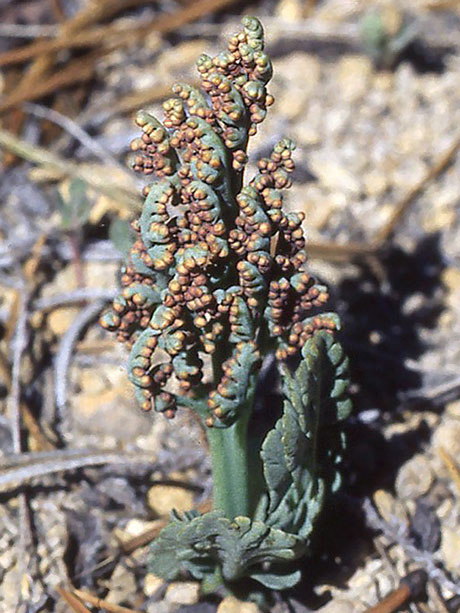
Pumice grape-fern is a perennial with a stout, fleshy underground stalk about 10 cm long, usually bearing a single leaf divided into sterile and fertile parts. The sterile portion of the leaf (trophophore) is dull, grayish green, glaucous, sessile or nearly so, the blade up to 4 cm long by 6 cm wide, usually ternately divided, the middle segment largest, each segment further divided pinnately into overlapping ascending, roundish, asymmetrically cuneate segments with wavy to crenate margins, the lower pinnae often lobed. The trophophore appears to originate near ground level, although it is located high on the subterranean common stalk. The fertile portion of the leaf (sporophore) is 1-3-pinnate, 1-1.5 times the length of the trophophore, with a short stalk and very compact sporangial cluster.
Overview
- Species Common Name Pumice grape-fern
- Species Scientific Name Botrychium pumicola
- State Listing Status Threatened
Ecoregions
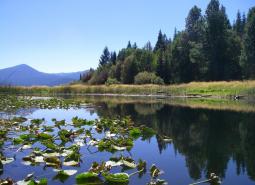
East Cascades
The East Cascade ecoregion extends from the Cascade Mountains' summit east to the warmer, drier high desert and down the length of the state. This ecoregion varies dramatically from its cool, moist border with the West Cascades ecoregion to its dry eastern border, where it meets sagebrush desert landscapes.

West Cascades
The West Cascades ecoregion extends from east of the Cascade Mountains summit to the foothills of the Willamette, Umpqua, and Rogue Valleys, and spans the entire length of the state of Oregon. It is largely dominated by conifer forests, moving into alpine parklands and dwarf shrubs at higher elevations.