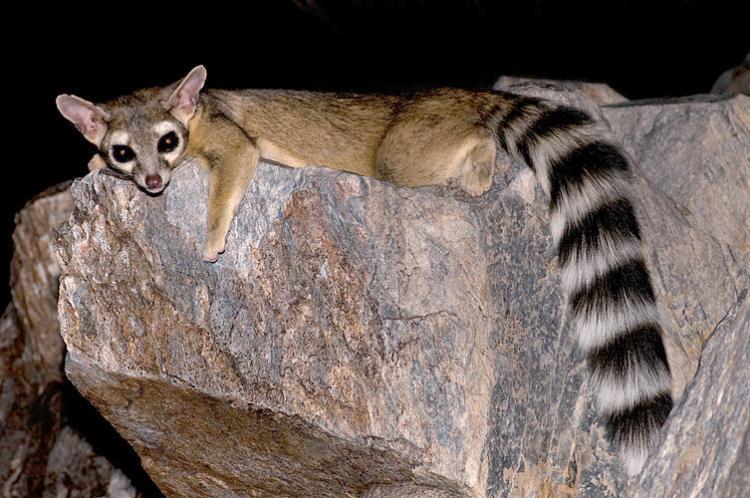
Ringtails are an elusive, nocturnal mammal in the raccoon (Procyonidae) family that are about the size of a small house cat, weighing 2-2.5 pounds. They are slender with a long body and a tail about head-body length. The tail is ringed with eight dark bands, including the tip, alternating with seven pale bands. Ringtails have a brownish-gray face with a white mask surrounding black-ringed eyes. The back is gray to buff with long, black-tipped guard hairs and the underside is white or pale buff. Their long, widely-set ears are thin and oval-shaped. The ringtail is at the northern edge of its global distribution in Oregon.
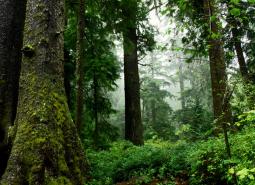
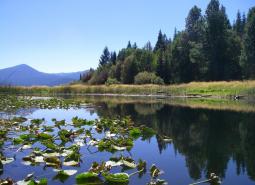
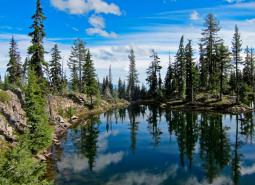
Ringtails are considered habitat generalists, and typically occur in low to mid-elevation forests. In Oregon, ringtails utilize a variety of habitats including tanoak woodlands, Douglas-fir dominated forests, mixed-hardwood forests, and rock cliffs near rivers. Clearcuts, young forests, and stand-edge habitats may be used where structures have been retained that can support foraging, denning, and resting behaviors including: legacy trees, snags (dead, broken and decayed), large logs, brush piles, and rock piles. In the Siskiyou mountains, mixed conifer-hardwood forests with steep southwestern-facing slopes are preferred as rest sites. Ringtails do not build their own dens, but take advantage of cavities and other small spaces both below and above ground in features including snags, live trees, logs, human-made brush piles, rock piles, and provisioned nest boxes.
Limiting factors
Habitat loss and fragmentation are likely affecting ringtail populations in Oregon. Anthropogenic disturbances including roads and rural and suburban development may reduce connectivity between occupied habitat patches. Populations of ringtails in urban areas may be more susceptible to mortality from predation by pets and feral or invasive animals, more abundant native predators, or poisonings. Increasing size and frequency of wildfires associated with fire suppression and climate change are a driving cause of ringtail habitat loss in Oregon. Forest management practices that affect forest structural complexity may reduce den and rest site availability. While trapping likely affected ringtail populations historically, it is unclear whether contemporary rates of incidental trapping mortality have a significant impact on ringtail populations.
Data gaps
• Research ringtail distribution, dispersal movements, home-range, density/abundance, and demographics, including population trends.
• Investigate habitat selection preferences, particularly for resting and denning.
• Evaluate habitat associations for ringtails in the West Cascades.
• Estimate home range sizes for various seasons, habitat types, and age/sex classes.
• Identify effective inventory and monitoring methods.
• Determine connectivity and movement barriers.
• Determine drivers of mortality, including risk of predation by barred owl, bobcat, and other avian and mammalian predators.
• Generate refined estimates of survival to include variation by age, sex, and season.
• Evaluate effects of competition with co-occurring mesocarnivores on ecology and habitat use.
• Evaluate the effects of forest management actions including timber harvest and fuels reduction on ringtail and ringtail habitat.
• Evaluate genetic health for ringtail populations.
• Investigate whether diseases such as sudden oak death affect the distribution or quality of ringtail habitat.
• Evaluate whether rodenticides affect ringtail populations.
Conservation actions
• Continue inventory and monitoring efforts to document population status and distribution.
• Address data gaps to inform conservation actions.
• Conduct education and outreach efforts to limit risks to ringtails from conflicts with or disease transmission from feral or off-leash domestic animals.
• Construct wildlife crossings to reduce road mortality risk.
• Manage forests to limit risks of catastrophic wildfire.
• Implement silvicultural practices to recruit or retain complex forest structures including legacy trees and snags (particularly hardwoods).
• Retain slash piles as habitat for ringtails and ringtail prey items where doing so does not exacerbate fire risk.
• Develop habitat models to inform conservation and management actions.
Key reference or plan
Ringtail (Bassariscus astutus) Survival, Home Range Size, and Rest Site Use in Southwest Oregon. Read here
Ecological Characteristics of Diurnal Rest Sites Used by Ringtails (Bassariscus astutus). Read here