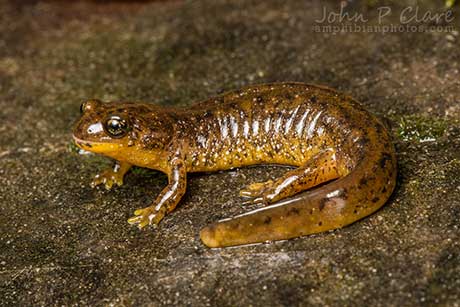
Southern torrent salamanders are highly aquatic and closely associated with cool, clear, permanent water. They are a relatively small salamander with short legs and a short, vertically compressed tail. They have a small, broad head with large, protruding eyes, and a short snout. Southern torrent salamanders are olive to brown in color on their backs, with small black and white spots that extend onto their bright yellow underbelly. Adults can grow 1.5 to 2.5 inches snout to vent. Males are slightly smaller than females, with squared off lobes at the base of the tail. Aquatic juveniles look similar to adults but have short external gills and a finned tail. This salamander has reduced lungs, and obtains oxygen through its skin. They are very intolerant of desiccation (drying out). Similar species to the southern torrent salamander include three other species of torrent salamander (Cascade, Olympic, and Columbia) that were treated as one species until 1992 when genetic analysis showed that there were four distinct species of torrent salamander. All four species are morphologically similar. Rhyacotriton variegatus exhibits a biphasic life history. Eggs are laid in low-flow headwater streams where larvae remain for up to five years. Juveniles are restricted to cold, clear streams; metamorphosed adults continue to occupy these stream habitats, but also leave natal streams and move to forests during wet conditions for foraging and dispersal. Adults are rarely found more than a few meters from stream banks.
Overview
- Species Common Name Southern Torrent Salamander
- Species Scientific Name Rhyacotriton variegatus
- State Listing Status Sensitive
Ecoregions
Coast Range
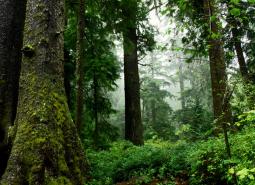
Oregon's Coast Range, known for its dramatic scenery, is extremely diverse, with habitats ranging from open sandy dunes to lush forests and from tidepools to headwater streams. It follows the coastline and extends east through coastal forest to the border of the Willamette Valley and Klamath Mountains ecoregions
Klamath Mountains
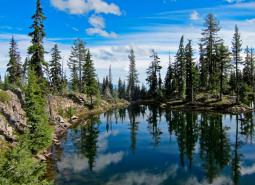
The Klamath Mountains ecoregion covers much of southwestern Oregon, including the Klamath Mountains, Siskiyou Mountains, the interior valleys and foothills between these and the Cascade Range, and the Rogue and Umpqua river valleys. Several popular and scenic rivers run through the ecoregion, including the Umpqua, Rogue, Illinois, and Applegate rivers. Historically, this ecoregion is known …
Northern Basin and Range
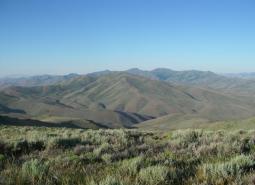
The Northern Basin and Range ecoregion covers the very large southeastern portion of the state, from Burns south to the Nevada border and from the Christmas Valley east to Idaho. It is largely a high elevation desert-like area dominated by sagebrush communities and habitats.
Willamette Valley
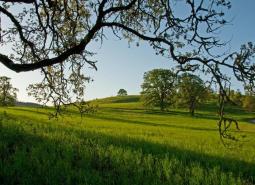
The Willamette Valley ecoregion is bounded on the west by the Coast Range and on the east by the Cascade Range. This long mostly level alluvial plain has some scattered areas of low basalt, and contrasts with productive farmland and large urban areas. It has the fastest-growing human population in the state resulting in challenges due to land-use changes.