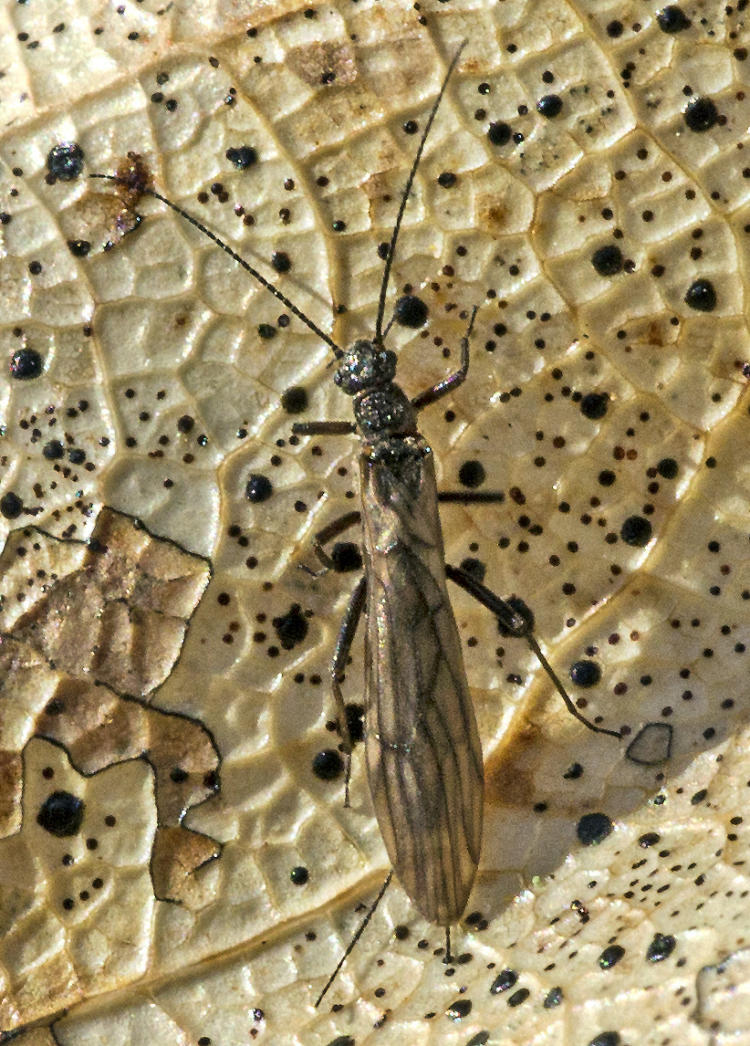
Males have a body length of 4.3 mm; interocular distance of 0.59 mm; forewing length of 5.3 mm; macropterous wings; tergum nine divided by medial membranous area except narrow bridge on anterior margin; two well-developed tergal knobs present along inner margin of the divided tergum nine; epiproct with both upper and lower processes well developed, area between upper and lower processes concave, lower process more than twice as long as upper process, as measured from the depth of the concavity; dorsomedial membranous area of epiproct centered between base and apex of epiproct; line drawn between tip of epiproct and junction of lower margin of epiproct and neck straight, apex not curving downward at extreme tip; angle formed between upper and lower processes 90; lower process broad, wider than upper process in dorsal view. Female have a body length 4.6 mm; interocular distance of 0.61 mm; macropterous wing with a forewing length of 5.8 mm;subgenital plate with hind margin darkly colored and heavily sclerotized, medial area of plate with heavy coloration, not overhanging posterior margin of tergum eight.
Overview
- Species Common Name A Stonefly
- Species Scientific Name Capnia kersti