Photo Credit: David Maloney, U.S. Fish and Wildlife Service
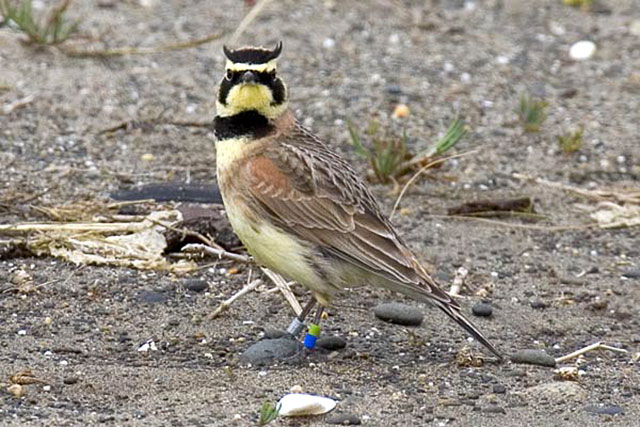
The Streaked Horned Lark (Eremophila alpestris strigata) is a small, ground-nesting songbird found only in the Pacific Northwest. It is a subspecies of the more widespread Horned Lark (Eremophila alpestris). This bird is native to the South Puget Lowlands of Washington, as well as the Willamette Valley and Lower Columbia River region in Oregon. Streaked Horned Larks have dark brown backs, yellowish underparts, a walnut-brown nape, and distinctive yellow markings above the eyes and on the throat. Compared to other Horned Lark subspecies, they are noticeably more yellow underneath and darker on the back. Their smaller size, darker coloring, and yellow underside help distinguish them from nearby subspecies.
Overview
Species Common Name Streaked Horned Lark
Species Scientific NameEremophila alpestris strigata
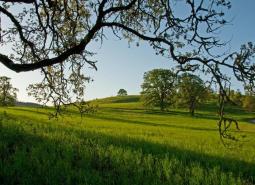
Streaked Horned Larks have a strong affinity for recently disturbed habitats and primarily use open, treeless expanses of bare ground or sparsely vegetated grassland for nesting and foraging. They also occupy coastal dunes, fallow and active agricultural fields, wetland mudflats, sparsely vegetated edges of grass fields, recently planted Christmas tree farms with extensive bare ground, and airfield margins. Columbia River islands are used opportunistically when suitable substrates are available. The majority of Streaked Horned Larks winter in the Willamette Valley, while individuals that breed along the Lower Columbia River islands either remain on the islands or migrate to the coast. The species exhibits high nest site fidelity.
Limiting factors
Streaked Horned Larks have large area requirements. Breeding habitat is the most significant factor in the decline of the Streaked Horned Lark in Oregon and Washington. Loss and degradation of grassland habitat are key limiting factors. Nesting failure due to agricultural practices (e.g., mowing, haying, spraying) and predation at nest sites contribute to low reproductive success. Rodenticides (e.g. zinc phosphide) can also cause mortality. Vehicle collisions are another source of mortality where habitat is adjacent to roadway or airport traffic. Managed areas dedicated to lark management are needed to recover the species.
Data gaps
• Evaluate the appropriateness of reintroductions to areas where larks have been extirpated.
• Conduct demographic studies to determine population viability.
• Explore alternative approaches to reduce airstrikes.
• Investigate overwintering habitat selection and identify components of high-quality wintering habitat.
• Determine causes of adult mortality.
• Develop methods for improving fecundity.
• Examine adult and natal dispersal and movements of adults following nest failure.
Conservation actions
• Manage habitat by maintaining or restoring large, sparsely-vegetated grasslands, creating protected nesting areas, increasing plant diversity to promote greater insect diversity, and controlling key non-native plants.
• Designate areas to be managed for core population centers.
• Minimize disturbance during the breeding and fledging period (mid-April through mid-August).
• Improve nesting habitat away from active runways. This may reduce collisions and improve adult survival.
• Ensure enough suitable habitat exists away from airport facilities.
• Implement conservation actions in the interagency working group work plan
Key reference or plan
Population and Habitat Objectives for Landbirds in Prairies, Oak, and Riparian Habitats of Western Oregon and Washington. Read here
The Willamette Valley Landowner’s Guide to Creating Habitat for Grassland Birds. Read here
Endangered and Threatened Wildlife and Plants; Draft Recovery Plan for the Streaked Horned Lark. Read here
USFWS Streaked Horn Lark – Summary Page. Read here
Pearson, S.F., M. Linders, I. Keren, H. Anderson, R. Moore, G. Slater, and A. Kreager. 2016. Survey protocols and strategies for assessing streaked horned lark site occupancy status, population abundance, and trends. Wildlife Science Division, Washington Department of Fish and Wildlife, Olympia, Washington. Read here
Streaked Horned Lark Recovery Plan: Recovery Implementation Strategy. Read here